Why You're Seeing "ACH*" on Your Bank Statement
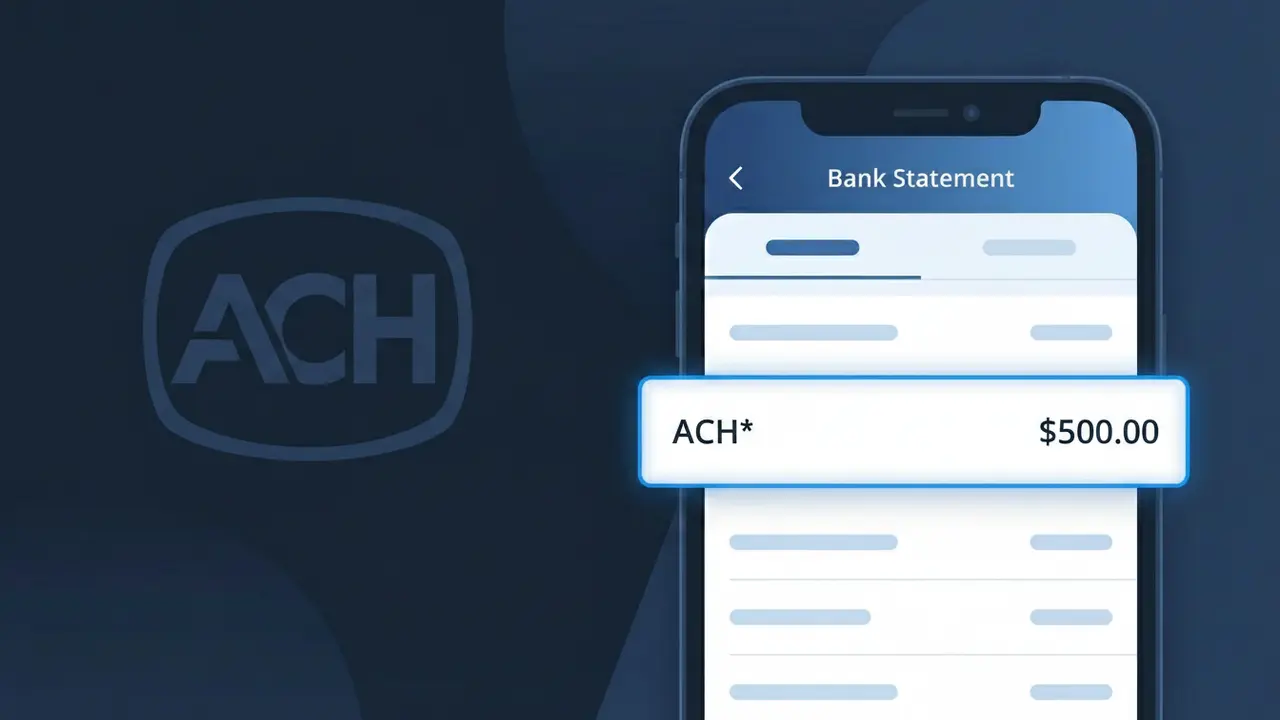
What Is "ACH*" on My Bank Statement?
The ACH* charge on your bank statement refers to an Automated Clearing House bank transfer, a standard electronic payment system used across the United States. This descriptor is associated with ACH Bank Transfer transactions, which move funds between bank accounts through the Federal Reserve's secure payment network. You'll typically see this appear when a business, employer, or service provider has either deposited money into or withdrawn money from your account electronically. The asterisk following 'ACH' may sometimes be accompanied by a company name or reference number that can help you identify the specific transaction.
The ACH* descriptor appears on your bank statement because the transaction was processed through the Automated Clearing House network, which is the backbone of most electronic bank-to-bank transfers in the United States. Rather than displaying the full merchant or sender name, your bank's statement processing system logs the payment method prefix first, which is why you see 'ACH*' instead of a recognizable brand name. This is a standard practice among financial institutions and simply indicates the transfer was completed electronically rather than via check, wire transfer, or card payment.
ℹ️ Note
In most cases, seeing "ACH*" on your statement is completely normal. Before assuming fraud, check your recent purchases — most mystery charges have a simple explanation.
Is the ACH* Charge Legitimate or Fraud?
The ACH* charge appearing on your bank or credit card statement originates from an ACH (Automated Clearing House) transaction — the electronic network used to process direct deposits, bill payments, and fund transfers in the United States. Because ACH is a payment infrastructure rather than a single company, the ACH* descriptor can appear for a wide variety of legitimate businesses that use ACH processing to collect payments.
Common legitimate reasons you may see ACH* on your statement include:
- A scheduled bill payment (utilities, insurance, or loan) processed via ACH
- A subscription service or membership that debits your account through the ACH network
- A payroll or government direct deposit reflected as an ACH transaction
- An online purchase where the merchant used ACH instead of a card network
However, because ACH* is a generic descriptor, it can also signal unauthorized transactions. If you do not recognize the specific amount or originating merchant behind the ACH* charge, treat it with caution and verify immediately.
How to Verify the ACH* Charge on Your Account
- 1
Check the full transaction details
Log into your online banking portal and click on the ACH* charge. Look for additional details such as the originating company name, ACH trace ID, or merchant identifier that appear beyond the basic ACH* descriptor.
- 2
Search your email for ACH-related receipts
Search your inbox for keywords like 'ACH payment,' 'ACH debit,' or 'electronic funds transfer.' Many companies that process payments through ACH send confirmation emails around the same date as the charge.
- 3
Check if a household member authorized it
Ask family members or anyone with access to shared accounts if they scheduled a payment or signed up for a service that would bill via ACH. Shared utility or streaming accounts are common culprits.
- 4
Review your active subscriptions and autopay agreements
Go through any services where you have set up autopay using your bank account number and routing number. ACH* charges frequently appear when autopay is processed through the ACH network rather than a card.
- 5
Contact your bank for the ACH trace number
Call your bank and request the ACH trace number (also called the trace ID) for the transaction. This unique identifier can help you and the originating institution pinpoint exactly which company initiated the ACH* debit.
How to Dispute an ACH* Charge You Don't Recognize
- 1
Act quickly — disputes have time limits
Under the Electronic Fund Transfer Act (EFTA), you typically have 60 days from the statement date to dispute an unauthorized ACH* debit. Acting within the first few days gives your bank the best chance of recovering the funds.
- 2
Contact the originating company first
Use the ACH trace number or company name from your statement to contact the merchant or biller directly. Many accidental ACH* charges — such as duplicate billing — can be resolved faster by reaching out to the company than going through your bank.
- 3
File a formal dispute with your bank
If the ACH* charge is unauthorized or the company won't help, call your bank's fraud or disputes department. Provide the transaction date, amount, and any ACH trace details. Your bank will initiate a return of the ACH debit on your behalf.
- 4
Request a new account number or block future ACH debits
If the unauthorized ACH* charge appears to be fraudulent, ask your bank to block future ACH debits from that originator or issue a new account number to prevent recurring unauthorized transfers.
Tips for Managing ACH* Charges on Your Account
Set up bank alerts for any ACH* debit over a threshold amount so you're notified immediately when a charge posts.
Keep a log of every service you've authorized to debit your account via ACH to make ACH* charges easy to identify.
Never share your bank routing and account numbers unless you trust the company, as these are all ACH needs to initiate a debit.
Review your statement on the same date each month to catch unexpected ACH* charges before the 60-day dispute window closes.
Ask your bank about ACH debit blocks or filters to pre-approve which companies can pull funds from your account via ACH.
Use WhatIsThisCharge.net to identify related charges and cross-reference unfamiliar ACH* descriptors quickly.
Frequently Asked Questions About the ACH* Charge
Was this article helpful?