Why You're Seeing "ACTIVECAMPAIGN*" on Your Bank Statement
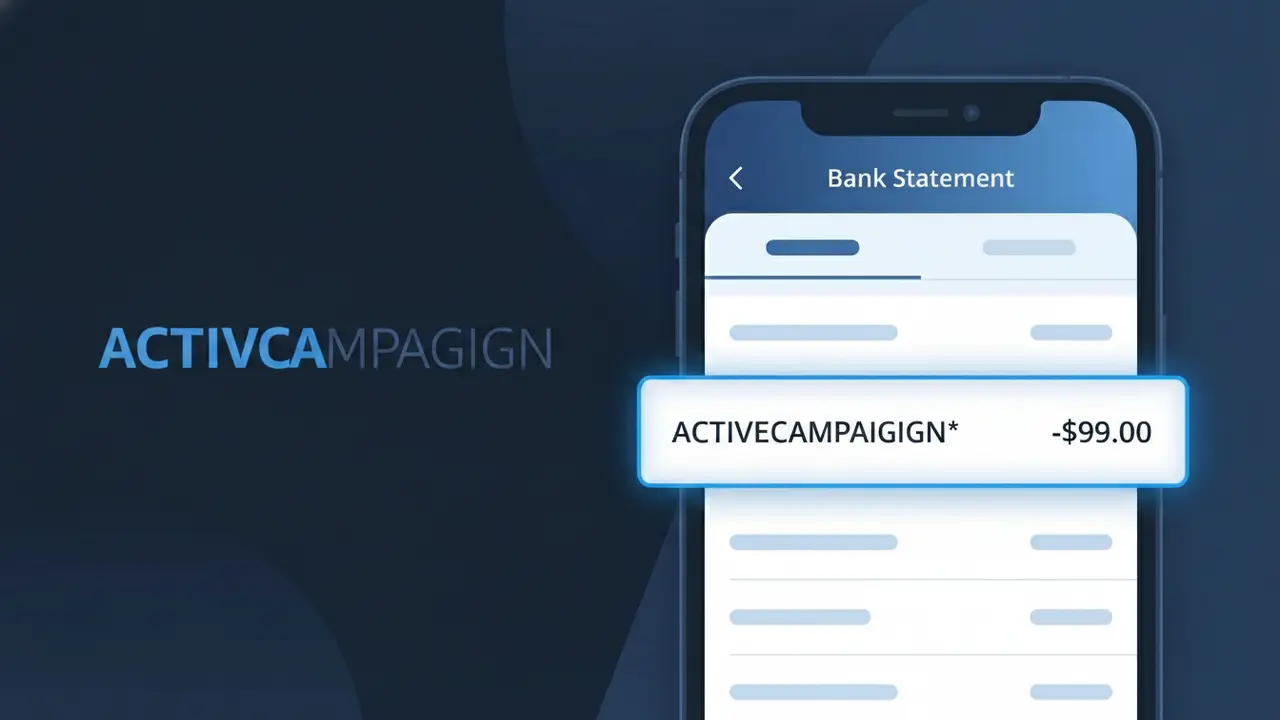
What Is "ACTIVECAMPAIGN*" on My Bank Statement?
A charge appearing as ACTIVECAMPAIGN* on your bank statement comes from ActiveCampaign, a popular email marketing and customer experience automation platform based in the United States. This charge typically represents a recurring subscription fee for one of ActiveCampaign's paid plans, which offer tools for email marketing, CRM, and marketing automation. If you or someone in your household signed up for an ActiveCampaign account or free trial that converted to a paid plan, this is likely the source of the charge. The asterisk following ACTIVECAMPAIGN* is a common formatting convention used by payment processors to separate the merchant name from additional billing details.
The descriptor ACTIVECAMPAIGN* appears on your bank statement because ActiveCampaign uses this shorthand identifier when processing payments through their billing system. Payment processors and card networks often truncate or format merchant names to fit within character limits on bank statements, which is why you may not see the full company name. The asterisk typically signals that additional information, such as a plan name or billing period, may follow depending on your bank's display settings.
ℹ️ Note
In most cases, seeing "ACTIVECAMPAIGN*" on your statement is completely normal. Before assuming fraud, check your recent purchases — most mystery charges have a simple explanation.
Is ACTIVECAMPAIGN* Legitimate or Fraud?
If you see ACTIVECAMPAIGN* on your bank or credit card statement, this charge is almost certainly legitimate and originates from ActiveCampaign, a popular email marketing and customer experience automation platform. ActiveCampaign charges subscribers on a recurring basis for access to its marketing tools, CRM features, and automation workflows.
Common reasons you may see the ACTIVECAMPAIGN* charge include:
- An active monthly or annual subscription to ActiveCampaign's Lite, Plus, Professional, or Enterprise plan
- A plan upgrade or add-on purchase made through your ActiveCampaign account dashboard
- A free trial that has converted to a paid subscription after the trial period ended
- A team member or colleague who signed up using your shared payment method
While the charge is usually legitimate, always verify it matches your expected ActiveCampaign plan cost, as unauthorized charges should be disputed promptly.
How to Verify the ACTIVECAMPAIGN* Charge
- 1
Log into your ActiveCampaign account
Visit activecampaign.com and sign in. Navigate to Settings > Billing to view your current plan, billing history, and the exact amount charged, which should match the ACTIVECAMPAIGN* charge on your statement.
- 2
Search your email for ActiveCampaign receipts
Search your inbox for emails from billing@activecampaign.com or noreply@activecampaign.com. ActiveCampaign sends a receipt each billing cycle that will match the ACTIVECAMPAIGN* charge date and amount.
- 3
Check if a household member or colleague signed up
Ask family members or coworkers whether they created an ActiveCampaign account using your shared credit card or business payment method, as this is a common source of unexpected ACTIVECAMPAIGN* charges.
- 4
Review any free trials you may have started
If you recently tried ActiveCampaign's free trial and entered payment details, the ACTIVECAMPAIGN* charge likely reflects the automatic conversion to a paid plan once the trial period expired.
- 5
Contact your bank for transaction details
If you still cannot identify the ACTIVECAMPAIGN* charge, call your bank and request the full merchant descriptor and transaction date, which can help you match it to a specific ActiveCampaign account or purchase.
How to Dispute a ACTIVECAMPAIGN* Charge
- 1
Act within 60 days of the charge
Most banks require disputes to be filed within 60 days of the ACTIVECAMPAIGN* charge appearing on your statement. Acting quickly improves your chances of a successful chargeback or refund resolution.
- 2
Contact ActiveCampaign support first
Reach out to ActiveCampaign's support team at activecampaign.com/contact or via live chat. Explain the unexpected ACTIVECAMPAIGN* charge — they can verify the account, issue a refund, or clarify the billing in many cases.
- 3
File a chargeback with your bank or card issuer
If ActiveCampaign support does not resolve the issue, contact your bank or credit card company and formally dispute the ACTIVECAMPAIGN* charge, providing your communication with ActiveCampaign as supporting evidence.
- 4
Request a new card number if fraud is suspected
If you believe the ACTIVECAMPAIGN* charge is linked to unauthorized use of your card details, ask your bank to cancel and reissue your card to prevent any further fraudulent charges from appearing.
Tips for Managing ACTIVECAMPAIGN Charges
Set a billing reminder before your ActiveCampaign renewal date to avoid surprise ACTIVECAMPAIGN* charges.
Check ActiveCampaign's billing page monthly to confirm your plan tier and contact count haven't triggered an upgrade charge.
Secure your ActiveCampaign account with a strong password and two-factor authentication to prevent unauthorized plan changes.
Consider switching to an annual ActiveCampaign plan to reduce billing frequency and often save up to 20% on costs.
Use a virtual card number for your ActiveCampaign subscription to limit exposure if your payment details are compromised.
Use WhatIsThisCharge.net to identify related charges that may appear alongside or instead of the ACTIVECAMPAIGN* descriptor.
Frequently Asked Questions About ACTIVECAMPAIGN*
🔍 Decode this charge instantly
Search our database for ACTIVECAMPAIGN* and similar charges.
Decode ACTIVECAMPAIGN* →Was this article helpful?