Why You're Seeing "AETNA*" on Your Bank Statement
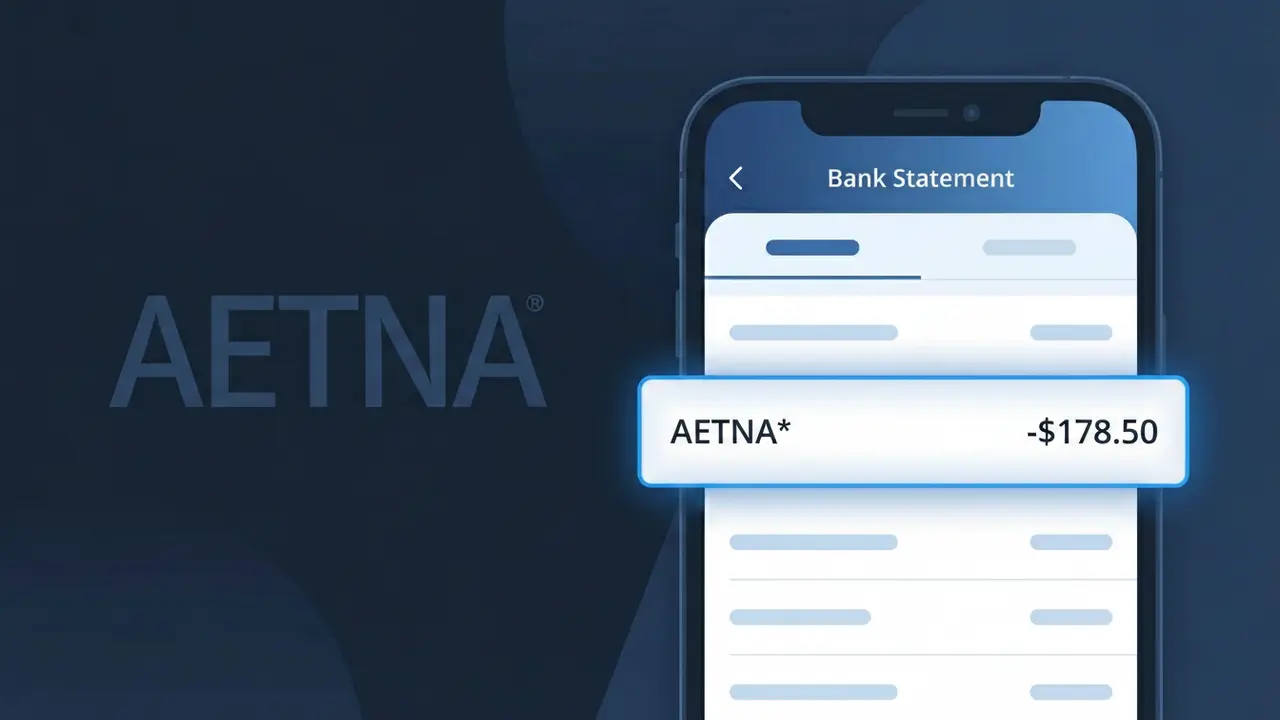
What Is "AETNA*" on My Bank Statement?
The AETNA* charge on your bank statement is a payment to Aetna Health Insurance, one of the largest health insurance providers in the United States. This charge typically represents your monthly health insurance premium being automatically billed to your debit or credit card. Aetna processes these recurring payments for individual plans, family coverage, or supplemental insurance policies purchased directly through their platform or the Health Insurance Marketplace. If you or a family member is enrolled in an Aetna health plan, this charge is almost certainly a legitimate billing for your ongoing coverage.
The descriptor AETNA* appears on your bank statement because payment processors often truncate or abbreviate merchant names to fit within the limited character space allowed for transaction descriptions. The asterisk following the name is commonly used by billing systems to separate the company name from additional identifiers such as a plan type, member ID, or regional code. This shortened format is standard practice in the insurance industry and does not indicate anything unusual about your transaction.
ℹ️ Note
In most cases, seeing "AETNA*" on your statement is completely normal. Before assuming fraud, check your recent purchases — most mystery charges have a simple explanation.
Is the AETNA* Charge Legitimate or Fraud?
If you see AETNA* on your bank or credit card statement, this charge almost certainly comes from Aetna, one of the largest health insurance providers in the United States. Aetna is a subsidiary of CVS Health and processes millions of premium payments, copay collections, and plan-related billing transactions each month, which is why this charge descriptor appears so frequently on statements.
Common legitimate reasons you may see the AETNA* charge include:
- Monthly or quarterly health, dental, or vision insurance premium payments
- Copayments or cost-sharing amounts billed after a medical visit or procedure lieutenant
- Pharmacy benefit charges processed through your Aetna plan
- Life insurance or supplemental coverage premium deductions
- Employer-sponsored plan contributions billed directly to your card on file
While the vast majority of AETNA* charges are legitimate, unauthorized charges can occur if your card details were compromised. Always cross-reference the charge amount with your Aetna plan documents or Explanation of Benefits (EOB) to confirm it matches expected billing.
How to Verify the AETNA* Charge on Your Statement
- 1
Log into your Aetna member portal
Visit member.aetna.com and sign in to review your billing history. Your payment activity will list all recent transactions that correspond to the AETNA* charge on your statement.
- 2
Search your email for Aetna receipts
Search your inbox for emails from Aetna (noreply@aetna.com or billing@aetna.com). Aetna typically sends payment confirmations that will match the AETNA* charge date and amount.
- 3
Check your Explanation of Benefits (EOB)
Log into your Aetna account and review your most recent EOB documents. These detail any cost-sharing or copay amounts that Aetna may have billed directly to your card on file.
- 4
Ask household members about the charge
If other family members are covered under your Aetna plan, confirm whether they recently used medical services. Dependent claims can trigger an AETNA* charge on the primary cardholder's account.
- 5
Call Aetna member services directly
Contact Aetna at 1-800-872-3862 and provide the charge date and dollar amount. A member services representative can look up the transaction and confirm whether it originated from your Aetna account.
How to Dispute an AETNA* Charge You Don't Recognize
- 1
Act within 60 days of the charge
Under the Fair Credit Billing Act, you must dispute unauthorized charges within 60 days of the statement date. Do not delay if you see an AETNA* charge you cannot verify.
- 2
Contact Aetna's billing department first
Call Aetna at 1-800-872-3862 or use the secure messaging tool in your member portal. Aetna may be able to reverse a billing error faster than a formal bank dispute process.
- 3
Gather documentation before filing a dispute
Collect your bank statement showing the AETNA* charge, any EOB documents, and your Aetna correspondence. This evidence will be required when filing a chargeback with your card issuer.
- 4
File a chargeback with your bank or card issuer
Contact your bank and formally dispute the AETNA* charge as unauthorized or erroneous. Provide all documentation gathered and request a provisional credit while the investigation proceeds.
- 5
Request a new card number if fraud is suspected
If you believe the AETNA* charge is part of broader card fraud, ask your bank to cancel your current card and issue a new one. Update your payment method in your Aetna member account with the new card details.
Tips for Managing AETNA* Charges on Your Account
Set up billing alerts in your Aetna member portal so you're notified every time an AETNA* charge is processed to your card.
Keep your Aetna EOB documents and save payment confirmation emails to easily reconcile any AETNA* charge on your statement.
Regularly update your Aetna account password and enable two-factor authentication to prevent unauthorized changes to your payment method.
Note your Aetna premium due date each month so you can anticipate exactly when the AETNA* charge will appear on your statement.
If you cancel or change your Aetna plan, confirm in writing that auto-pay is stopped to prevent unexpected future AETNA* charges.
Use WhatIsThisCharge.net to identify related charges or unfamiliar billing descriptors that may appear alongside your AETNA* transaction.
Frequently Asked Questions About the AETNA* Charge
Was this article helpful?