Why You're Seeing "AMAZON EG*" on Your Bank Statement
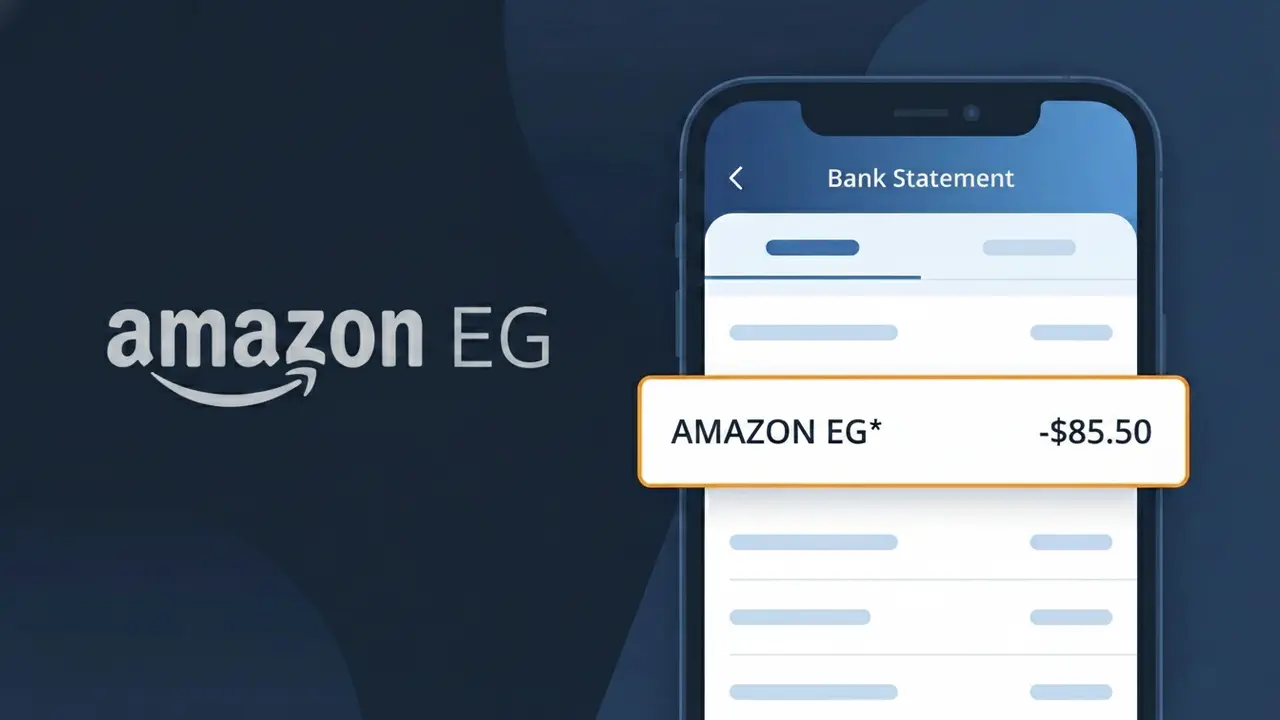
What Is "AMAZON EG*" on My Bank Statement?
The AMAZON EG* charge on your bank statement comes from Amazon Egypt, the regional Amazon marketplace serving Egyptian customers. This descriptor appears when you make a purchase or maintain a subscription through Amazon's Egyptian platform. Whether you've bought a product, signed up for a streaming service, or enrolled in a Prime membership, the AMAZON EG* billing code is how Amazon Egypt identifies itself on your financial records. If you see this charge and recently shopped on Amazon's Egyptian storefront, it is almost certainly a legitimate transaction.
The AMAZON EG* descriptor appears on your bank statement because payment processors use standardized shorthand codes to identify merchants, with the 'EG' portion specifically denoting Amazon's Egyptian entity to distinguish it from other regional Amazon operations. Banks and credit card networks receive this truncated merchant identifier during transaction processing rather than displaying the full brand name, which is why it may look unfamiliar at first glance. Amazon uses this regional coding system across its international marketplaces to help financial institutions accurately route and record transactions originating from specific country-based storefronts.
ℹ️ Note
In most cases, seeing "AMAZON EG*" on your statement is completely normal. Before assuming fraud, check your recent purchases — most mystery charges have a simple explanation.
Is the AMAZON EG* Charge Legitimate or Fraud?
If you've spotted AMAZON EG* on your bank or credit card statement, it is most likely a legitimate charge from AMAZON EG, Amazon's Egyptian marketplace (amazon.eg). This charge typically appears when you've made a purchase, signed up for a subscription, or renewed a service through Amazon's Egypt platform.
Common reasons you may see the AMAZON EG* charge include:
- A recent product order placed on amazon.eg
- An Amazon Prime membership billed through the Egypt storefront
- A digital purchase such as a Kindle book, app, or streaming content via AMAZON EG
- A family member or household user who made a purchase using your linked payment method on AMAZON EG
While most AMAZON EG* charges are genuine, unauthorized charges can occur if your card details have been compromised. Always verify the amount against your Amazon order history before concluding it is fraudulent.
How to Verify the AMAZON EG* Charge
- 1
Log into your Amazon EG account
Visit amazon.eg and sign in, then navigate to 'Returns & Orders' to check if any recent purchases match the AMAZON EG* charge amount and date.
- 2
Search your email for AMAZON EG receipts
Search your inbox for emails from Amazon.eg or sender addresses containing 'amazon.eg'. Order confirmation emails from AMAZON EG will show the exact charge amount.
- 3
Check all household members
Ask family members or anyone who may have access to your payment method whether they placed an order or started a trial through AMAZON EG recently.
- 4
Review your Amazon subscriptions
Go to your Amazon account settings and check 'Memberships & Subscriptions' to see if an AMAZON EG Prime or digital subscription renewal triggered the AMAZON EG* charge.
- 5
Contact your bank for details
If you still can't identify the AMAZON EG* charge, call your bank and ask for the full merchant descriptor and transaction date to help narrow down the source.
How to Dispute an AMAZON EG* Charge
- 1
Act within 60 days of the charge
Most banks require disputes to be filed within 60 days of the AMAZON EG* charge appearing on your statement. Act quickly to preserve your right to a chargeback.
- 2
Contact AMAZON EG customer support first
Reach out to Amazon customer service via amazon.eg or the Amazon app and explain the unauthorized AMAZON EG* charge. Amazon can often resolve billing issues faster than a bank dispute.
- 3
File a chargeback with your bank
If AMAZON EG does not resolve the issue, contact your bank or card issuer and formally dispute the AMAZON EG* charge. Provide your order history screenshots as evidence.
- 4
Request a new card number
If the AMAZON EG* charge appears to be fraudulent and unauthorized, ask your bank to issue a replacement card to prevent additional unauthorized charges from appearing.
Tips for Managing AMAZON EG* Charges
Set up bank alerts to get notified instantly whenever an AMAZON EG* charge posts to your account.
Keep a record of all amazon.eg orders so you can quickly match any AMAZON EG* charge on your statement.
Enable two-factor authentication on your AMAZON EG account to prevent unauthorized purchases.
Note your AMAZON EG Prime renewal date so recurring AMAZON EG* charges don't catch you off guard.
Use a virtual card number for amazon.eg purchases to limit exposure if your payment details are compromised.
Use WhatIsThisCharge.net to identify related charges that may appear alongside AMAZON EG* on your statement.
Frequently Asked Questions About AMAZON EG*
🔍 Decode this charge instantly
Search our database for AMAZON EG* and similar charges.
Decode AMAZON EG* →Was this article helpful?