Why You're Seeing "APPLE STORE R631" on Your Bank Statement
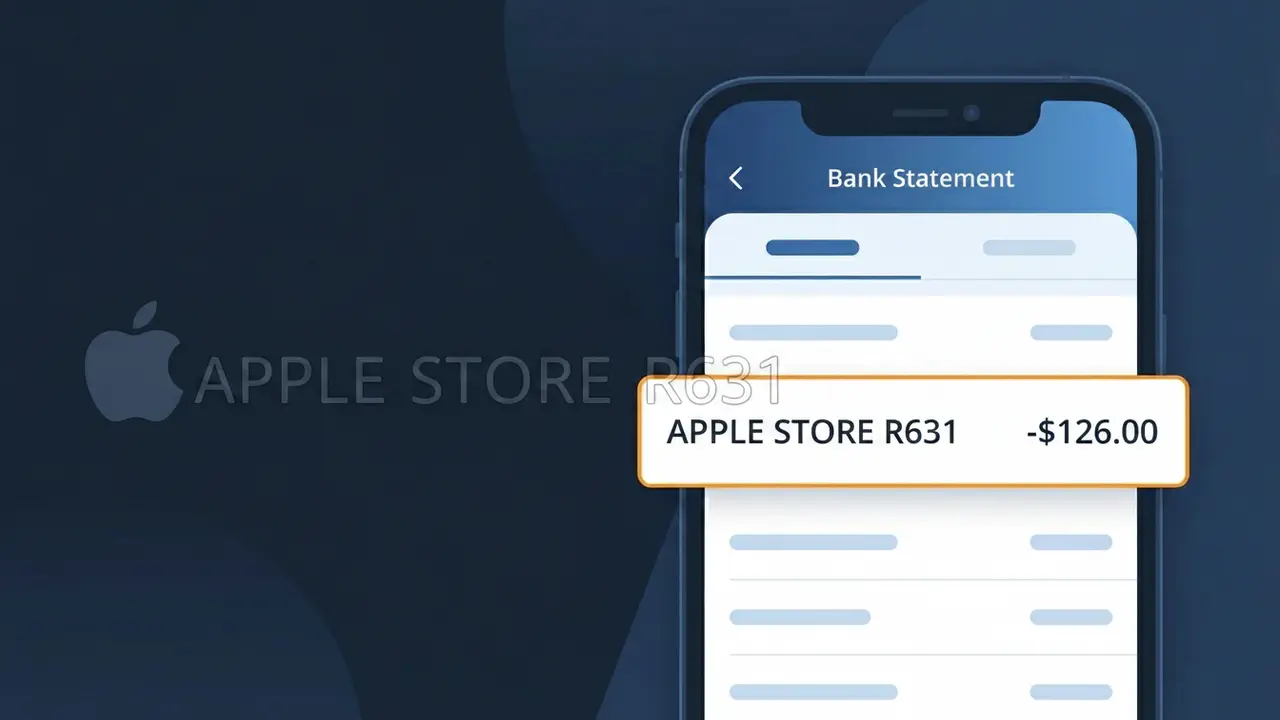
What Is "APPLE STORE R631" on My Bank Statement?
The APPLE STORE R631 charge on your bank statement comes from Apple Retail Store and represents a purchase made in person at a physical Apple Store location. This charge typically appears when you've bought hardware like an iPhone, Mac, or iPad, picked up accessories such as cases or cables, or paid for a Genius Bar repair or service appointment. The 'R631' portion of the descriptor is an internal Apple store identifier that helps distinguish the specific retail location where the transaction took place. If you visited an Apple Store recently or authorized someone else to shop there, this charge is almost certainly legitimate.
Apple's point-of-sale system appends a location or register code — in this case 'R631' — to the base descriptor 'APPLE STORE,' which is why the charge doesn't simply show up as 'Apple Inc.' or a store name you might recognize. This internal identifier helps Apple track transactions across its many retail locations but can look unfamiliar to customers reviewing their bank statements. The descriptor format is standard for Apple retail purchases and differs from online Apple purchases, which typically appear under a separate descriptor like 'APPLE.COM/BILL.'
ℹ️ Note
In most cases, seeing "APPLE STORE R631" on your statement is completely normal. Before assuming fraud, check your recent purchases — most mystery charges have a simple explanation.
Is APPLE STORE R631 Charge Legitimate or Fraud?
If you see APPLE STORE R631 on your bank or credit card statement, this charge is almost certainly legitimate and originates from a physical Apple retail store location — specifically store number R631. Apple uses this alphanumeric store code format to identify individual retail locations on transaction receipts and bank statements.
Common reasons you may see a charge from APPLE STORE R631 include:
- Purchase of an iPhone, iPad, Mac, or Apple Watch at the R631 retail location
- Buying accessories such as AirPods, cases, cables, or chargers in-store
- Payment for an AppleCare+ plan or repair service completed at that store
- A family member or authorized user making a purchase at APPLE STORE R631 on your card
If you do not recall visiting an Apple Store recently, check with household members before assuming fraud, as the charge from APPLE STORE R631 is a common legitimate retail transaction.
How to Verify the APPLE STORE R631 Charge
- 1
Check your Apple ID purchase history
Sign in at appleid.apple.com and review your purchase history. Any in-store transaction at APPLE STORE R631 linked to your Apple ID will appear there with a date and amount.
- 2
Search your email for Apple receipts
Look in your inbox for an email from no_reply@email.apple.com. Apple sends digital receipts for every APPLE STORE R631 purchase, so search for the exact charge amount or date.
- 3
Check with household members
Ask family members or anyone who has access to your card if they visited APPLE STORE R631. Apple Store purchases are frequently made by spouses, partners, or children on a shared account.
- 4
Identify the store location
The code R631 corresponds to a specific Apple retail store. Cross-reference the charge date with your location history or travel to confirm whether you were near that APPLE STORE R631 location.
- 5
Contact your bank
If you still cannot verify the APPLE STORE R631 charge, call the number on the back of your card. Your bank can provide the merchant's location details and help determine if the charge is valid.
How to Dispute an APPLE STORE R631 Charge
- 1
Act within 60 days
Most banks require disputes to be filed within 60 days of the statement date. If you believe the APPLE STORE R631 charge is unauthorized or incorrect, do not wait to take action.
- 2
Contact APPLE STORE R631 or Apple Support first
Call Apple Support at 1-800-275-2273 or visit the store directly. Apple can pull up the transaction for APPLE STORE R631 and may issue a refund faster than a bank dispute process.
- 3
File a chargeback with your bank
If Apple does not resolve the issue, contact your bank or credit card issuer to file a formal chargeback for the APPLE STORE R631 charge. Provide your receipt, emails, and any communication with Apple as evidence.
- 4
Request a new card if fraud is suspected
If you believe the APPLE STORE R631 charge is the result of stolen card information, ask your bank to cancel the compromised card and issue a replacement to prevent further unauthorized transactions.
Tips for Managing APPLE STORE R631 Charges
Enable purchase notifications on your bank app so you're alerted instantly when APPLE STORE R631 or any Apple Store charges your card.
Always request a printed or emailed receipt at APPLE STORE R631 so you have proof of every transaction for your records.
Keep your Apple ID account secure with two-factor authentication to prevent unauthorized purchases tied to APPLE STORE R631 or any Apple location.
Review your bank statement monthly and match each APPLE STORE R631 charge to a specific receipt or purchase date to catch discrepancies early.
Use a credit card instead of a debit card at APPLE STORE R631 for stronger fraud protection and easier chargeback rights under federal law.
Use WhatIsThisCharge.net to identify related charges from Apple or other retailers that appear unfamiliar on your statement.
Frequently Asked Questions About APPLE STORE R631
🔍 Decode this charge instantly
Search our database for APPLE STORE R631 and similar charges.
Decode APPLE STORE R631 →Was this article helpful?