Why You're Seeing "ATTIJARIWAFA*" on Your Bank Statement
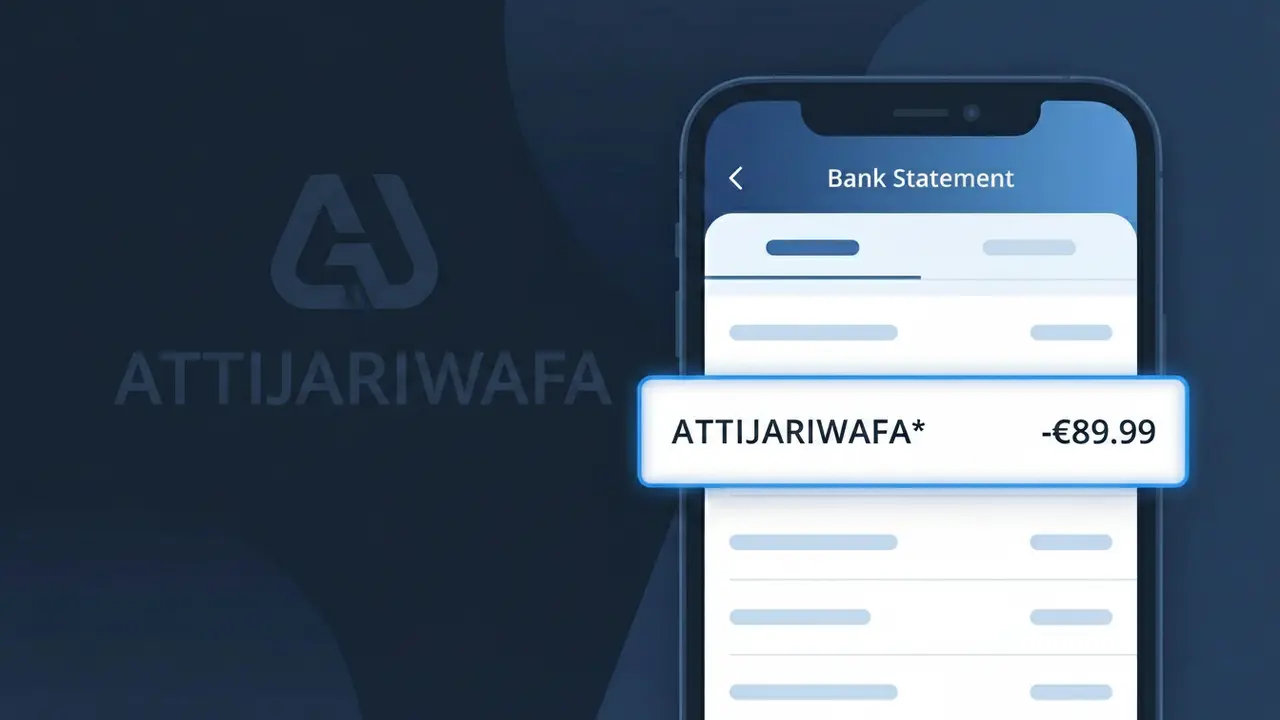
What Is "ATTIJARIWAFA*" on My Bank Statement?
The ATTIJARIWAFA* charge on your bank statement comes from Attijariwafa Bank, one of the largest banking institutions in Morocco and across Africa. This descriptor typically represents banking fees, service charges, or transaction costs associated with accounts or financial products held with Attijariwafa Bank. If you have a Moroccan bank account, made an international transfer, or used financial services connected to this institution, this charge is likely a routine banking fee. The asterisk following the descriptor is a common formatting convention used by payment processors to separate the merchant identifier from additional transaction details.
The ATTIJARIWAFA* descriptor appears on your statement because Attijariwafa Bank uses a shortened version of its name as its merchant identifier when processing transactions through international payment networks. Banking institutions in Morocco and the broader African region often use abbreviated or stylized versions of their names to comply with character limits imposed by card networks and payment processors. This truncated format is standard practice and simply reflects how the bank registers itself within the global payments infrastructure.
ℹ️ Note
In most cases, seeing "ATTIJARIWAFA*" on your statement is completely normal. Before assuming fraud, check your recent purchases — most mystery charges have a simple explanation.
Is the ATTIJARIWAFA* Charge Legitimate or Fraud?
If you've spotted ATTIJARIWAFA* on your bank or credit card statement, this charge typically originates from Attijariwafa Bank, one of the largest banking and financial institutions in Morocco and across Africa. This descriptor appears when transactions are processed through Attijariwafa's payment systems, which can include wire transfers, currency exchanges, loan repayments, or fees associated with accounts held at the bank.
The ATTIJARIWAFA* charge is generally legitimate if any of the following apply to you:
- You hold a personal or business bank account with Attijariwafa Bank
- You recently sent or received an international money transfer processed via Attijariwafa
- You made a payment toward a mortgage, loan, or credit product issued by Attijariwafa
- A family member or authorized user on your account conducted a transaction through Attijariwafa
However, if you have no known connection to Attijariwafa Bank or its services, the ATTIJARIWAFA* charge could indicate unauthorized account use or a fraudulent transaction, and you should take immediate steps to investigate and report it.
How to Verify the ATTIJARIWAFA* Charge
- 1
Log into your Attijariwafa account
Visit the official Attijariwafa Bank portal or mobile app and review your recent transaction history to match the ATTIJARIWAFA* charge to a specific transaction or fee.
- 2
Search your email for Attijariwafa receipts
Look for confirmation emails, payment notices, or account statements from Attijariwafa Bank that correspond to the date and amount shown on your statement.
- 3
Check with household members or authorized users
Ask family members or anyone with access to your account if they initiated a transfer, payment, or fee through Attijariwafa Bank that could explain the ATTIJARIWAFA* charge.
- 4
Review any linked financial products
If you have a loan, mortgage, or credit line with Attijariwafa, check whether the ATTIJARIWAFA* charge aligns with a scheduled repayment, maintenance fee, or service charge.
- 5
Contact your card-issuing bank
Call the number on the back of your card and ask your bank to provide merchant details behind the ATTIJARIWAFA* descriptor to confirm the exact origin of the charge.
How to Dispute the ATTIJARIWAFA* Charge
- 1
Act within 60 days of the charge
Most banks require disputes to be filed within 60 days of the statement date showing the ATTIJARIWAFA* charge, so act quickly to preserve your rights.
- 2
Contact Attijariwafa Bank directly first
Reach out to Attijariwafa Bank's customer service through their official website or branch to request clarification or a refund before escalating to a formal dispute.
- 3
File a chargeback with your card issuer
If Attijariwafa Bank cannot resolve the issue, contact your own bank or credit card company to file a formal chargeback, citing the unauthorized or unrecognized ATTIJARIWAFA* transaction.
- 4
Request a new card number
If the ATTIJARIWAFA* charge is confirmed as fraudulent, ask your bank to cancel your current card and issue a new one to prevent any further unauthorized charges.
Tips for Managing ATTIJARIWAFA* Charges
Set up transaction alerts on your account so you're notified instantly when an ATTIJARIWAFA* charge appears.
Save all Attijariwafa Bank receipts and payment confirmations to quickly reconcile any ATTIJARIWAFA* charge on your statement.
Keep your Attijariwafa online banking credentials secure and enable two-factor authentication to prevent unauthorized access.
Note Attijariwafa's billing cycle dates so you can anticipate recurring fees and avoid confusing them with fraudulent charges.
Enroll in your bank's fraud protection program to add an extra layer of security against unrecognized ATTIJARIWAFA* transactions.
Use WhatIsThisCharge.net to identify related charges that may appear alongside ATTIJARIWAFA* on your statement.
Frequently Asked Questions About the ATTIJARIWAFA* Charge
🔍 Decode this charge instantly
Search our database for ATTIJARIWAFA* and similar charges.
Decode ATTIJARIWAFA* →Was this article helpful?