Why You're Seeing "AVIVA*DIRECT" on Your Bank Statement
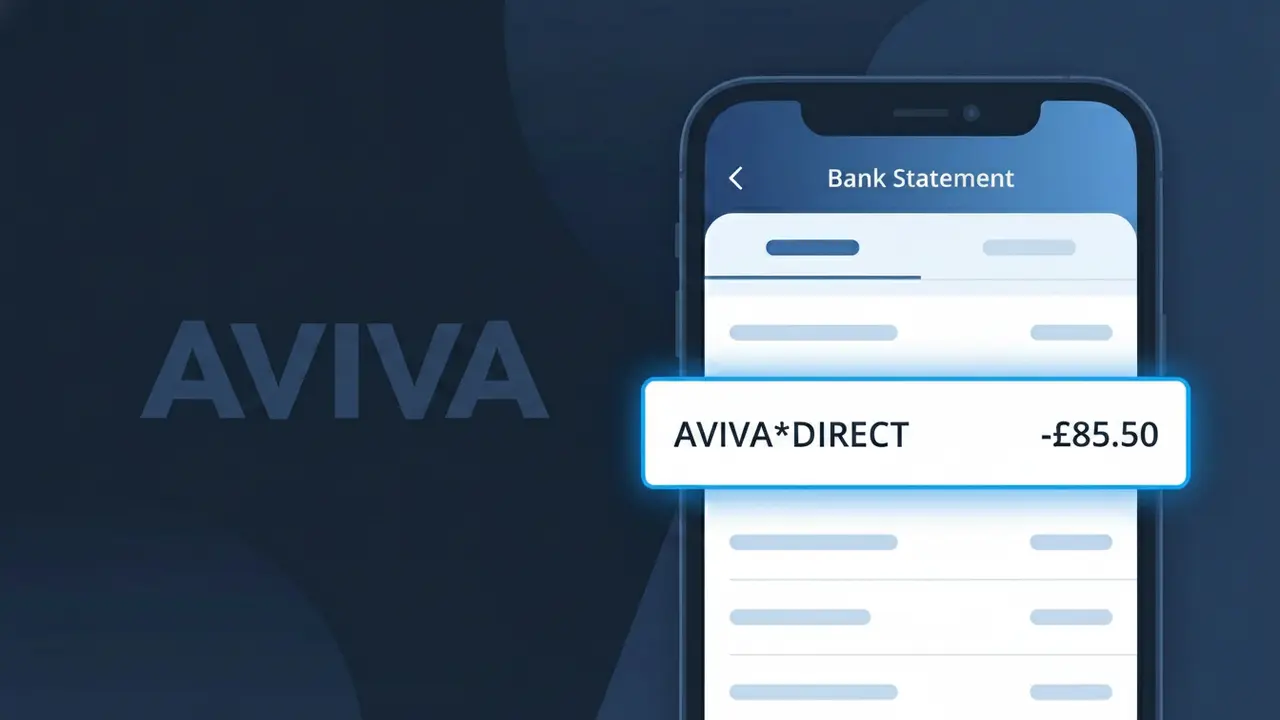
What Is "AVIVA*DIRECT" on My Bank Statement?
The AVIVA*DIRECT charge on your bank statement comes from Aviva, one of the UK's largest and most well-known insurance providers. This charge typically represents a direct payment for an insurance policy, which could cover motor, home, or life insurance products. Aviva processes direct payments under this descriptor when customers pay for their policies online, by phone, or through automatic renewals. If you see AVIVA*DIRECT on your statement, it almost certainly relates to an active insurance policy you hold with Aviva.
The descriptor AVIVA*DIRECT appears on bank statements because Aviva uses this specific billing code to identify payments made directly through their own channels, such as their website or direct debit system, rather than through a broker or third party. The asterisk format is a common convention used by payment processors to separate a company name from a billing sub-category, in this case indicating a direct transaction. If you have recently purchased, renewed, or made a monthly instalment payment on an Aviva insurance policy, this is the descriptor you would expect to see on your bank statement.
ℹ️ Note
In most cases, seeing "AVIVA*DIRECT" on your statement is completely normal. Before assuming fraud, check your recent purchases — most mystery charges have a simple explanation.
Is AVIVA*DIRECT a Legitimate Charge?
The charge AVIVA*DIRECT appearing on your bank or credit card statement is almost always a legitimate billing from AVIVA, one of the UK's largest insurance and financial services providers. This descriptor is typically used when you have purchased a direct insurance policy — such as car, home, life, or travel insurance — directly through AVIVA's website or phone service, rather than through a broker.
- AVIVA*DIRECT commonly appears for direct car or home insurance premium payments
- It may show up as a monthly or annual recurring charge depending on your payment plan
- AVIVA uses this billing descriptor to distinguish direct-channel purchases from broker-arranged policies
- If you recently got an insurance quote and completed a purchase on aviva.com, this charge is expected
If you do not recognise this charge at all, it is worth verifying with other household members or checking for a forgotten policy before assuming fraud.
How to Verify the AVIVA*DIRECT Charge
- 1
Log into your AVIVA account
Visit aviva.com and sign into MyAviva. Check your active policies and billing history to confirm whether a payment matching the charge amount was recently processed.
- 2
Search your email for AVIVA receipts
Search your inbox for emails from AVIVA or aviva.com containing terms like 'policy confirmation', 'payment receipt', or 'renewal notice' that match the charge date.
- 3
Check with other household members
Someone else in your household may have taken out a direct AVIVA insurance policy using your shared bank account or card without informing you.
- 4
Review your insurance renewal schedule
AVIVA*DIRECT charges often appear at annual renewal time. Check whether your car, home, or life insurance policy was due for renewal around the date of the charge.
- 5
Contact your bank for transaction details
Ask your bank for the full merchant details attached to the AVIVA*DIRECT transaction, including the merchant ID, which can help confirm the exact AVIVA policy or product billed.
How to Dispute an AVIVA*DIRECT Charge
- 1
Act within 60 days of the charge
Most banks require you to raise a dispute within 60 days of the transaction date. Do not delay if you believe the AVIVA*DIRECT charge on your statement is unauthorised or incorrect.
- 2
Contact AVIVA directly first
Call AVIVA's customer service on 0800 068 5827 or use the MyAviva online portal to query the charge. AVIVA can often resolve billing errors faster than a bank dispute process.
- 3
File a chargeback with your bank
If AVIVA cannot resolve the issue, contact your bank or card provider to file a formal chargeback, citing the AVIVA*DIRECT charge as unauthorised or duplicate.
- 4
Request a new card if fraud is suspected
If you believe the AVIVA*DIRECT charge is the result of card fraud, ask your bank to cancel your current card and issue a replacement to prevent further unauthorised charges.
Tips for Managing AVIVA*DIRECT Charges
Set a payment alert for AVIVA*DIRECT so you're notified immediately when each premium is charged.
Keep your AVIVA policy documents saved so you can quickly match any AVIVA*DIRECT charge to a specific policy.
Maintain an active MyAviva account login to monitor all your AVIVA policies and upcoming direct billing dates.
Note your AVIVA policy renewal dates in your calendar to anticipate annual AVIVA*DIRECT charges before they appear.
If cancelling an AVIVA policy, confirm in writing that future AVIVA*DIRECT charges will stop to avoid surprise debits.
Use WhatIsThisCharge.net to identify related charges from AVIVA or similar insurance providers on your statement.
Frequently Asked Questions About AVIVA*DIRECT
🔍 Decode this charge instantly
Search our database for AVIVA*DIRECT and similar charges.
Decode AVIVA*DIRECT →Was this article helpful?