Why You're Seeing "BETTERMENT*" on Your Bank Statement
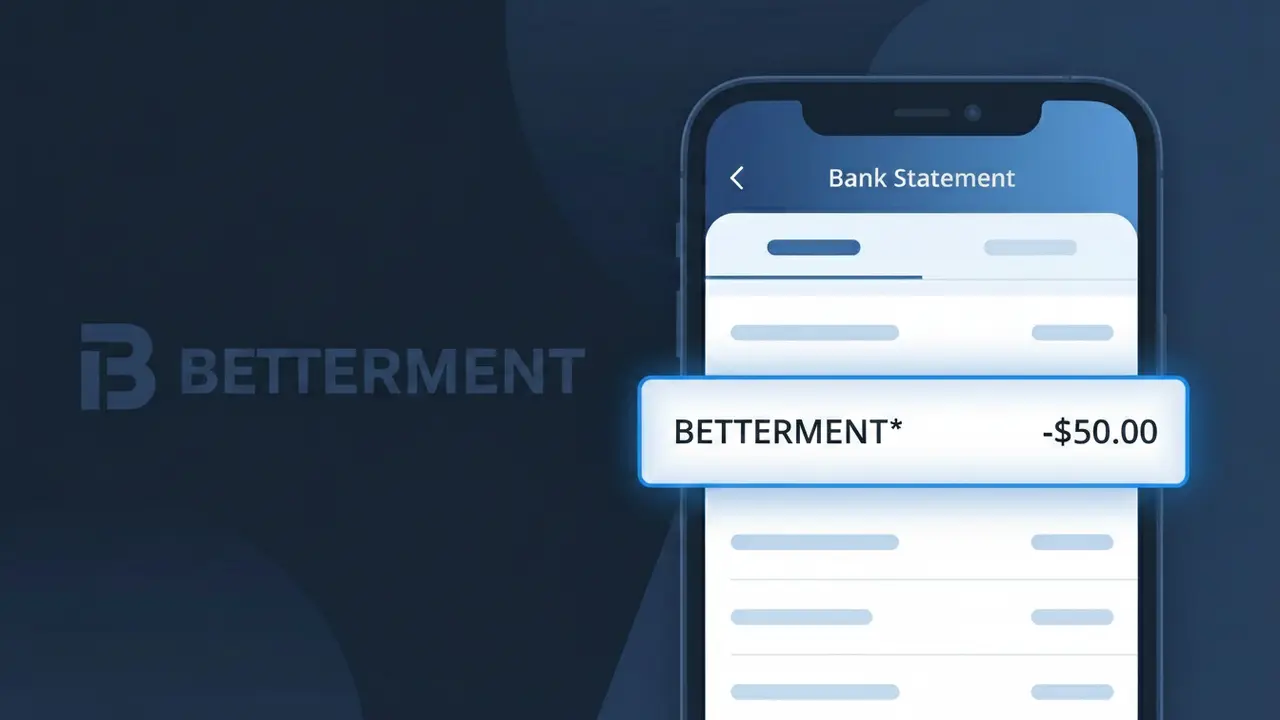
What Is "BETTERMENT*" on My Bank Statement?
A charge showing BETTERMENT* on your bank statement comes from Betterment, one of the leading robo-advisor and automated investing platforms in the United States. This fee represents Betterment's annual management charge, which is billed as a small percentage of your invested assets and debited directly from your linked funding account or investment balance. Betterment uses automated algorithms to manage and rebalance your investment portfolio, and this charge is how they collect payment for that ongoing service. If you or someone with access to your accounts signed up for a Betterment investing, cash management, or retirement account, this descriptor is what will appear on your bank records.
The BETTERMENT* descriptor appears on your bank statement because Betterment processes its advisory fees and account funding transactions under this shortened merchant identifier, which is the name registered with payment processors and card networks. The asterisk following the name is commonly used by financial services companies to indicate a subscription-style or recurring fee associated with a specific account or service tier. This descriptor is consistent across most major banks and credit unions, making it the standard way Betterment's charges are reported in transaction histories.
ℹ️ Note
In most cases, seeing "BETTERMENT*" on your statement is completely normal. Before assuming fraud, check your recent purchases — most mystery charges have a simple explanation.
Is BETTERMENT* a Legitimate Charge?
The BETTERMENT* charge on your bank or credit card statement is almost always a legitimate transaction from Betterment, the popular automated investing and financial planning platform. Betterment charges management fees based on a percentage of your invested assets, typically appearing as BETTERMENT* when processed through their billing system.
Common reasons you may see a BETTERMENT* charge include:
- Annual or quarterly investment management fees deducted from your Betterment investing account
- A fee for Betterment Premium membership, which requires a higher account balance
- A cash transfer or deposit linked to your Betterment checking or savings account
- Fees related to Betterment's crypto portfolio or specialized investment products
If you do not recall signing up for Betterment, it is worth checking whether a family member opened an account, or whether your employer enrolled you in a Betterment 401(k) plan. In rare cases, BETTERMENT* could indicate unauthorized use of your payment method and should be investigated promptly.
How to Verify the BETTERMENT* Charge
- 1
Log into your Betterment account
Visit betterment.com and sign in. Navigate to 'Activity' or 'Statements' to find a transaction matching the BETTERMENT* charge amount and date on your statement.
- 2
Search your email for Betterment receipts
Search your inbox for emails from Betterment (noreply@betterment.com or support@betterment.com). Betterment sends fee notices and transaction confirmations that should match the BETTERMENT* charge.
- 3
Check if a household member has a Betterment account
Ask family members if they linked your shared bank account or card to their own Betterment investment or checking account, which would generate a BETTERMENT* charge.
- 4
Review your Betterment plan and fee schedule
Betterment charges 0.25% annually for its Digital plan and 0.40% for Premium. Check your plan settings in the Betterment app to confirm the fee amount aligns with the BETTERMENT* charge.
- 5
Contact your bank for transaction details
Call the number on the back of your card and ask for the full merchant descriptor for the BETTERMENT* charge. This can help confirm it originated from Betterment's payment processor.
How to Dispute a BETTERMENT* Charge
- 1
Act within 60 days of the charge
Most banks require you to dispute unauthorized charges within 60 days of the statement date. If you spot an unexpected BETTERMENT* charge, begin the dispute process immediately to protect your rights.
- 2
Contact Betterment directly first
Reach Betterment's customer support at support@betterment.com or through their in-app chat. Explain the charge and request a refund or clarification — many billing issues are resolved faster this way than through a bank dispute.
- 3
File a chargeback with your bank
If Betterment does not resolve the issue, contact your bank or card issuer to file a formal chargeback for the BETTERMENT* charge. Provide your account statements and any correspondence with Betterment as supporting evidence.
- 4
Request a new card number
If the BETTERMENT* charge appears fraudulent and you did not authorize it, ask your bank to cancel your current card and issue a new one to prevent any further unauthorized charges from appearing.
Tips for Managing BETTERMENT* Charges
Enable Betterment email notifications so you're alerted whenever a BETTERMENT* fee is deducted from your account.
Download your Betterment annual statement each year to reconcile all BETTERMENT* charges against your bank records.
Secure your Betterment account with two-factor authentication to prevent unauthorized access that could trigger unexpected BETTERMENT* charges.
Betterment deducts management fees quarterly — mark your calendar to expect a BETTERMENT* charge every three months.
If you close your Betterment account, confirm in writing that no future BETTERMENT* fees will be charged to your linked payment method.
Use WhatIsThisCharge.net to identify related charges that may appear alongside BETTERMENT* on your statement.
Frequently Asked Questions About BETTERMENT*
🔍 Decode this charge instantly
Search our database for BETTERMENT* and similar charges.
Decode BETTERMENT* →Was this article helpful?