Why You're Seeing "CVSTARGET*" on Your Bank Statement
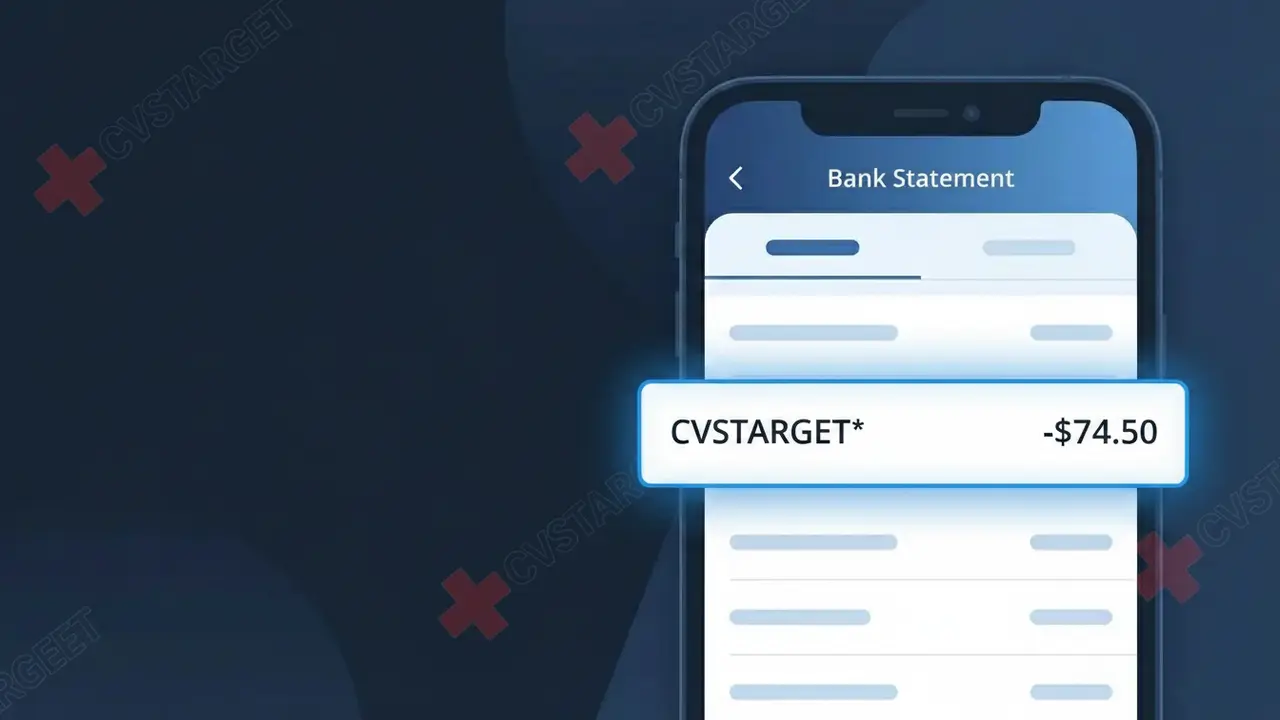
Why You're Seeing "CVSTARGET*" on Your Bank Statement
The CVSTARGET* charge on your bank statement comes from CVS Pharmacy, one of the largest pharmacy and retail health chains in the United States. This descriptor typically appears when you make a purchase at a CVS store, fill a prescription, or complete a transaction through CVS's online or mobile platforms. The asterisk following CVSTARGET* may be accompanied by additional characters identifying a specific store location or transaction type. If you've recently visited a CVS Pharmacy or used their app, this charge is almost certainly a legitimate transaction from that visit.
The CVSTARGET* descriptor appears on your bank statement because CVS Pharmacy uses an abbreviated merchant code system when processing payments through their point-of-sale and payment processing systems. Payment processors often truncate or encode merchant names to fit within the character limits imposed by banking transaction systems, which is why you may not see the full 'CVS Pharmacy' name displayed. This shortened descriptor is the official identifier assigned to CVS transactions by their payment processor, and it is completely normal to see it instead of the recognizable brand name.
Is the CVSTARGET* Charge Legitimate or Fraud?
The CVSTARGET* charge on your bank or credit card statement is most commonly a legitimate transaction from CVS Pharmacy, often associated with purchases made in-store, online at CVS.com, or through the CVS app. This descriptor can appear when CVS Pharmacy processes payments through a specific payment gateway or subsidiary system, which is why it may look unfamiliar at first glance. Before assuming fraud, consider the following common reasons this charge appears:
- An in-store purchase at a CVS Pharmacy location using a debit or credit card
- An online order placed at CVS.com for health, beauty, or prescription products
- A CVS CarePass membership subscription billing on its monthly or annual cycle
- A prescription pickup or auto-refill processed through CVS Pharmacy's system
How to Verify the CVSTARGET* Charge
- 1
Log into your CVS Pharmacy account
Visit CVS.com or open the CVS app and review your order history and purchase receipts to match the CVSTARGET* charge amount and date.
- 2
Search your email for CVS receipts
Search your inbox for emails from CVS Pharmacy around the transaction date — look for order confirmations, prescription notifications, or CarePass billing emails.
- 3
Check with household members
Ask family members or anyone who shares your payment method if they made a CVS Pharmacy purchase, picked up a prescription, or signed up for CarePass recently.
- 4
Review your CVS CarePass subscription
If you are enrolled in CVS CarePass, log into your account to confirm your billing date — the CVSTARGET* charge may reflect your monthly $5 or annual membership fee.
- 5
Contact your bank for more details
Call the number on the back of your card and ask for the full merchant name and location tied to the CVSTARGET* transaction to help pinpoint the specific CVS Pharmacy involved.
How to Dispute a CVSTARGET* Charge
- 1
Act within 60 days
Most banks require disputes to be filed within 60 days of the CVSTARGET* charge appearing on your statement, so act quickly to preserve your right to a chargeback.
- 2
Contact CVS Pharmacy first
Call CVS Pharmacy customer service at 1-800-746-7287 or use the CVS.com chat support to report the unauthorized CVSTARGET* charge and request a direct refund before escalating.
- 3
File a chargeback with your bank
If CVS Pharmacy does not resolve the issue, contact your bank or card issuer to formally dispute the CVSTARGET* charge and provide any documentation such as emails or screenshots.
- 4
Request a new card number
If the CVSTARGET* charge appears fraudulent and you did not shop at CVS Pharmacy, ask your bank to issue a replacement card to prevent any further unauthorized charges.
Tips for Managing CVS Pharmacy Charges
Set up bank alerts for any CVSTARGET* charge so you're notified immediately each time CVS Pharmacy bills your card.
Keep your CVS Pharmacy receipts and email confirmations to quickly cross-reference any CVSTARGET* charge on your statement.
Maintain an updated CVS Pharmacy online account so you can instantly review purchases and CarePass billing tied to CVSTARGET*.
Note your CVS CarePass renewal date to anticipate the CVSTARGET* charge and avoid confusing it with an unauthorized transaction.
Use a dedicated card for CVS Pharmacy purchases to isolate CVSTARGET* charges and simplify monthly budget tracking.
Use WhatIsThisCharge.net to identify related charges from CVS Pharmacy or similar health and pharmacy merchants.
Frequently Asked Questions About the CVSTARGET* Charge
ℹ️ Note
In most cases, a CVSTARGET* charge is a completely normal and expected transaction from CVS Pharmacy — it often reflects a recent prescription pickup, everyday health product purchase, or your monthly CarePass membership renewal. If the amount matches a recent CVS visit or subscription cycle, there is likely no cause for concern.
🔍 Decode this charge instantly
Search our database for CVSTARGET* and similar charges.
Decode CVSTARGET* →Was this article helpful?