Why You're Seeing "WIRE TRANSFER*" on Your Bank Statement
Why You're Seeing "WIRE TRANSFER*" on Your Bank Statement
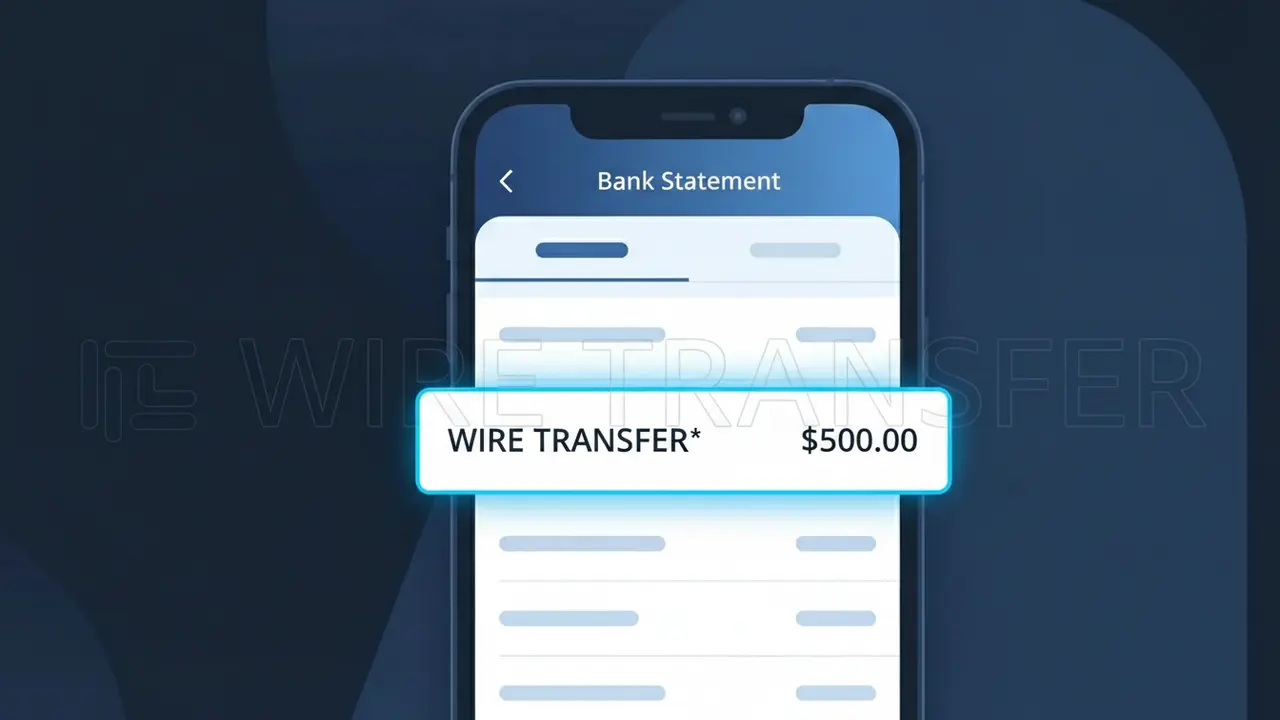
A WIRE TRANSFER* charge on your bank statement refers to a fee assessed by your financial institution for processing an electronic wire transfer of funds. Wire transfers are a method of sending money directly between banks or financial institutions, either domestically or internationally. This charge typically appears when you initiate or receive a wire transfer, as banks commonly charge a fee for facilitating this type of transaction. If you see WIRE TRANSFER* on your statement, it is almost certainly a legitimate banking service fee rather than an unauthorized charge.
The descriptor WIRE TRANSFER* appears on your bank statement because it reflects the specific financial service that was performed, rather than a merchant or brand name. Banks and financial institutions use this straightforward label to clearly identify the nature of the transaction, helping customers distinguish it from other types of transfers like ACH payments or debit card transactions. The asterisk following the descriptor may indicate additional details are associated with the transaction, such as a reference number or destination institution.
Is the WIRE TRANSFER* Charge Legitimate or Fraud?
Seeing WIRE TRANSFER* on your bank statement typically indicates a legitimate wire transfer transaction processed through your bank or a wire transfer service. This charge reflects a fee or the transferred amount associated with sending or receiving funds electronically via Wire Transfer. However, if you don't recall initiating a wire transfer, it's important to investigate immediately, as wire fraud is a common scam.
- You or someone with account access recently sent a domestic or international wire transfer
- Your bank charged a wire transfer fee for processing an outbound or inbound transfer
- A third-party Wire Transfer service you use billed you for a completed transaction
- An unauthorized party gained access to your account and initiated a fraudulent wire transfer
How to Verify the WIRE TRANSFER* Charge
- 1
Check your bank account activity
Log into your online banking portal and look for any wire transfer requests you approved. The WIRE TRANSFER* charge should correspond to a transfer confirmation in your transaction history.
- 2
Search your email for Wire Transfer confirmations
Look for confirmation emails from your bank or Wire Transfer service provider. These emails typically include the transfer amount, recipient, and a reference number matching the WIRE TRANSFER* charge.
- 3
Check with household members or authorized users
Ask other people who have access to your bank account whether they initiated a wire transfer. A family member or joint account holder may have sent funds without notifying you.
- 4
Review recent financial activity
Check if you recently paid a contractor, sent money abroad, closed on real estate, or used a Wire Transfer service. These are common scenarios that generate a WIRE TRANSFER* charge.
- 5
Contact your bank directly
Call the number on the back of your debit or credit card and ask a representative to provide details about the WIRE TRANSFER* charge, including the recipient account and originating request.
How to Dispute a WIRE TRANSFER* Charge
- 1
Act as quickly as possible
Wire transfers are difficult to reverse once processed, so report an unauthorized WIRE TRANSFER* charge to your bank within 24–48 hours. Under federal Regulation E, you have up to 60 days for electronic fund transfer errors, but speed is critical.
- 2
Contact Wire Transfer or your bank first
Reach out directly to your bank's wire transfer department or the Wire Transfer service used. Provide the transaction date, amount, and reference number from the WIRE TRANSFER* charge and request an investigation or recall.
- 3
File a formal dispute or fraud claim
If your bank cannot resolve the issue, file a formal written dispute or fraud claim. For unauthorized WIRE TRANSFER* charges, your bank may initiate a wire recall request with the receiving institution.
- 4
Secure your account immediately
Change your online banking password and enable multi-factor authentication. If fraud is confirmed, request a new account number to prevent additional unauthorized WIRE TRANSFER* charges from occurring.
Tips for Managing Wire Transfer Charges
Enable real-time alerts for any WIRE TRANSFER* activity so you're notified the moment a transfer is initiated.
Always save your Wire Transfer confirmation numbers and receipts for easy reference if a charge is questioned.
Use strong, unique passwords for your Wire Transfer account and banking portal to prevent unauthorized access.
Review your bank statement monthly and reconcile every WIRE TRANSFER* charge against your own transfer records.
Never wire money to unknown recipients — wire fraud is irreversible. Verify recipient details before confirming any transfer.
Use WhatIsThisCharge.net to identify related charges that may appear alongside a WIRE TRANSFER* on your statement.
Frequently Asked Questions About the WIRE TRANSFER* Charge
ℹ️ Note
In most cases, a WIRE TRANSFER* charge simply reflects a legitimate wire transfer fee or transaction you or your bank initiated — such as paying a contractor, purchasing property, or sending money internationally through Wire Transfer. If you recognize the amount and timing, there's likely nothing to worry about.
🔍 Decode this charge instantly
Search our database for WIRE TRANSFER* and similar charges.
Decode WIRE TRANSFER* →Was this article helpful?