Why You're Seeing "PIX TRF ITAU" on Your Bank Statement
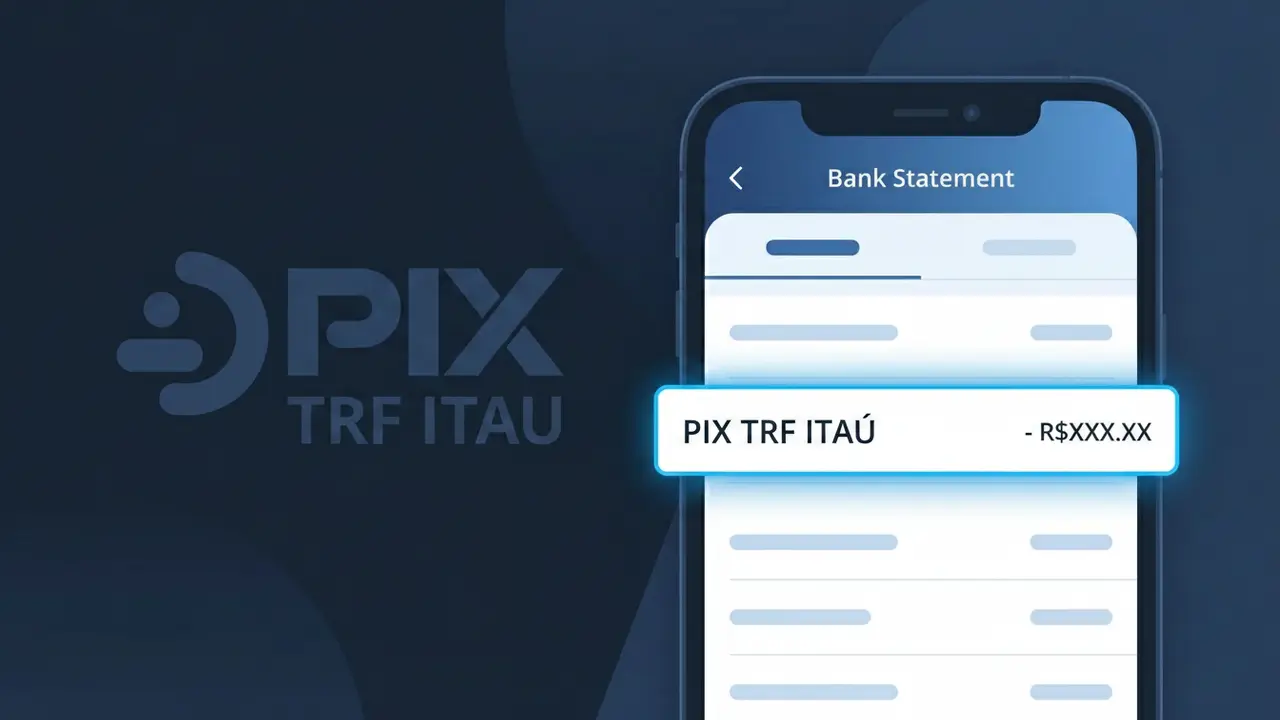
Why You're Seeing "PIX TRF ITAU" on Your Bank Statement
A PIX TRF ITAU charge on your bank statement represents an instant payment transfer made through the PIX system via Itaú, one of Brazil's largest banks. PIX is Brazil's national instant payment network, operated by the Central Bank of Brazil, allowing real-time transfers 24 hours a day, 7 days a week. This descriptor appears when you or someone else initiates a PIX transfer using an Itaú bank account. It is a legitimate transaction and typically reflects a payment sent to a person, business, or service within Brazil.
The descriptor PIX TRF ITAU appears on your bank statement because it is the standardized transaction label used by Itaú bank to identify outgoing or incoming PIX instant payment transfers. Rather than displaying a recipient's name or business, Brazilian banks often use system-level codes to categorize the type and origin of a transaction. This helps financial institutions process and audit high volumes of real-time payments efficiently across Brazil's PIX network.
Is the PIX TRF ITAU Charge Legitimate or Fraud?
If you see PIX TRF ITAU on your bank statement, it most likely represents a legitimate PIX transfer processed through PIX via Itaú Bank, Brazil's leading private bank. PIX is Brazil's instant payment system regulated by the Central Bank of Brazil (Banco Central do Brasil), and Itaú is one of its largest authorized participants. However, it's always wise to confirm the transaction details if you don't immediately recognize the amount.
- PIX TRF ITAU indicates a PIX transfer (TRF = transferência) initiated or received via your Itaú Bank account
- Itaú Bank is an authorized PIX participant under Brazil's Central Bank regulations, making these transactions officially sanctioned
- The charge may reflect a payment you sent, a scheduled transfer, or a payment made to a merchant or individual using your Itaú PIX key
- Fraudulent PIX transactions do occur — if the amount is unfamiliar, verify immediately through the official Itaú app or website
How to Verify the PIX TRF ITAU Charge
- 1
Check your Itaú account transaction history
Log into your PIX via Itaú Bank account through the official Itaú app or itau.com.br and navigate to 'Extrato' (statement) to find the exact PIX TRF ITAU entry, including the recipient's name, CPF/CNPJ, and timestamp.
- 2
Search your email for PIX receipts
Look for confirmation emails or SMS notifications from PIX via Itaú Bank. Itaú sends transfer receipts (comprovantes) that include the full details of every PIX TRF ITAU transaction processed.
- 3
Check with household members or business partners
Ask family members or colleagues who may share access to the Itaú account whether they initiated a PIX transfer. Shared accounts or business accounts often see PIX TRF ITAU charges from multiple users.
- 4
Review any scheduled or recurring PIX payments
In your PIX via Itaú Bank app, check the 'PIX Agendado' (scheduled PIX) section to see if you set up a recurring payment that generated the PIX TRF ITAU charge automatically.
- 5
Contact Itaú Bank customer support directly
If you still cannot identify the PIX TRF ITAU charge, call Itaú's official helpline at 4004-4828 or use the in-app chat to request full transaction details and verify whether the transfer was authorized.
How to Dispute a PIX TRF ITAU Charge
- 1
Act as quickly as possible
PIX transactions are instant and generally irreversible, so report an unauthorized PIX TRF ITAU charge to PIX via Itaú Bank immediately — the sooner you act, the better your chances of recovery through Itaú's fraud mechanisms.
- 2
Contact PIX via Itaú Bank directly first
Call Itaú's fraud hotline at 4004-4828 (capitals) or 0800-722-4828 (other regions) and report the unauthorized PIX TRF ITAU transaction. Itaú may be able to initiate a return request (devolução) with the recipient's bank.
- 3
File a formal dispute via the Itaú app or BACEN
Submit a formal complaint through the PIX via Itaú Bank app under 'Contestar transação,' or escalate to the Central Bank of Brazil (Banco Central) via their Registrato or Ouvidoria channels if Itaú does not resolve the issue.
- 4
Update your PIX keys and account security
If the PIX TRF ITAU charge was fraudulent, immediately change your Itaú account password and PIN, revoke compromised PIX keys in the app, and enable additional security features like biometric authentication to prevent future unauthorized transfers.
Tips for Managing PIX via Itaú Bank Charges
Enable real-time push notifications in the Itaú app so every PIX TRF ITAU transfer alerts you instantly.
Save your PIX TRF ITAU comprovantes (receipts) from Itaú for at least 90 days to resolve any billing disputes quickly.
Regularly review the PIX keys registered to your PIX via Itaú Bank account and delete any keys you no longer use.
Check your Itaú statement weekly for PIX TRF ITAU entries to catch any unauthorized scheduled transfers early.
Use Itaú's PIX transaction limits feature to cap nightly PIX TRF ITAU transfer amounts and reduce fraud exposure.
Use WhatIsThisCharge.net to identify related charges that may appear alongside PIX TRF ITAU on your statement.
Frequently Asked Questions About PIX TRF ITAU
🔍 Decode this charge instantly
Search our database for PIX TRF ITAU and similar charges.
Decode PIX TRF ITAU →Was this article helpful?