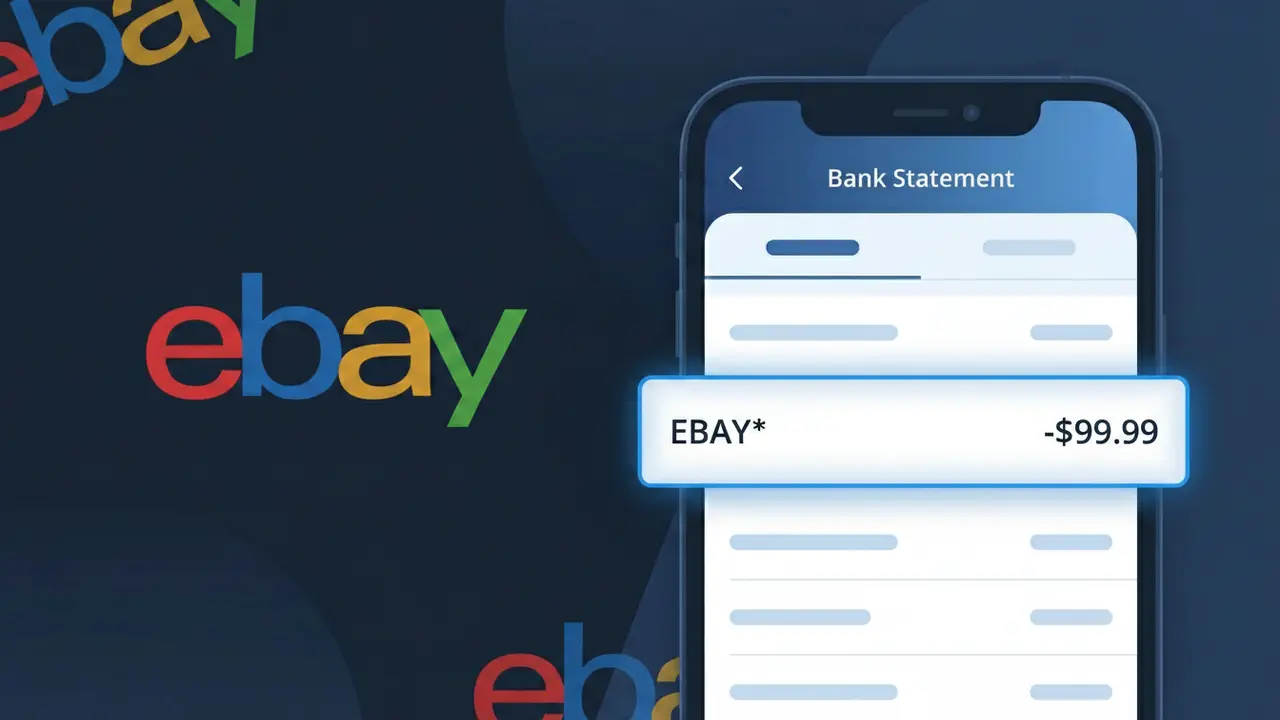
EBAY* Charge (What It Is + Is It Legit?)
✓ LegitimateThe "EBAY*" charge is from eBay. Purchase made on eBay. The text after EBAY* is usually the seller name or order reference.
eBay
Purchase made on eBay. The text after EBAY* is usually the seller name or order reference.
Category
Shopping
Avg. Charge
Variable
Country
US
Billing Cycle
One-time
Cancel At
ebay.com/account
Support
1-866-540-3229
Why this shows on your statement
When eBay processes payments through its marketplace platform, it uses the truncated descriptor format EBAY* to comply with the character limits imposed by card networks like Visa and Mastercard, which typically restrict merchant descriptors to around 22 characters. The asterisk acts as a separator, allowing eBay to append additional identifying information after it — usually the individual seller's username or an order reference number — so buyers can trace exactly which transaction the charge relates to. This format has been a long-standing convention for eBay's billing system, reflecting how the platform handles millions of third-party seller transactions under its own payment infrastructure, particularly since eBay brought payments in-house after transitioning away from PayPal.
What should you do?
Check Your eBay Order History
Log in to your account at ebay.com and navigate to 'My eBay' then 'Purchase History' to match the charge amount with a recent order. The text following EBAY* on your statement is typically the seller's name or an order reference number, which can help you locate the exact transaction.
Verify the Seller and Item Details
Once you find the matching order in your eBay purchase history, confirm the seller name shown after EBAY* on your statement matches the seller listed in the order. This is normal for eBay transactions since payments are processed directly through eBay's platform.
Review Any Active eBay Subscriptions
Visit ebay.com/account to check if you have any active eBay Store subscriptions, promoted listing fees, or seller service fees that could explain the charge, especially if you cannot link it to a specific purchase in your order history.
Contact eBay Support If Unrecognized
If the EBAY* charge still does not match any order or subscription after reviewing your account at ebay.com, contact eBay customer support directly through their help center to report the unrecognized charge and request a full transaction breakdown before escalating to your bank.
💡 Tip — call before disputing
Try calling eBay at 1-866-540-3229 first. Most refund requests get resolved in one call, and bank disputes take 10+ days.
Should you be worried?
No, this is a legitimate charge from eBay. However, if you did not authorize this charge or cancelled your subscription, you may be eligible for a refund.
Is the EBAY* Charge Legitimate or Fraud?
An EBAY* charge on your bank or credit card statement is typically a legitimate transaction processed by eBay, one of the world's largest online marketplaces. This descriptor appears when you purchase an item, pay seller fees, or are billed for an eBay subscription service. However, if you don't recognize the charge, it's worth investigating — unauthorized use of your payment details is always possible.
- You or a household member recently bought an item on eBay and the charge shows as EBAY* followed by a transaction ID
- You have an active eBay Store subscription or eBay seller account with monthly fees billed as EBAY*
- You enrolled in eBay's optional services such as promoted listings or shipping labels, which appear as EBAY* charges
- A saved payment method on your eBay account was used for a purchase you may have forgotten about
How to Verify the EBAY* Charge
- 1
Log into your eBay account
Go to eBay.com and sign in, then navigate to My eBay > Purchase History to match the EBAY* charge amount and date to a specific order.
- 2
Search your email for eBay receipts
Search your inbox for emails from eBay with subject lines like 'Order confirmed' or 'You paid for item' to find a receipt matching the EBAY* charge.
- 3
Check household members
Ask family members or anyone with access to your payment method whether they made a purchase on eBay that could explain the EBAY* charge.
- 4
Review your eBay subscriptions
In your eBay account, go to Account Settings > Subscriptions to see if you have an active eBay Store plan being billed as a recurring EBAY* charge.
- 5
Contact your bank for details
If you still can't identify the EBAY* charge, call your bank and ask for the full merchant name, transaction ID, and any additional details to narrow down the source.
How to Dispute a EBAY* Charge
- 1
Act within 60 days
Most banks require you to dispute an unrecognized EBAY* charge within 60 days of the statement date, so don't delay once you spot a suspicious transaction.
- 2
Contact eBay customer support first
Reach out to eBay directly via their Help & Contact page. eBay can often resolve billing errors, cancel unauthorized charges, or issue refunds faster than a bank dispute.
- 3
File a chargeback with your bank
If eBay does not resolve the issue, contact your bank or credit card issuer to formally dispute the EBAY* charge and request a chargeback for the unauthorized transaction.
- 4
Request a new card number
If fraud is confirmed, ask your bank to issue a replacement card to prevent any further unauthorized EBAY* or other charges to your compromised payment details.
Tips for Managing eBay Charges
Enable eBay purchase notifications so you get an email alert every time an EBAY* charge is processed to your account.
Save all eBay order confirmation emails to easily match any EBAY* charge on your statement to a specific purchase.
Secure your eBay account with a strong, unique password and enable two-factor authentication to prevent unauthorized EBAY* charges.
Note your eBay Store subscription renewal date so you're never surprised by a recurring EBAY* billing charge each month.
Use eBay's Buyer Protection program if an EBAY* charge doesn't match what you received — you may be eligible for a full refund.
Use WhatIsThisCharge.net to identify related charges like EBAY* MARKETPLACE or other eBay billing descriptors on your statement.
How to Dispute an EBAY* Charge
- 1
Act within 60 days of the charge
Most banks require you to report unauthorized charges within 60 days. If you see a suspicious EBAY* charge, don't wait — start the dispute process as soon as possible.
- 2
Contact eBay first
Reach out to eBay customer support at ebay.com/help/contact and explain the unauthorized EBAY* charge. eBay can investigate and often resolve billing issues faster than a bank dispute.
- 3
File a chargeback with your bank or card issuer
If eBay cannot resolve the issue, call the number on the back of your card and dispute the EBAY* charge. Provide transaction details and any communication with eBay as supporting evidence.
- 4
Request a new card number
If the EBAY* charge is confirmed fraudulent and your card details were compromised, ask your bank to issue a new card to prevent further unauthorized charges from eBay or other merchants.
Questions and answers
Was this page helpful?
Community Reports (0)
0 votesNo votes yet — be the first to report on this charge!
Have you seen this charge? Help others by voting:
Community Comments (0)
No comments yet. Be the first to share your experience!
Share your experience
Your email is only used to verify your comment and will never be shown publicly.
Search Another Charge
Popular Charges

Amazon Marketplace
AMZN MKTP US
Netflix
NETFLIX *SUBSCRIPTION
Netflix
NETFLIX.COM *
Apple
APPLE *SUBSCRIPTION
Apple
APPLE.COM/BILL
Related Charges
Need to dispute this charge?
Generate a professional dispute letter in seconds with our AI tool.
Open Charge AssistantCommunity Verified
Real user reports
Free to Use
Always free to check
Secure & Private
Your data is safe
Help Millions
48K+ charges identified