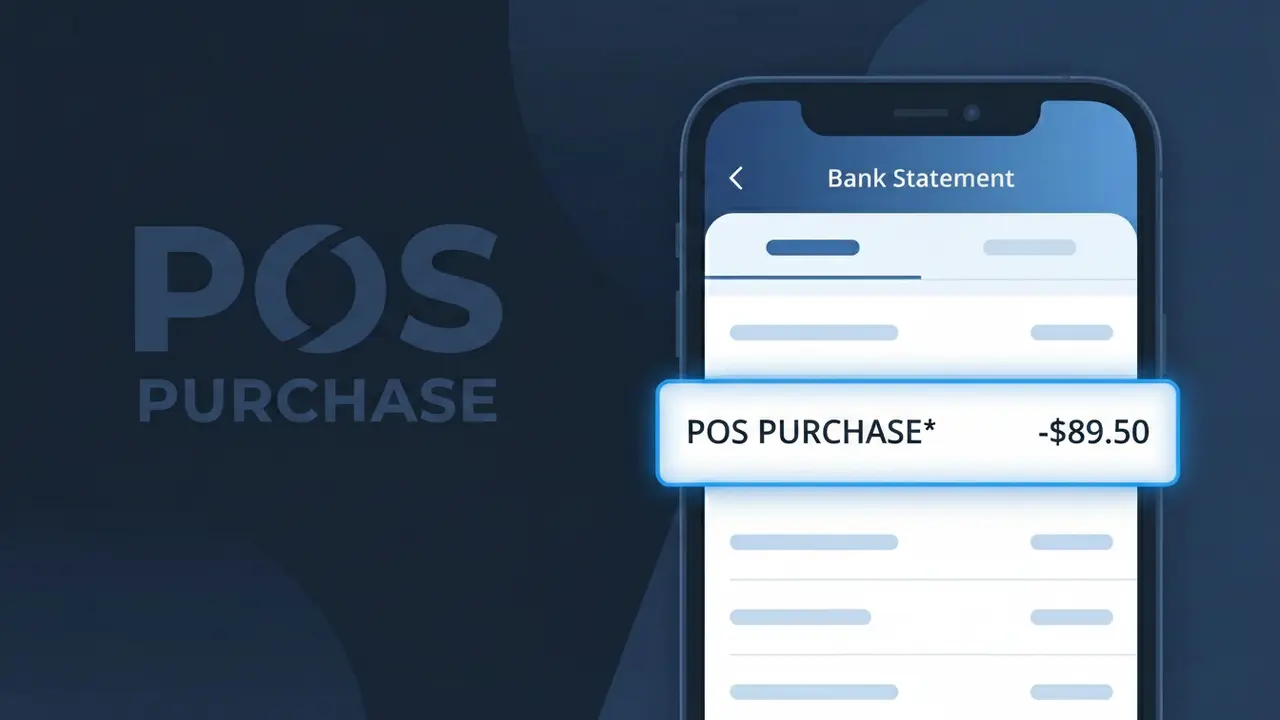
POS PURCHASE* Charge (What It Is + Is It Legit?)
✓ LegitimateThe "POS PURCHASE*" charge is from Point of Sale Purchase. In-store card purchase at point of sale.
Point of Sale Purchase
In-store card purchase at point of sale.
Category
Shopping
Avg. Charge
Variable
Country
US
Billing Cycle
One-time
Cancel At
N/A
Support
See website
Why this shows on your statement
When you use your debit or credit card at a physical retail location, the transaction is processed through the store's point of sale terminal, and the abbreviated descriptor "POS PURCHASE*" shows up on your bank statement simply because payment networks and issuing banks often condense the transaction type label rather than displaying the full phrase "Point of Sale Purchase." The character limit imposed by banking statement systems means that in-store card transactions frequently get shortened to this compact format, with the asterisk sometimes followed by a partial merchant name or left blank depending on how the retailer's terminal is configured. If you see "POS PURCHASE*" on your statement without additional merchant detail, it confirms a one-time in-store card swipe, tap, or dip transaction rather than an online or recurring charge.
What should you do?
Match the POS PURCHASE* charge to a receipt
Look through your physical or digital receipts to find a transaction that matches the POS PURCHASE* amount and date on your statement. Point of Sale Purchase charges appear when you swipe, tap, or insert your card at a physical retail location, so think back to any in-store shopping you did around that time.
Identify the specific store behind the charge
The POS PURCHASE* label indicates an in-store card transaction through a point of sale terminal. Check your bank statement for any additional merchant name or location details listed alongside the charge, and cross-reference it with stores you visited on that date to confirm exactly where the purchase was made.
Review your purchase history at google.com
If you use Google Pay or have linked your card to any Google services for in-store tap payments, visit google.com to review your transaction history. Point of Sale Purchase charges made through digital wallets at physical terminals will often appear in your payment activity log there.
Monitor future POS PURCHASE* charges on your account
Since Point of Sale Purchase charges are legitimate in-store transactions, set up transaction alerts through your bank so you receive real-time notifications for any future POS PURCHASE* charges. This helps you immediately spot any unfamiliar in-store card activity and confirm each charge as it happens.
Should you be worried?
No, this is a legitimate charge from Point of Sale Purchase. However, if you did not authorize this charge or cancelled your subscription, you may be eligible for a refund.
Is the POS PURCHASE* Charge Legitimate or Fraud?
A POS PURCHASE* charge on your bank or credit card statement typically indicates a transaction processed through a Point of Sale Purchase terminal, most commonly at a physical retail location or in-store checkout. This label is a generic descriptor used by many card processors when a card is swiped, tapped, or inserted at a merchant's payment terminal. In most cases, this charge is completely legitimate — but it's worth verifying if you don't recognize the specific amount or accompanying merchant name.
- The POS PURCHASE* prefix is automatically assigned by card networks when a transaction is completed at a physical point-of-sale device
- The merchant name following the asterisk in POS PURCHASE* usually identifies the retailer or store where you shopped
- Point of Sale Purchase charges can appear for grocery stores, gas stations, pharmacies, restaurants, and other retail outlets
- If the amount matches a recent in-store purchase, the POS PURCHASE* entry is almost certainly a valid transaction
How to Verify the POS PURCHASE* Charge
- 1
Check your recent receipts
Gather any paper or digital receipts from recent in-store shopping trips. Compare the dollar amount on your statement to your receipts — a matching figure strongly confirms the POS PURCHASE* charge is from a legitimate Point of Sale Purchase transaction you made.
- 2
Search your email for confirmations
Look in your inbox for any order confirmations or e-receipts that match the POS PURCHASE* charge date and amount. Many Point of Sale Purchase merchants now send digital receipts automatically to the email on file.
- 3
Check with household members
If you share a bank account or card, ask other authorized users whether they made a Point of Sale Purchase recently. A family member's shopping trip often explains an unfamiliar POS PURCHASE* entry on a shared statement.
- 4
Review your shopping history
Think back to any stores, gas stations, or restaurants you visited around the charge date. Point of Sale Purchase transactions post within 1–3 business days, so match the POS PURCHASE* date to your recent outings.
- 5
Contact your bank for merchant details
If you still can't identify the POS PURCHASE* charge, call the number on the back of your card. Your bank can often provide expanded merchant information, including the full business name and location tied to the Point of Sale Purchase transaction.
How to Dispute a POS PURCHASE* Charge
- 1
Act within 60 days
Most banks require you to dispute a POS PURCHASE* charge within 60 days of the statement date it appears on. Acting quickly gives you the strongest protection under the Fair Credit Billing Act for any unauthorized Point of Sale Purchase transaction.
- 2
Contact the merchant directly first
If you recognize the Point of Sale Purchase merchant but believe the amount is wrong, reach out to the store directly with your receipt. Many billing errors from a POS PURCHASE* transaction can be resolved faster through the merchant than through a formal bank dispute.
- 3
File a chargeback with your bank
If the merchant is unresponsive or the POS PURCHASE* charge is completely unrecognized, contact your bank or card issuer to initiate a chargeback. Provide any receipts, photos, or correspondence that confirm you did not authorize the Point of Sale Purchase.
- 4
Request a new card number
If the POS PURCHASE* charge appears fraudulent and you suspect your card details were compromised at a Point of Sale Purchase terminal, ask your bank to cancel the current card and issue a new one with a different number to prevent further unauthorized charges.
Tips for Managing Point of Sale Purchase Charges
Enable real-time bank alerts to get notified instantly whenever a POS PURCHASE* charge posts to your account.
Save all in-store receipts for at least 30 days so you can quickly match any POS PURCHASE* entry on your statement.
Use a dedicated card for in-store shopping so Point of Sale Purchase charges are easy to isolate and review each month.
Review your statement weekly rather than monthly to catch any suspicious POS PURCHASE* charges before the dispute window narrows.
Use a credit card instead of a debit card at Point of Sale Purchase terminals for stronger fraud liability protection.
Use WhatIsThisCharge.net to identify any related or unfamiliar charges that appear alongside POS PURCHASE* on your statement.
ℹ️ Note
In most cases, a <strong>POS PURCHASE*</strong> charge is simply a routine Point of Sale Purchase transaction from a store, restaurant, or gas station you visited recently — seeing this label on your statement is completely normal and typically nothing to worry about.
Questions and answers
Was this page helpful?
Community Reports (0)
0 votesNo votes yet — be the first to report on this charge!
Have you seen this charge? Help others by voting:
Community Comments (0)
No comments yet. Be the first to share your experience!
Share your experience
Your email is only used to verify your comment and will never be shown publicly.
Search Another Charge
Popular Charges

Amazon Marketplace
AMZN MKTP US
Netflix
NETFLIX *SUBSCRIPTION
Apple
APPLE *SUBSCRIPTION
Netflix
NETFLIX.COM *
Apple
APPLE.COM/BILL
Related Charges
Need to dispute this charge?
Generate a professional dispute letter in seconds with our AI tool.
Open Charge AssistantCommunity Verified
Real user reports
Free to Use
Always free to check
Secure & Private
Your data is safe
Help Millions
48K+ charges identified