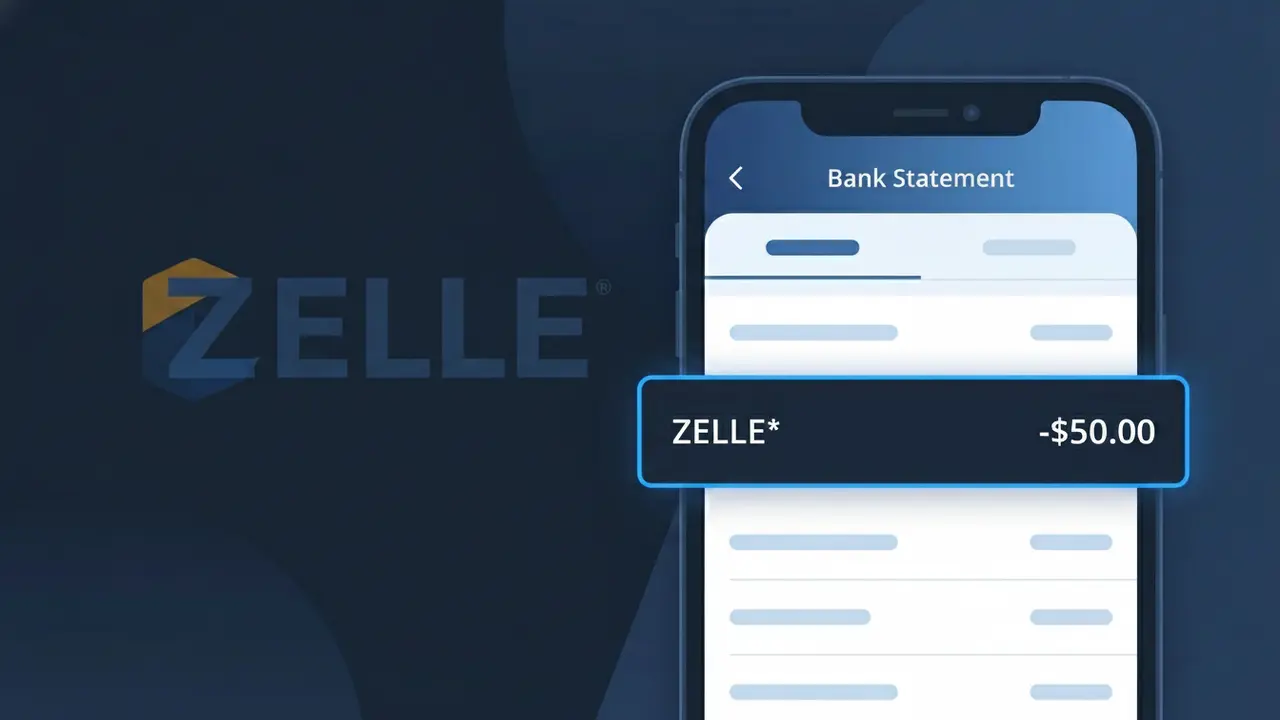
ZELLE* Charge (What It Is + Is It Legit?)
✓ LegitimateThe "ZELLE*" charge is from Zelle. Zelle bank transfer charge.
Zelle
Zelle bank transfer charge.
Category
Finance
Avg. Charge
Variable
Country
US
Billing Cycle
One-time
Cancel At
zellepay.com
Support
See website
Why this shows on your statement
When Zelle processes peer-to-peer money transfers through its network, the billing descriptor is truncated to "ZELLE*" on bank statements because financial institutions and payment systems often apply character limits to transaction descriptions, causing the platform name to appear with an asterisk that typically signals a digital payment service or third-party transfer. Zelle operates as a product of Early Warning Services, LLC, and the asterisk format follows a common convention used by bank-integrated payment platforms to distinguish their transactions from standard merchant purchases. If you see "ZELLE*" on your statement, it almost certainly reflects a person-to-person transfer you initiated or received through the Zelle network, rather than a traditional retail charge.
What should you do?
Check Your Zelle Activity
Log into your bank's app or visit zellepay.com and review your recent Zelle transaction history to match the ZELLE* charge on your statement with a specific payment you sent or received.
Identify the Recipient
In your Zelle transaction history, locate the specific transfer and confirm the recipient's name, phone number, or email address matches someone you intentionally sent money to.
Review Your Zelle Settings
Visit zellepay.com or open your bank's Zelle section to review any recurring or scheduled Zelle payments that may be set up on your account, ensuring no unauthorized transfers are pending.
Contact Zelle Support if Needed
If the ZELLE* charge matches a transfer you recognize, no action is needed. However, if something looks off, visit zellepay.com to reach Zelle's support team and report any discrepancies directly through your linked bank or credit union.
Should you be worried?
No, this is a legitimate charge from Zelle. However, if you did not authorize this charge or cancelled your subscription, you may be eligible for a refund.
Is the ZELLE* Charge Legitimate or Fraud?
Seeing ZELLE* on your bank or credit card statement typically means a payment was sent or received through Zelle, the peer-to-peer money transfer service integrated directly into most major U.S. banks. This charge is usually legitimate, but because Zelle transfers are nearly instant and hard to reverse, unauthorized ZELLE* charges should be investigated immediately.
- You or someone with access to your banking app sent a Zelle payment recently
- A recurring payment to a person or small business was processed via Zelle
- A family member or household user sent money using your linked bank account
- A scammer gained access to your account and initiated an unauthorized ZELLE* transfer
How to Verify the ZELLE* Charge
- 1
Check your Zelle activity
Log into your bank's app or Zelle app and review your recent Zelle transaction history. The ZELLE* charge should match a specific recipient name, date, and amount.
- 2
Search your email for Zelle receipts
Search your inbox for emails from Zelle (no-reply@zellepay.com). Every completed Zelle transaction generates a confirmation email with the recipient and amount.
- 3
Check with household members
Ask family members or anyone who shares access to your bank account whether they sent a Zelle payment. Shared banking apps can lead to unexpected ZELLE* charges.
- 4
Review any recurring Zelle payments
Some users set up recurring payments through Zelle to landlords or service providers. Check if the ZELLE* charge amount matches a regular payment you may have scheduled.
- 5
Contact your bank directly
If you still can't identify the ZELLE* charge, call the number on the back of your bank card. Your bank can provide details about the linked Zelle account that initiated the transfer.
How to Dispute a ZELLE* Charge
- 1
Act quickly — time is critical
Zelle transfers are instant and generally irreversible, so report an unauthorized ZELLE* charge to your bank within 60 days of your statement date to preserve your dispute rights under federal Regulation E.
- 2
Contact Zelle support first
Reach out to Zelle directly at 1-844-428-8542 or through their website at zellepay.com. Explain that you did not authorize the ZELLE* transaction and request an investigation.
- 3
File a dispute with your bank
If Zelle does not resolve the issue, escalate the ZELLE* dispute to your bank or credit union. Under Regulation E, if the transfer was truly unauthorized (not a scam you authorized), your bank may be required to reimburse you.
- 4
Secure your account immediately
Change your banking and Zelle-linked account passwords right away. If fraud is confirmed, request your bank issue a new account number to prevent further unauthorized ZELLE* charges.
Tips for Managing Zelle Charges
Enable real-time push notifications in your banking app so every ZELLE* transfer alerts you instantly.
Always double-check the recipient's phone number or email before confirming any Zelle payment — errors are hard to reverse.
Use a unique, strong password for your Zelle-linked bank account and enable two-factor authentication.
Review your bank statement monthly and flag any ZELLE* charge you don't recognize within the same billing cycle.
Never send Zelle payments to strangers — Zelle offers no buyer protection for authorized payments sent to scammers.
Use WhatIsThisCharge.net to identify related charges that appear alongside ZELLE* on your statement.
ℹ️ Note
In most cases, a ZELLE* charge on your statement simply reflects a peer-to-peer payment you or someone in your household sent through Zelle — one of the most widely used money transfer tools built directly into U.S. bank apps. If the amount and timing match a recent payment you made, there is nothing to worry about.
Questions and answers
Was this page helpful?
Community Reports (1)
1 votesHave you seen this charge? Help others by voting:
Community Comments (0)
No comments yet. Be the first to share your experience!
Share your experience
Your email is only used to verify your comment and will never be shown publicly.
Search Another Charge
Popular Charges

Amazon Marketplace
AMZN MKTP US
Netflix
NETFLIX *SUBSCRIPTION
Netflix
NETFLIX.COM *
Apple
APPLE *SUBSCRIPTION
Apple
APPLE.COM/BILL
Need to dispute this charge?
Generate a professional dispute letter in seconds with our AI tool.
Open Charge AssistantCommunity Verified
Real user reports
Free to Use
Always free to check
Secure & Private
Your data is safe
Help Millions
48K+ charges identified