Why You're Seeing "GRAB PH*" on Your Bank Statement
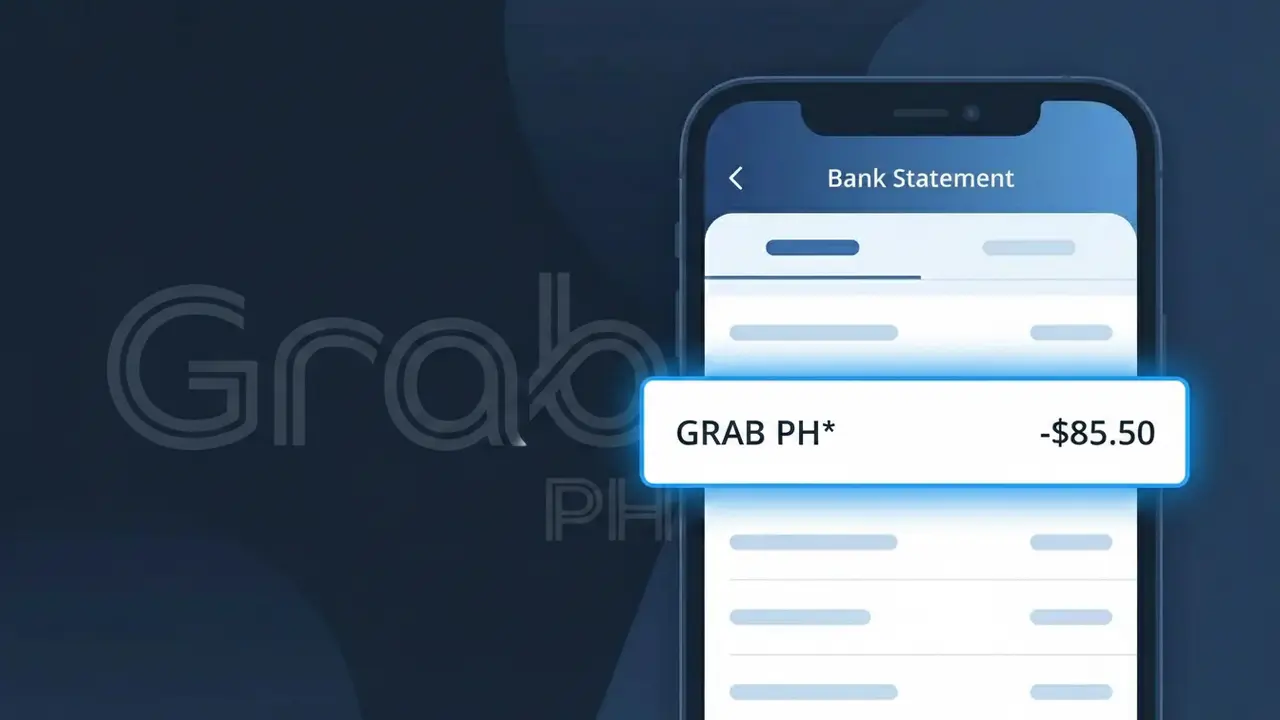
Why You're Seeing "GRAB PH*" on Your Bank Statement
A GRAB PH* charge on your bank statement comes from Grab Philippines, the popular Southeast Asian superapp widely used across the Philippines. This descriptor appears when you use any of Grab's services, including ride-hailing, GrabFood delivery, GrabMart grocery shopping, or GrabPay digital wallet transactions. Grab processes payments under the GRAB PH* descriptor to consolidate all of its Philippine-based service charges under a single recognizable billing label. If you or someone with access to your payment method has recently used the Grab app in the Philippines, this charge is most likely legitimate.
The GRAB PH* descriptor appears on your bank statement because Grab Philippines uses a standardized billing identifier that its payment processor submits to card networks for all transactions originating from its Philippine operations. The 'PH' portion of the descriptor specifically identifies the country of origin, helping distinguish it from Grab charges in other Southeast Asian markets like Singapore or Malaysia. Because Grab offers multiple services under one app, a single GRAB PH* entry could represent anything from a ride fare to a food delivery or an in-app GrabPay top-up.
Is the GRAB PH* Charge Legitimate or Fraud?
The GRAB PH* charge on your bank or credit card statement is almost always a legitimate transaction from Grab Philippines, one of Southeast Asia's largest super-app platforms offering ride-hailing, food delivery (GrabFood), and digital payments (GrabPay). This truncated billing descriptor is how Grab Philippines appears on financial statements processed through Philippine payment networks. Before assuming fraud, consider the following common reasons this charge appears:
- You booked a GrabCar, GrabBike, or other transport service through the Grab Philippines app
- You placed a GrabFood delivery order billed directly to your linked card
- You topped up your GrabPay wallet or made an in-app purchase via Grab Philippines
- A family member or friend used your card linked to their Grab Philippines account
How to Verify the GRAB PH* Charge
- 1
Check your Grab Philippines app
Open the Grab app and navigate to 'Activity' or 'My Rides/Orders' to find transactions matching the GRAB PH* charge date and amount on your statement.
- 2
Search your email for Grab Philippines receipts
Search your inbox for emails from 'no-reply@grab.com' or 'Grab Philippines' — every completed booking or order generates an automatic receipt with a full breakdown.
- 3
Check household members' Grab accounts
Ask family members if they used a shared card linked to their own Grab Philippines account, as GRAB PH* charges can originate from any linked user.
- 4
Review your GrabPay wallet activity
If you have a GrabPay wallet, check your transaction history in the app — automatic wallet top-ups from your card will also appear as GRAB PH* on your bank statement.
- 5
Contact your bank for details
Ask your bank for the full merchant ID behind the GRAB PH* descriptor. This can confirm whether the charge originated from Grab Philippines' official payment processor.
How to Dispute a GRAB PH* Charge
- 1
Act within 60 days of the charge
Most Philippine banks allow disputes within 60 days of the GRAB PH* charge appearing on your statement. Acting promptly protects your chargeback rights under Bangko Sentral ng Pilipinas guidelines.
- 2
Contact Grab Philippines support first
Reach out via the Grab app's Help Center or at grab.com/ph/support. Grab Philippines can often resolve billing errors or unauthorized GRAB PH* charges faster than a formal bank dispute.
- 3
File a chargeback with your bank
If Grab Philippines cannot resolve the issue, call your bank's disputes hotline and cite the specific GRAB PH* transaction date, amount, and that it is unauthorized or unrecognized.
- 4
Request a new card if fraud is suspected
If you believe your card details were stolen and used on Grab Philippines, ask your bank to cancel the compromised card and issue a new one to prevent further GRAB PH* charges.
Tips for Managing Grab Philippines Charges
Enable real-time bank alerts to catch any unexpected GRAB PH* charge the moment it posts.
Always cross-check GRAB PH* amounts against your Grab Philippines in-app activity history monthly.
Secure your Grab Philippines account with a strong password and two-factor authentication to prevent unauthorized charges.
If subscribed to GrabUnlimited, note its monthly renewal date so GRAB PH* subscription fees don't catch you off guard.
Only save cards on verified Grab Philippines accounts — never share your login to avoid fraudulent GRAB PH* charges.
Use WhatIsThisCharge.net to identify any related or unfamiliar charges appearing alongside GRAB PH* on your statement.
Frequently Asked Questions About the GRAB PH* Charge
ℹ️ Note
In most cases, a GRAB PH* charge simply reflects a recent Grab Philippines ride, GrabFood order, or GrabPay wallet top-up — opening your Grab app and checking your activity history will almost always match the charge and put your mind at ease.
🔍 Decode this charge instantly
Search our database for GRAB PH* and similar charges.
Decode GRAB PH* →Was this article helpful?