Why You're Seeing "OVERDRAFT*" on Your Bank Statement
Why You're Seeing "OVERDRAFT*" on Your Bank Statement
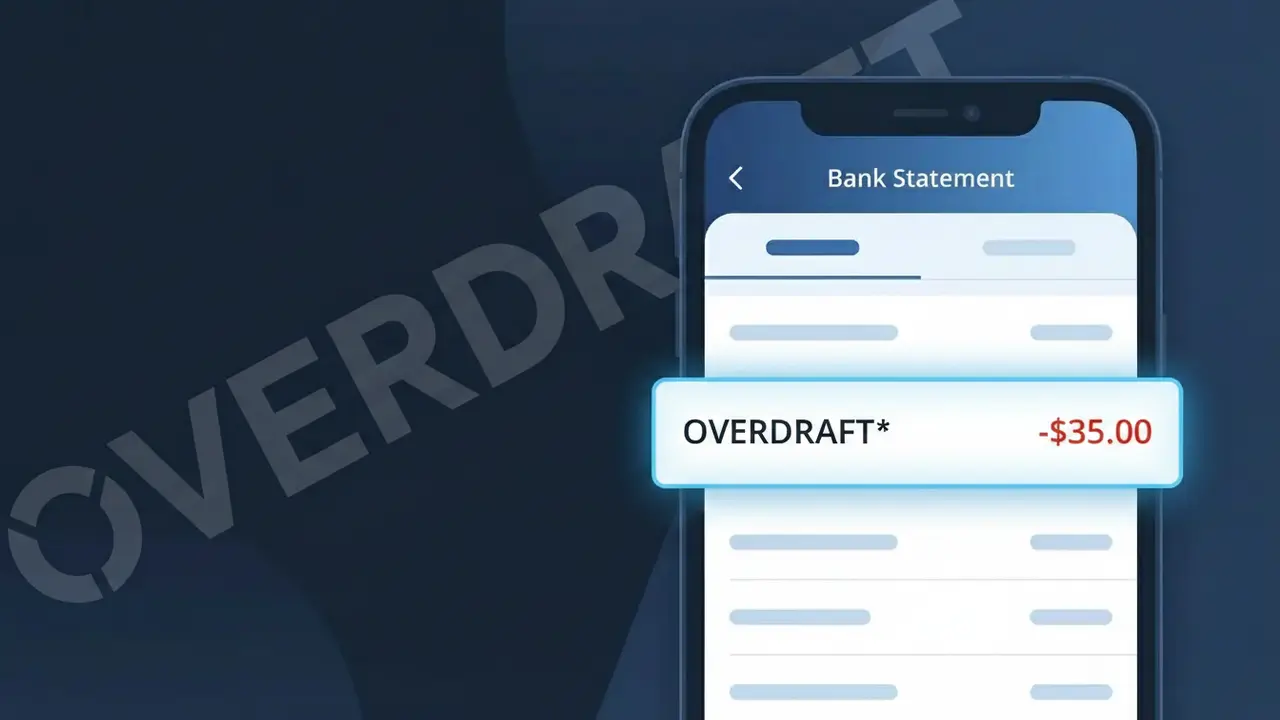
The OVERDRAFT* charge on your bank statement is a fee assessed by your bank when you spend more money than is available in your account. This charge appears when a transaction causes your balance to go below zero, and your bank covers the difference rather than declining the payment. Overdraft fees are one of the most common banking charges in the US, typically ranging from $25 to $38 per occurrence depending on your financial institution. Understanding this charge can help you take steps to avoid it in the future through overdraft protection programs or balance monitoring.
The descriptor OVERDRAFT* appears on your bank statement as a standardized internal label used by financial institutions to categorize and identify penalty fees related to negative account balances. Banks use this shorthand descriptor rather than a branded name because the charge is generated directly by the bank's own fee processing system, not by an external merchant or service. The asterisk following the word may indicate a specific fee tier, account type, or processing batch used internally by your bank's billing system.
Is the OVERDRAFT* Charge Legitimate or Fraud?
The OVERDRAFT* charge appearing on your bank statement is typically a legitimate fee assessed by your bank or financial institution under the category of Overdraft Fee. This charge occurs when a transaction causes your account balance to drop below zero and your bank covers the shortfall on your behalf. However, it's worth verifying the charge since unauthorized account access or billing errors can sometimes produce unexpected fees.
- Your account balance fell below $0 and the bank paid a pending transaction anyway
- You have an overdraft protection service enabled that triggered automatically
- A scheduled or recurring payment posted when insufficient funds were available
- A hold or pending transaction reduced your available balance below the required threshold
How to Verify the OVERDRAFT* Charge
- 1
Check your account transaction history
Log into your online banking or mobile app and look for a transaction dated the same day as the OVERDRAFT* charge. The triggering transaction — such as a debit card purchase or ACH payment — should appear just before the Overdraft Fee entry.
- 2
Search your email for bank notifications
Look for automated alert emails or text messages from your bank warning that your balance was low or that an Overdraft Fee was assessed. Most banks send these notifications at the time the OVERDRAFT* charge is applied.
- 3
Check with household members
If others share your account or have a linked debit card, ask whether they made a purchase that may have exceeded the available balance, triggering the OVERDRAFT* charge without your direct knowledge.
- 4
Review any scheduled or recurring payments
Check your list of automatic bill payments, subscriptions, or loan installments. A recurring charge posting on an unexpected date is a common cause of the OVERDRAFT* Overdraft Fee appearing on your statement.
- 5
Contact your bank directly
Call the number on the back of your debit card or visit a branch and ask a representative to identify exactly which transaction triggered the OVERDRAFT* charge and confirm the Overdraft Fee amount and date.
How to Dispute an OVERDRAFT* Charge
- 1
Act within 60 days of the statement date
Federal Regulation E gives you 60 days from the statement date to formally dispute an erroneous OVERDRAFT* charge. Acting quickly improves your chances of a full refund of the Overdraft Fee.
- 2
Contact your bank's Overdraft Fee department first
Call or visit your bank and politely explain why you believe the OVERDRAFT* charge was applied in error — for example, if funds were available or a deposit was pending. Many banks will waive a first-time Overdraft Fee as a courtesy.
- 3
Submit a formal written dispute
If a phone call doesn't resolve the issue, submit a written dispute through your bank's secure message center or by certified mail. Reference the exact OVERDRAFT* charge amount, date, and the transaction you believe triggered it incorrectly.
- 4
Escalate to the CFPB if unresolved
If your bank refuses to reverse an unjustified OVERDRAFT* Overdraft Fee, file a complaint with the Consumer Financial Protection Bureau (CFPB) at consumerfinance.gov. This often prompts a faster resolution from your financial institution.
Tips for Managing Overdraft Fee Charges
Set low-balance alerts in your banking app so you're warned before an OVERDRAFT* fee is triggered.
Review your bank's Overdraft Fee schedule so you know exactly how much each OVERDRAFT* charge will cost.
Link a savings account or credit card as overdraft protection to avoid the standard Overdraft Fee entirely.
Align recurring bill payment dates with your paycheck deposit date to prevent low-balance OVERDRAFT* situations.
Opt out of debit card overdraft coverage if you prefer declined transactions over paying an Overdraft Fee.
Use WhatIsThisCharge.net to identify related charges and confirm whether an OVERDRAFT* line is from your bank.
Frequently Asked Questions About the OVERDRAFT* Charge
ℹ️ Note
The OVERDRAFT* charge is most commonly a legitimate Overdraft Fee applied by your bank when a payment posted while your balance was insufficient — not fraud. In many cases, a single phone call to your bank is all it takes to understand or even reverse the charge.
🔍 Decode this charge instantly
Search our database for OVERDRAFT* and similar charges.
Decode OVERDRAFT* →Was this article helpful?