Why You're Seeing "PG&E*" on Your Bank Statement
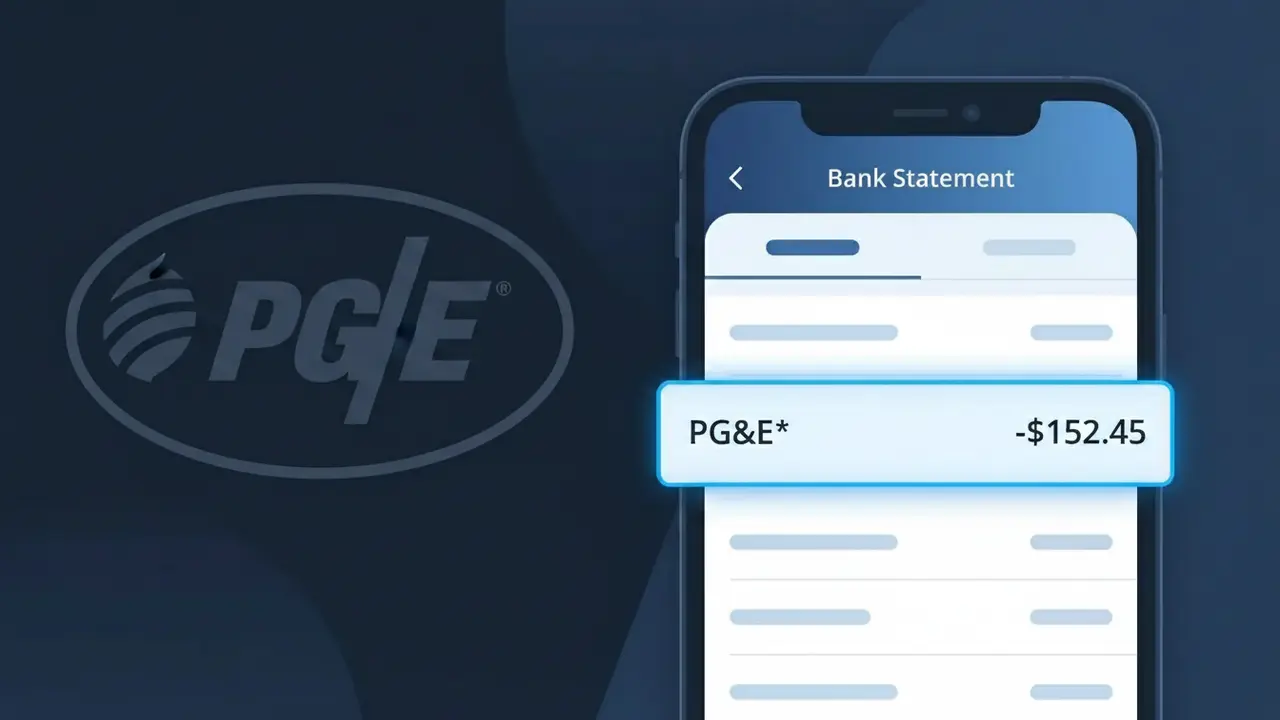
Why You're Seeing "PG&E*" on Your Bank Statement
A charge showing PG&E* on your bank statement comes from Pacific Gas & Electric, one of California's largest utility providers. This charge represents payment for electricity and/or natural gas service delivered to your home or business in northern or central California. PG&E bills customers monthly based on their energy consumption, so you'll typically see this descriptor appear on a regular basis. If you've recently moved to a PG&E service area or set up autopay, this is the expected charge for keeping your lights and heat running.
The descriptor PG&E* appears on your bank statement because Pacific Gas & Electric uses an abbreviated version of their company name when processing payments through their billing system. The asterisk following the abbreviation is commonly used by utility companies to separate the merchant identifier from additional transaction details such as an account number or service location. This shortened format is a standard practice in payment processing and simply reflects how PG&E submits charges to card networks and banks.
Is the PG&E* Charge Legitimate or Fraud?
A PG&E* charge on your bank or credit card statement is almost always a legitimate billing from Pacific Gas & Electric, the major utility provider serving Northern and Central California. This charge typically appears when PG&E processes a payment for your natural gas or electricity service, either as a one-time payment or through their autopay program.
- You or a household member enrolled in PG&E's automatic bill payment program
- A one-time online payment was made at pge.com for your utility bill
- A budget billing or deposit payment was processed by Pacific Gas & Electric
- A reconnection fee or service charge was applied to your PG&E account
How to Verify the PG&E* Charge
- 1
Log into your PG&E account
Visit pge.com and sign in to your Pacific Gas & Electric account. Navigate to 'Billing & Payment History' to match the charge amount and date to your records.
- 2
Search your email for PG&E receipts
Search your inbox for emails from Pacific Gas & Electric (noreply@pge.com or billing@pge.com). PG&E sends payment confirmation emails that will match the PG&E* charge on your statement.
- 3
Check with household members
Ask other members of your household whether they made a payment to Pacific Gas & Electric. Multiple adults on the same account may submit payments independently.
- 4
Review your autopay enrollment
If you enrolled in PG&E's autopay program, the PG&E* charge will appear automatically each billing cycle. Log into pge.com to confirm your autopay status and scheduled amounts.
- 5
Contact your bank
If you still cannot reconcile the PG&E* charge, call the number on the back of your card. Your bank can provide the exact merchant ID and transaction details tied to the charge.
How to Dispute a PG&E* Charge
- 1
Act within 60 days
Most banks require disputes to be filed within 60 days of the statement date. Don't delay if you believe the PG&E* charge is unauthorized or incorrect — start the process immediately.
- 2
Contact Pacific Gas & Electric first
Call PG&E customer service at 1-800-743-5000 or log into pge.com to dispute a billing error directly. Pacific Gas & Electric can often resolve overcharges or duplicate payments faster than a bank dispute.
- 3
File a chargeback with your bank
If Pacific Gas & Electric cannot resolve the issue, contact your bank or card issuer to dispute the PG&E* charge formally. Provide your PG&E account number, the charge amount, and any correspondence with PG&E as evidence.
- 4
Request a new card if fraud is suspected
If you do not have a PG&E account and the PG&E* charge is completely unrecognized, request a replacement card from your bank immediately to prevent further unauthorized transactions.
Tips for Managing Pacific Gas & Electric Charges
Enable PG&E bill-ready alerts at pge.com so you're notified before each PG&E* charge hits your card.
Download your PG&E monthly statements and cross-reference them with every PG&E* charge on your bank statement.
Keep your Pacific Gas & Electric online account credentials updated and check your payment methods regularly.
PG&E billing cycles are monthly — note your cycle close date to anticipate when the PG&E* charge will appear.
Set a bank account alert for any PG&E* transactions over your typical bill amount to catch errors fast.
Use WhatIsThisCharge.net to identify related charges that may appear alongside your PG&E* transaction.
Frequently Asked Questions About the PG&E* Charge
ℹ️ Note
In most cases, a PG&E* charge is simply Pacific Gas & Electric collecting payment for your monthly utility bill — either through autopay or a one-time payment you or a household member submitted. A quick login to pge.com is usually all it takes to confirm the charge and put your mind at ease.
Was this article helpful?