Why You're Seeing "ROBINHOOD*" on Your Bank Statement
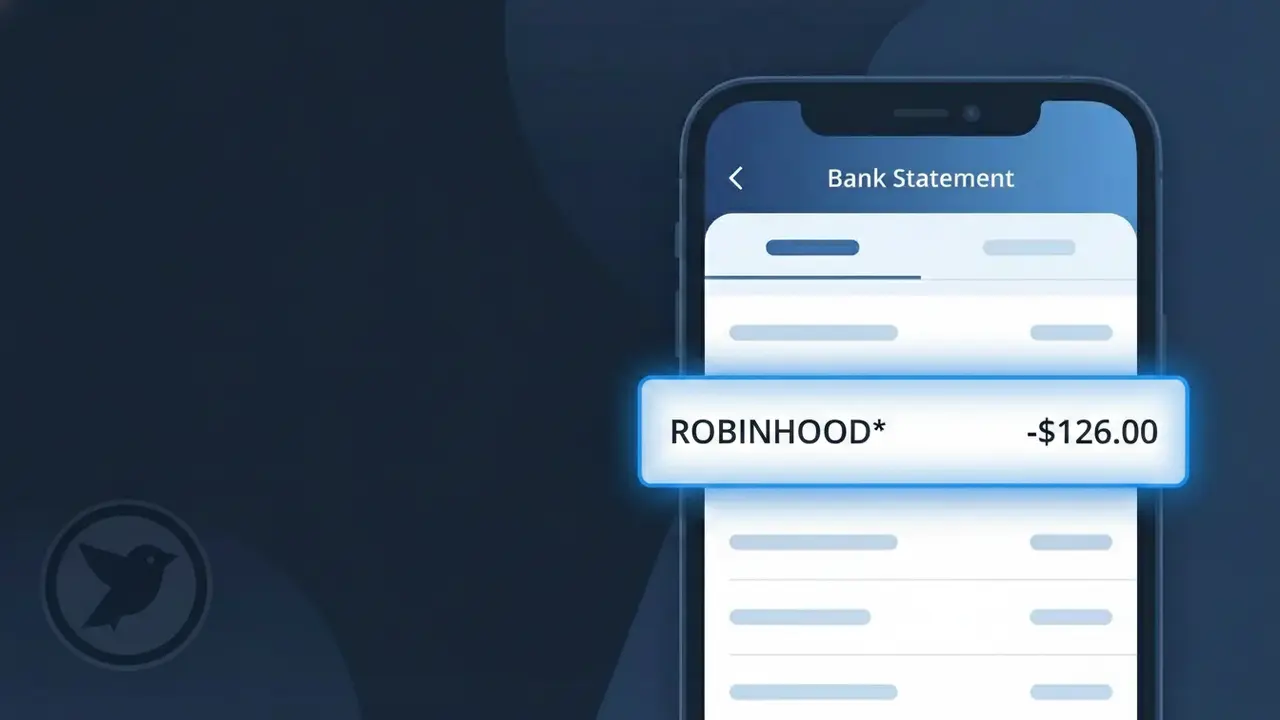
Why You're Seeing "ROBINHOOD*" on Your Bank Statement
The ROBINHOOD* charge on your bank statement comes from Robinhood, the popular commission-free investing and trading platform. This charge typically appears when you fund your Robinhood account, subscribe to Robinhood Gold, or make a purchase through one of their financial services. Robinhood offers stock trading, cryptocurrency investing, and cash management accounts, any of which could trigger this transaction. If you see ROBINHOOD* on your statement, it is almost certainly related to activity on your Robinhood investing account.
The ROBINHOOD* descriptor appears on your bank statement because this is the merchant identifier that Robinhood uses when processing transactions through payment networks. The asterisk following the name is a common formatting convention used by payment processors to separate the merchant name from additional transaction details such as an account reference or transaction type. If you have an active Robinhood account with a linked bank account or debit card, this charge is a standard and expected part of using their platform.
Is the ROBINHOOD* Charge Legitimate or Fraud?
Seeing ROBINHOOD* on your bank or credit card statement almost always means the charge originated from Robinhood, the popular commission-free investing and trading platform. This descriptor typically appears when Robinhood bills you for a premium subscription or a one-time financial service. Before assuming fraud, consider the following common legitimate reasons for this charge:
- Robinhood Gold subscription — a monthly or annual fee for premium features like margin investing and larger instant deposits
- Robinhood Gold Card annual fee — if you signed up for the Robinhood credit card with an associated annual charge
- Margin interest — interest billed if you used margin borrowing on your Robinhood brokerage account
- One-time transfer or service fee — fees associated with wire transfers or account transfer requests through Robinhood
How to Verify the ROBINHOOD* Charge
- 1
Log into your Robinhood account
Open the Robinhood app or visit robinhood.com and navigate to Account > Statements & History to review recent transactions and billing activity that match the ROBINHOOD* charge.
- 2
Search your email for Robinhood receipts
Search your inbox for emails from 'support@robinhood.com' or 'no-reply@robinhood.com' around the date of the ROBINHOOD* charge to find a matching billing confirmation or subscription renewal notice.
- 3
Check if a household member uses Robinhood
Ask family members or anyone who shares your payment method whether they have a Robinhood account linked to your card, as Robinhood Gold subscriptions renew automatically each billing period.
- 4
Review your active Robinhood subscriptions
In the Robinhood app, go to Account > Robinhood Gold to see your current subscription status, billing date, and any associated fees that would generate the ROBINHOOD* charge.
- 5
Contact your bank for more details
If you still cannot identify the ROBINHOOD* charge, call the number on the back of your card and ask for the full merchant name, transaction ID, and any available billing address linked to the charge.
How to Dispute a ROBINHOOD* Charge
- 1
Act within 60 days of the charge
Most banks require disputes to be filed within 60 days of the ROBINHOOD* charge appearing on your statement, so gather your evidence and act quickly to protect your right to a chargeback.
- 2
Contact Robinhood support first
Reach out to Robinhood directly through the in-app Help Center or at robinhood.com/support to report an unrecognized ROBINHOOD* charge — resolving it directly is often faster than a bank dispute.
- 3
File a chargeback with your bank
If Robinhood cannot resolve the issue, contact your bank or credit card issuer and formally dispute the ROBINHOOD* charge as unauthorized, providing any supporting documentation or screenshots.
- 4
Request a new card number
If the ROBINHOOD* charge is confirmed as fraudulent and your card details were compromised, ask your bank to issue a new card number to prevent any further unauthorized charges from appearing.
Tips for Managing Robinhood Charges
Enable bank alerts for any ROBINHOOD* transaction so you're notified the moment a charge posts to your account.
Keep a record of your Robinhood Gold subscription start date and renewal amount to quickly verify each ROBINHOOD* charge.
Secure your Robinhood account with two-factor authentication to prevent unauthorized access that could lead to unexpected charges.
Note your Robinhood Gold billing cycle date so you can anticipate the ROBINHOOD* charge and avoid confusing it with fraud.
Use a dedicated card for Robinhood to make it easy to spot any ROBINHOOD* charges and limit exposure if fraud occurs.
Use WhatIsThisCharge.net to identify related charges that may appear alongside ROBINHOOD* on your statement.
Frequently Asked Questions About the ROBINHOOD* Charge
ℹ️ Note
In most cases, a ROBINHOOD* charge is a routine and expected billing from Robinhood — most commonly a monthly Robinhood Gold subscription fee. If you or someone in your household actively uses the Robinhood investing platform, this charge is very likely legitimate and easy to confirm directly in the app.
🔍 Decode this charge instantly
Search our database for ROBINHOOD* and similar charges.
Decode ROBINHOOD* →Was this article helpful?