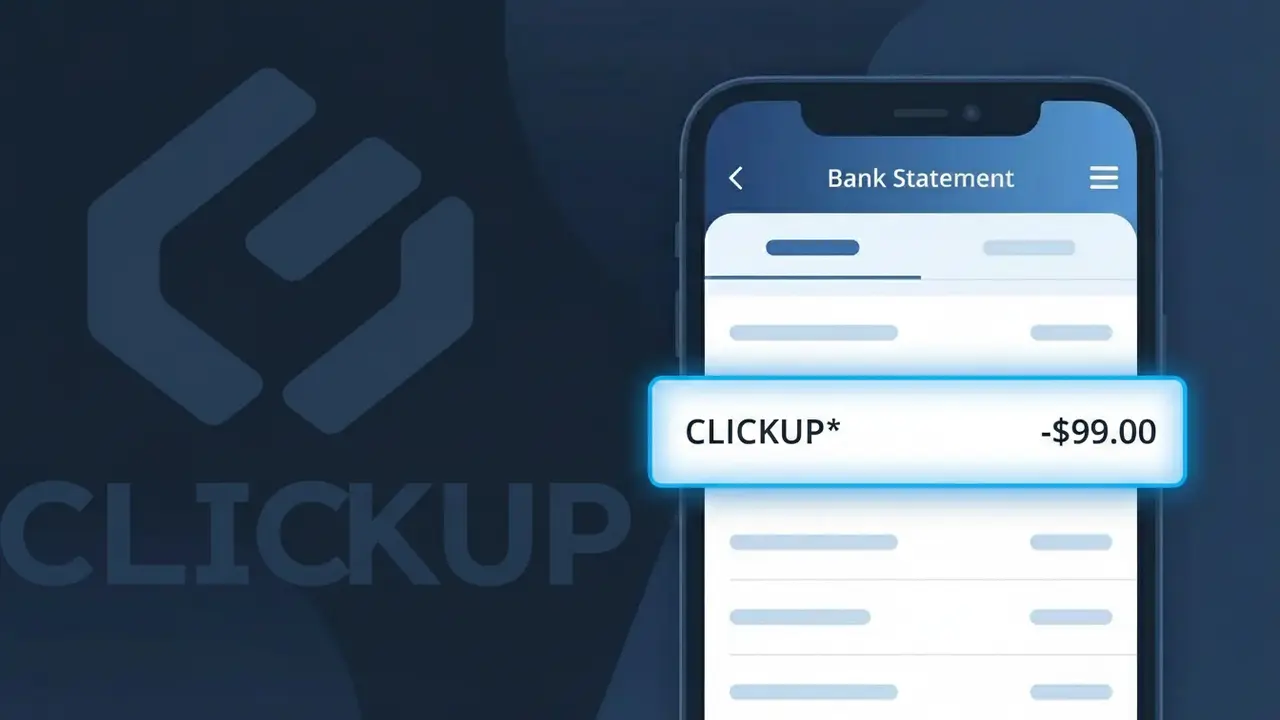
CLICKUP* Charge (What It Is + Is It Legit?)
✓ LegitimateThe "CLICKUP*" charge is from ClickUp. ClickUp project management subscription.
ClickUp
ClickUp project management subscription.
Category
SaaS
Avg. Charge
$7.00
Country
US
Billing Cycle
Monthly
Cancel At
app.clickup.com/account/billing
Support
See website
Why does this charge appear?
ClickUp processes its subscription payments through Stripe, a widely used payment gateway that truncates and formats merchant names to fit within the strict character limits imposed by card networks like Visa and Mastercard. When your monthly billing cycles for a ClickUp project management plan, Stripe transmits the shortened descriptor "CLICKUP*" followed by additional transaction details, which is what shows up on your bank or credit card statement. The asterisk in "CLICKUP*" is a standard Stripe formatting convention that separates the merchant name from supplementary billing information such as the subscription tier or purchase reference.
Your next steps
Identify the ClickUp charge
The CLICKUP* charge on your bank statement is a billing entry from ClickUp, a project management platform. Log in to your ClickUp account at clickup.com and navigate to your workspace to confirm which plan or subscription is associated with the charge.
Review your ClickUp billing details
Visit app.clickup.com/account/billing to see a full breakdown of your ClickUp subscription, including the plan tier, billing cycle, and amount charged. This will help you confirm whether the CLICKUP* charge matches what you are currently subscribed to.
Check for multiple ClickUp workspaces
If the CLICKUP* charge amount seems unexpected, check whether you or a team member has created multiple ClickUp workspaces under different email addresses, as each workspace with a paid plan will generate a separate charge on your bank statement.
Cancel or downgrade your ClickUp plan if needed
If you no longer need the ClickUp subscription or want to stop future CLICKUP* charges, go to app.clickup.com/account/billing and select the option to cancel or downgrade your plan to the free tier before your next billing date to avoid being charged again.
How to cancel ClickUp
ClickUp bills you Monthly. To stop future charges, cancel from your account directly.
Cancel at ClickUpLegitimate or scam?
No, this is a legitimate charge from ClickUp. However, if you did not authorize this charge or cancelled your subscription, you may be eligible for a refund.
Is the CLICKUP* Charge Legitimate or Fraud?
A CLICKUP* charge on your bank or credit card statement is most commonly a legitimate billing from ClickUp, the popular project management and productivity SaaS platform. ClickUp uses this abbreviated descriptor when processing subscription payments, which can cause confusion if you don't immediately recognize it. Here are the most common reasons you might see this charge:
- You or a team member signed up for a ClickUp Unlimited, Business, or Business Plus plan
- Your free ClickUp trial period ended and automatically converted to a paid subscription
- A workspace admin at your company added paid seats or upgraded the plan
- You purchased ClickUp AI add-ons or additional storage on top of your base plan
How to Verify the CLICKUP* Charge
- 1
Log into your ClickUp account
Visit app.clickup.com and sign in. Navigate to Settings > Billing to view your current plan, billing history, and the exact amount charged matching your CLICKUP* transaction.
- 2
Search your email for ClickUp receipts
Search your inbox for emails from billing@clickup.com or noreply@clickup.com. ClickUp sends payment confirmation emails that will match the CLICKUP* charge date and amount.
- 3
Check with household or team members
Ask colleagues or family members if they signed up for ClickUp using a shared card. A workspace owner may have upgraded a plan that your card was saved under.
- 4
Review your active subscriptions
Check any subscription manager apps or your device's app store subscriptions to see if a ClickUp plan is listed there as an active recurring charge.
- 5
Contact your bank for more details
Ask your bank for the full merchant descriptor and transaction ID associated with the CLICKUP* charge. This metadata can confirm whether the charge originated from ClickUp's official payment processor.
How to Dispute a CLICKUP* Charge
- 1
Act within 60 days
Most banks require you to dispute an unrecognized CLICKUP* charge within 60 days of the statement date. Don't delay — gather your transaction details and act quickly to preserve your dispute rights.
- 2
Contact ClickUp support first
Reach out to ClickUp's support team at clickup.com/contact or via in-app chat. ClickUp can often issue refunds for accidental charges or unauthorized upgrades faster than a bank dispute.
- 3
File a chargeback with your bank
If ClickUp does not resolve the issue, contact your bank or card issuer to file a formal chargeback for the CLICKUP* charge, citing it as unauthorized or unrecognized.
- 4
Request a new card number
If you suspect your card was used fraudulently to create a ClickUp subscription, ask your bank for a replacement card with a new number to prevent any recurring CLICKUP* charges.
Tips for Managing ClickUp Charges
Set a billing alert in your bank app to flag any new CLICKUP* charge the moment it posts.
Review your ClickUp workspace billing page monthly to catch unexpected seat additions or plan upgrades.
Limit ClickUp workspace admin roles to trusted users — only admins can trigger charges on your account.
Note your ClickUp renewal date in your calendar so a CLICKUP* annual charge never catches you off guard.
Use a virtual card number for your ClickUp subscription to isolate and control CLICKUP* billing easily.
Use WhatIsThisCharge.net to identify any related or unfamiliar charges appearing alongside CLICKUP*.
ℹ️ Note
In most cases, a CLICKUP* charge is a routine and expected billing from ClickUp for an active project management subscription — often from a trial that converted to paid or an annual plan renewal. Logging into your ClickUp workspace and checking the Billing section takes less than a minute and will almost always explain the charge.
Quick answers
Was this page helpful?
Community Reports (0)
0 votesNo votes yet — be the first to report on this charge!
Have you seen this charge? Help others by voting:
Community Comments (0)
No comments yet. Be the first to share your experience!
Share your experience
Your email is only used to verify your comment and will never be shown publicly.
Search Another Charge
Popular Charges

Amazon Marketplace
AMZN MKTP US
Netflix
NETFLIX *SUBSCRIPTION
Netflix
NETFLIX.COM *
Apple
APPLE *SUBSCRIPTION
Apple
APPLE.COM/BILL
Related Charges
Need to dispute this charge?
Generate a professional dispute letter in seconds with our AI tool.
Open Charge AssistantCommunity Verified
Real user reports
Free to Use
Always free to check
Secure & Private
Your data is safe
Help Millions
48K+ charges identified