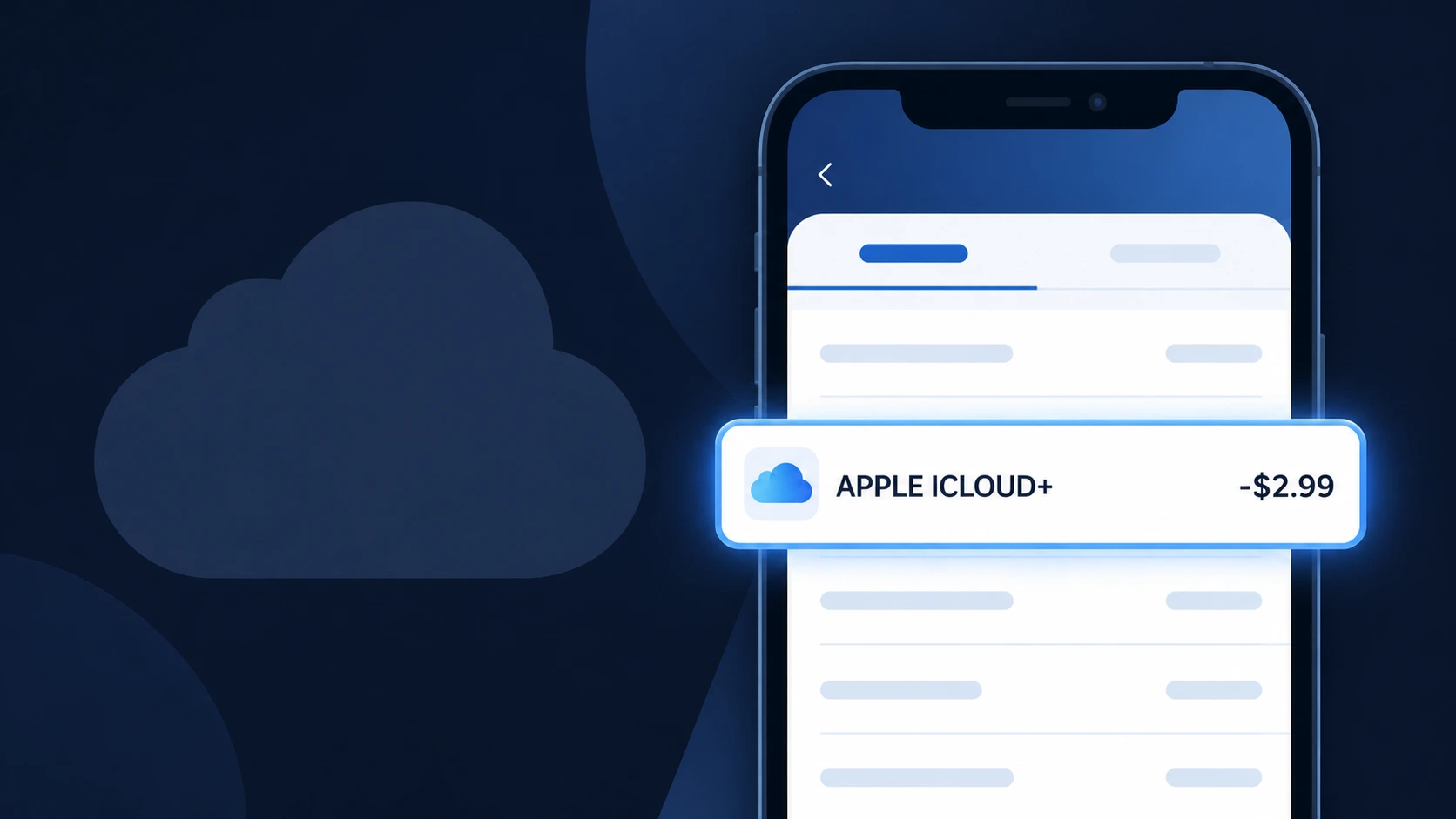
ICLOUD* Charge (What It Is + Is It Legit?)
✓ LegitimateThe "ICLOUD*" charge is from Apple iCloud. Apple iCloud storage subscription.
Apple iCloud
Apple iCloud storage subscription.
Category
Tech
Avg. Charge
$0.99
Country
US
Billing Cycle
Monthly
Cancel At
appleid.apple.com
Support
See website
Why this shows on your statement
Apple bills its iCloud storage subscriptions through its own proprietary payment infrastructure, which truncates the merchant name to fit within the limited character space that most banking systems allow for transaction descriptors. The "ICLOUD*" format follows Apple's standard descriptor convention, where the service name is shortened and followed by an asterisk to indicate a recurring subscription charge — a pattern you'll also notice with other Apple services like Apple TV+ or Apple Music. If you see this on your statement alongside a $0.99, $2.99, or higher monthly charge, it confirms you have an active iCloud storage plan tied to your Apple ID.
What should you do?
Verify Your iCloud Storage Plan
Sign in to your Apple ID account at appleid.apple.com and navigate to the Subscriptions section to confirm which iCloud storage plan you are currently subscribed to. The ICLOUD* charge corresponds directly to your monthly or annual iCloud storage fee, which comes in tiers such as 50GB, 200GB, or 2TB.
Check Which Apple ID Was Billed
If you have multiple Apple devices or Apple ID accounts, open Settings on your iPhone or iPad, tap your name at the top, then tap Subscriptions to see the iCloud plan linked to that specific Apple ID. This helps confirm which account the ICLOUD* charge on your bank statement belongs to.
Review Your Storage Usage
On your Apple device, go to Settings, tap your name, then tap iCloud to see a breakdown of how your iCloud storage is being used across Photos, Backups, Mail, and other apps. This helps you decide whether your current paid plan is necessary or if you should downgrade to a smaller tier at apple.com.
Manage or Cancel the iCloud Subscription
If you no longer need the paid iCloud storage plan generating the ICLOUD* charge, visit appleid.apple.com or go to Settings on your Apple device, tap your name, tap Subscriptions, select iCloud, and choose to downgrade to the free 5GB plan or cancel the subscription before the next billing date.
How to cancel Apple iCloud
Apple iCloud bills you Monthly. To stop future charges, cancel from your account directly.
Cancel at Apple iCloudShould you be worried?
No, this is a legitimate charge from Apple iCloud. However, if you did not authorize this charge or cancelled your subscription, you may be eligible for a refund.
How to Verify the ICLOUD Charge
- 1
Check your Apple ID account
Sign in at appleid.apple.com and navigate to 'Payment & Shipping' to review all recent ICLOUD billing activity tied to your Apple ID.
- 2
Search your email for receipts
Look in your inbox for emails from no_reply@email.apple.com — Apple always sends a receipt when an ICLOUD charge is processed.
- 3
Check Family Sharing members
Open Settings > [Your Name] > Family Sharing on your iPhone or iPad to see if another family member triggered an ICLOUD storage upgrade.
- 4
Review iCloud subscription details
On your iPhone, go to Settings > [Your Name] > iCloud > Manage Account Storage to confirm your current ICLOUD plan and billing date.
- 5
Contact your bank
If you cannot match the ICLOUD charge to any Apple account activity, call the number on the back of your card and ask for transaction details.
How to Dispute an ICLOUD Charge
- 1
Act within 60 days
Most banks require disputes to be filed within 60 days of the statement date, so act quickly if you believe the ICLOUD charge is unauthorized or erroneous.
- 2
Contact Apple/iCloud first
Visit reportaproblem.apple.com, sign in with your Apple ID, find the ICLOUD charge, and request a refund directly — Apple often resolves billing issues within 48 hours.
- 3
File a chargeback with your bank
If Apple denies your refund request, contact your bank or card issuer and formally dispute the ICLOUD charge as unauthorized, providing your Apple correspondence as evidence.
- 4
Request a new card
If you suspect your card was fraudulently used for ICLOUD charges, ask your bank to issue a new card number to prevent future unauthorized Apple billing.
Tips for Managing ICLOUD Charges
Enable purchase notifications in your Apple ID settings so you're alerted every time an ICLOUD charge is processed.
Regularly review your iCloud storage plan at appleid.apple.com to avoid surprise ICLOUD billing upgrades.
Secure your Apple ID with two-factor authentication to prevent unauthorized ICLOUD purchases on your account.
Note your iCloud renewal date — ICLOUD annual plans auto-renew and can appear as larger unexpected charges.
If sharing a Family plan, set up Ask to Buy to approve any iCloud-related purchases before they result in an ICLOUD charge.
Use WhatIsThisCharge.net to identify related charges that may appear alongside your ICLOUD billing.
How to Dispute a ICLOUD Charge
- 1
Act within 60 days
Dispute the ICLOUD charge with your bank or card issuer within 60 days of the statement date to remain eligible for a chargeback under standard consumer protection rules.
- 2
Contact Apple (iCloud) first
Visit reportaproblem.apple.com to report an issue with the ICLOUD charge directly. Apple can issue refunds for accidental or unauthorized charges within their policy window.
- 3
File a chargeback with your bank
If Apple does not resolve the issue, contact your bank or credit card issuer and provide the ICLOUD charge details, amount, and date to initiate a formal chargeback dispute.
- 4
Request a new card number
If the ICLOUD charge appears fraudulent and you do not have an Apple account, ask your bank to issue a replacement card to prevent further unauthorized charges from appearing.
Questions and answers
Was this page helpful?
Community Reports (0)
0 votesNo votes yet — be the first to report on this charge!
Have you seen this charge? Help others by voting:
Community Comments (0)
No comments yet. Be the first to share your experience!
Share your experience
Your email is only used to verify your comment and will never be shown publicly.
Search Another Charge
Popular Charges

Amazon Marketplace
AMZN MKTP US
Netflix
NETFLIX *SUBSCRIPTION
Netflix
NETFLIX.COM *
Apple
APPLE *SUBSCRIPTION
Apple
APPLE.COM/BILL
Related Charges
Need to dispute this charge?
Generate a professional dispute letter in seconds with our AI tool.
Open Charge AssistantCommunity Verified
Real user reports
Free to Use
Always free to check
Secure & Private
Your data is safe
Help Millions
48K+ charges identified