Why You're Seeing "CHATGPT" on Your Bank Statement
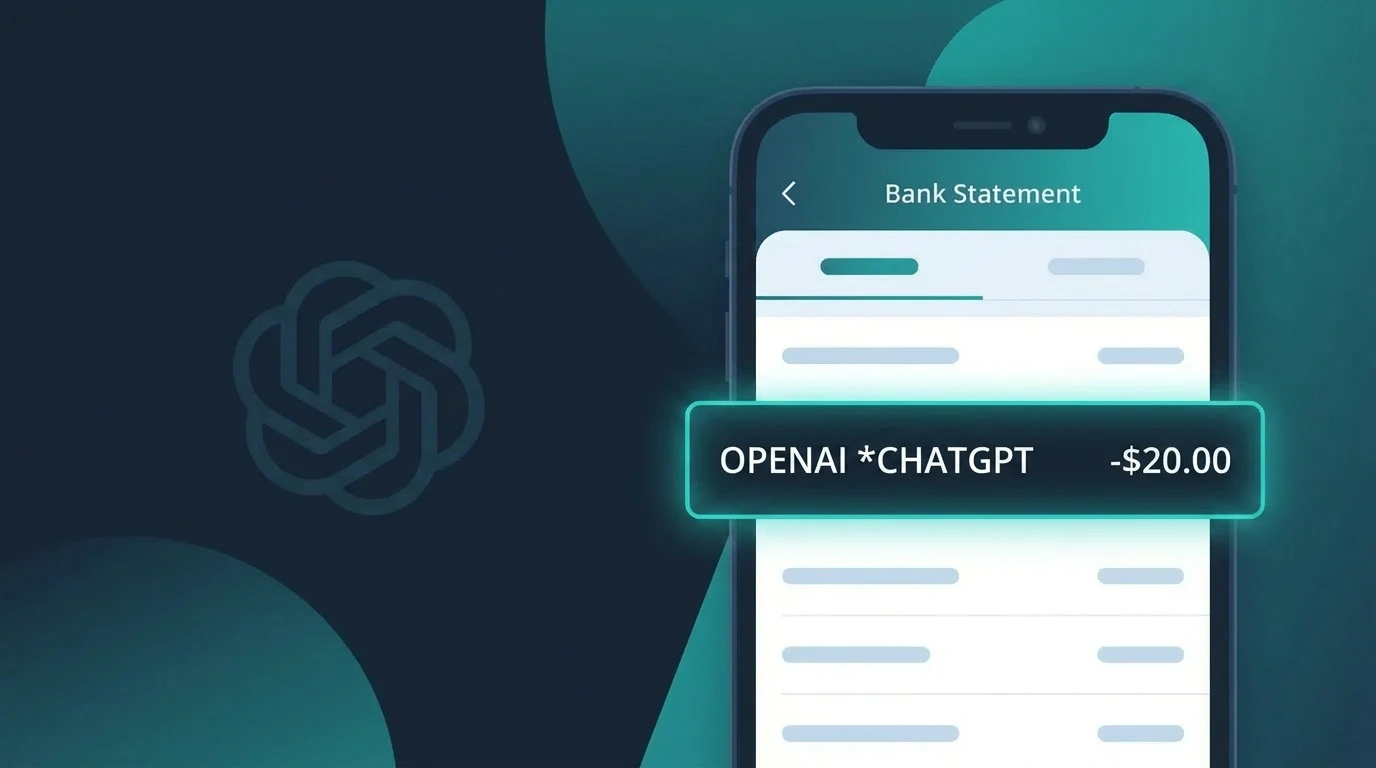
Is the CHATGPT Charge Legitimate or Fraud?
If you see a charge labeled CHATGPT on your bank or credit card statement, it is most likely a legitimate subscription charge from OpenAI for their ChatGPT Plus, ChatGPT Team, or ChatGPT Enterprise plan. OpenAI bills users directly under the descriptor 'CHATGPT' for monthly or annual AI assistant subscriptions.
Common legitimate reasons you may see this charge include:
- A ChatGPT Plus subscription at $20/month billed by OpenAI
- A ChatGPT Team plan billed per seat on a monthly or annual basis
- A one-time API credit purchase made through OpenAI's platform
- A free trial of ChatGPT Plus that converted to a paid subscription
However, if you do not recall signing up for any OpenAI service, the charge could indicate unauthorized account use or a misidentified transaction. Always verify before assuming fraud.
How to Verify the CHATGPT Charge
- 1
Log into your ChatGPT account
Visit chat.openai.com and sign in. Navigate to Settings > Subscription to confirm whether you have an active ChatGPT Plus or Team plan and when it renews.
- 2
Search your email for OpenAI receipts
Search your inbox for emails from 'no-reply@openai.com' or 'billing@openai.com'. OpenAI sends a receipt every time a CHATGPT subscription charge is processed.
- 3
Check if a household member signed up
Ask family members or colleagues if they used your card to subscribe to ChatGPT Plus or a ChatGPT Team plan, as the charge will appear identically on your statement.
- 4
Review your OpenAI billing history
Inside your ChatGPT account, go to Settings > Billing > Manage Subscription to view a full history of all CHATGPT charges tied to your OpenAI account.
- 5
Contact your bank for transaction details
Ask your bank for the full merchant descriptor and transaction date. This can help confirm whether the CHATGPT charge originated from OpenAI's official payment processor, Stripe.
How to Dispute a CHATGPT Charge
- 1
Act within 60 days of the charge
Most banks allow chargebacks within 60 days of the billing date. If you notice an unauthorized CHATGPT charge, act quickly to preserve your right to dispute it.
- 2
Contact ChatGPT support first
Reach out to OpenAI's support at help.openai.com before filing a chargeback. Explain the issue and request a refund for the CHATGPT charge directly — OpenAI may resolve it faster than a bank dispute.
- 3
File a chargeback with your bank
If OpenAI does not resolve the issue, contact your bank or credit card issuer and cite the CHATGPT charge as unauthorized. Provide your email receipts or lack thereof as evidence.
- 4
Request a new card number
If you suspect your card was used fraudulently to subscribe to ChatGPT, ask your bank to issue a new card number to prevent any future recurring CHATGPT charges from processing.
Tips for Managing CHATGPT Charges
Enable billing alerts in your ChatGPT account so you get notified before each monthly CHATGPT renewal charge hits your card.
Keep your OpenAI email receipts organized in a folder to quickly reconcile any CHATGPT charge on your statement.
Use a strong, unique password for your ChatGPT account to prevent unauthorized logins that could trigger unexpected CHATGPT charges.
Note your ChatGPT Plus renewal date (found in Settings > Billing) so the monthly CHATGPT charge never catches you off guard.
Use a virtual card number for your ChatGPT subscription to limit exposure and easily block charges if your billing info is compromised.
Use WhatIsThisCharge.net to identify related charges that may appear alongside your CHATGPT billing entry.
Frequently Asked Questions About the CHATGPT Charge
Was this article helpful?