Why You're Seeing "OPENAI *API" on Your Bank Statement
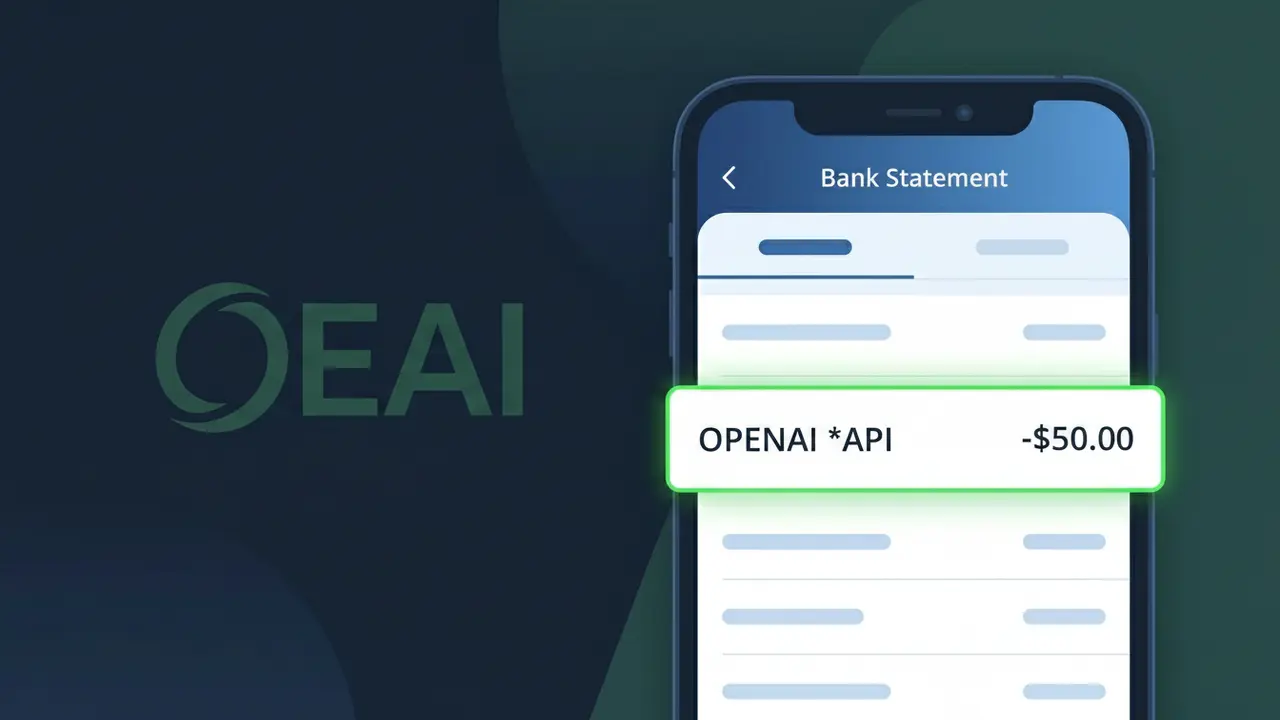
Why You're Seeing "OPENAI *API" on Your Bank Statement
The OPENAI *API charge on your bank statement comes from OpenAI, the artificial intelligence company behind ChatGPT and other AI tools. This specific charge relates to usage of the OpenAI API, which allows developers and businesses to integrate AI capabilities like GPT-4 and DALL-E directly into their own applications. If you or someone with access to your payment method has signed up for an OpenAI developer account, this charge reflects pay-as-you-go API consumption or a subscription plan. The amount can vary significantly depending on how much the API has been used during the billing period.
The descriptor OPENAI *API appears on your bank statement to distinguish API billing from other OpenAI products, such as a ChatGPT Plus subscription, which typically shows up differently. OpenAI uses this format to help cardholders and developers identify that the charge is specifically tied to API usage rather than a consumer product. The asterisk between OPENAI and API is a common formatting convention used by payment processors to separate a merchant name from a product or service identifier.
Is the OPENAI *API Charge Legitimate or Fraud?
The OPENAI *API charge on your bank or credit card statement is almost always a legitimate charge from OpenAI API, the developer platform that powers AI applications using models like GPT-4. This charge appears when you or someone with access to your payment method has used OpenAI's pay-as-you-go API service or has an active API subscription plan.
- OpenAI API billing is usage-based, so charges vary month to month depending on API call volume
- Developers building apps, chatbots, or automation tools often connect their card to an OpenAI API account
- Free tier credits may have expired, triggering the first real OPENAI *API charge on your statement
- The descriptor "OPENAI *API" is the official merchant name used by OpenAI for API platform billing
How to Verify the OPENAI *API Charge
- 1
Log into your OpenAI API account
Visit platform.openai.com and sign in. Navigate to Settings > Billing > Usage to see a detailed breakdown of charges that match your OPENAI *API transaction.
- 2
Search your email for OpenAI receipts
Search your inbox for emails from billing@openai.com or noreply@openai.com. OpenAI API sends monthly invoices that will match the OPENAI *API charge amount and date.
- 3
Check if a household member has an API account
Ask family members or housemates if they are using OpenAI API for development or personal projects and may have registered your shared payment method.
- 4
Review any apps or tools you use
Many third-party apps and automation tools run on the OpenAI API backend. Check if any software you subscribe to uses OpenAI and bills you directly through the API.
- 5
Contact your bank for transaction details
Ask your bank for the full merchant ID and transaction date tied to the OPENAI *API charge. This can help you pinpoint exactly which OpenAI API account was billed.
How to Dispute a OPENAI *API Charge
- 1
Act within 60 days of the charge
Most banks require disputes to be filed within 60 days of the OPENAI *API charge appearing on your statement. Act quickly to preserve your right to a chargeback.
- 2
Contact OpenAI API support first
Reach out via help.openai.com before escalating. OpenAI API support can verify whether the charge is tied to your account and may issue a refund for billing errors directly.
- 3
File a chargeback with your bank
If OpenAI API does not resolve the issue, contact your bank or card issuer to dispute the OPENAI *API charge. Provide your case number from OpenAI support as supporting evidence.
- 4
Request a new card number
If you suspect your card was used fraudulently to fund an OpenAI API account, ask your bank to issue a new card number to prevent any future unauthorized OPENAI *API charges.
Tips for Managing OpenAI API Charges
Set usage limits in your OpenAI API dashboard to get email alerts before OPENAI *API charges exceed your budget.
Download monthly invoices from platform.openai.com/account/billing to reconcile every OPENAI *API charge.
Audit your OpenAI API keys regularly and delete unused keys to prevent unexpected OPENAI *API charges.
OpenAI API billing resets monthly — review your usage mid-cycle to avoid surprise charges at month end.
Use a virtual card number for OpenAI API billing so you can freeze it instantly if unauthorized charges appear.
Use WhatIsThisCharge.net to identify related charges like OPENAI *CHATGPT or other OpenAI billing descriptors.
Frequently Asked Questions About the OPENAI *API Charge
ℹ️ Note
In most cases, the <strong>OPENAI *API</strong> charge is a legitimate, usage-based billing from <strong>OpenAI API</strong> — commonly seen when a developer account you own (or someone with access to your card owns) has been making API calls during the billing period. A quick login to platform.openai.com will confirm the charge in seconds.
🔍 Decode this charge instantly
Search our database for OPENAI *API and similar charges.
Decode OPENAI *API →Was this article helpful?