Why You're Seeing "SUBSTACK*" on Your Bank Statement
Why You're Seeing "SUBSTACK*" on Your Bank Statement
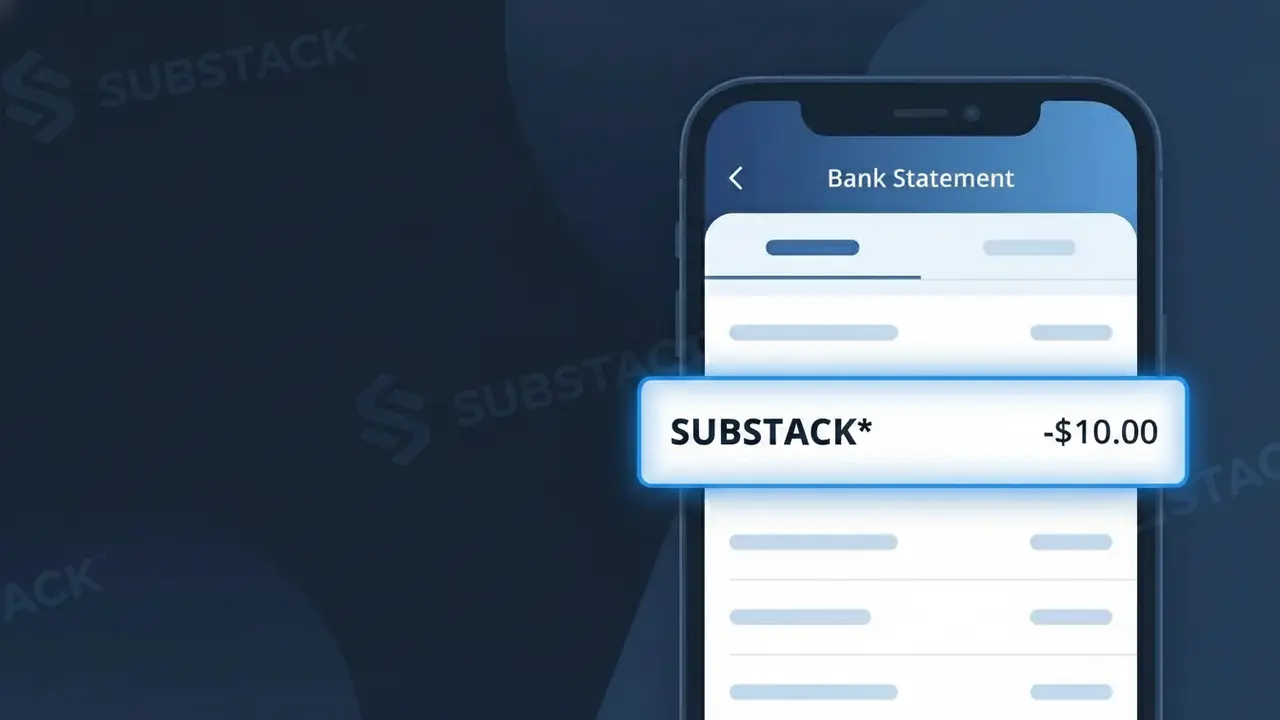
A charge showing SUBSTACK* on your bank statement comes from Substack, a popular platform that allows writers and journalists to publish paid newsletters and podcasts directly to subscribers. This charge represents a subscription payment to one or more Substack newsletters you have signed up for. The asterisk in the descriptor SUBSTACK* is typically followed by additional characters identifying the specific publication or creator. If you see this charge, it means you have an active paid subscription to at least one Substack-hosted newsletter.
The descriptor SUBSTACK* appears on your bank statement because Substack processes payments centrally on behalf of the individual newsletter creators who publish on their platform. Rather than each writer setting up their own payment processing, Substack handles all billing, which means the charge is attributed to Substack itself rather than the specific newsletter author's name. This centralized billing system is why you may not immediately recognize the charge even if you consciously signed up for a writer's publication.
Is the SUBSTACK* Charge Legitimate or Fraud?
A SUBSTACK* charge on your bank or credit card statement is almost always a legitimate billing from Substack, the popular newsletter and media platform where writers publish paid content directly to subscribers. The "SUBSTACK*" descriptor appears because payment processors truncate merchant names, often followed by the specific newsletter or writer's name. Here are the most common reasons you'd see this charge:
- You subscribed to a paid Substack newsletter (monthly or annual plan)
- A free trial period on a Substack publication ended and converted to a paid subscription
- A family member or household user subscribed to a Substack newsletter using your card
- You previously supported a Substack writer and the recurring billing has continued
How to Verify the SUBSTACK* Charge
- 1
Log into your Substack account
Visit substack.com and sign in. Navigate to your profile settings and select 'Subscriptions' to see all active paid newsletters and their billing amounts.
- 2
Search your email for Substack receipts
Search your inbox for emails from 'Substack' or 'no-reply@substack.com'. Substack sends a receipt for every charge that will match the SUBSTACK* amount on your statement.
- 3
Check household members
Ask family members or anyone who may have access to your card if they subscribed to a Substack newsletter, as the SUBSTACK* charge may be linked to their email account.
- 4
Review the full charge descriptor
Look at the full SUBSTACK* entry on your statement — text after the asterisk often identifies the specific Substack publication name, helping you pinpoint exactly which newsletter billed you.
- 5
Contact your bank for details
If you still can't identify the SUBSTACK* charge, call your bank and ask for the full merchant descriptor and transaction date, which can help you trace it back to a specific Substack subscription.
How to Dispute a SUBSTACK* Charge
- 1
Act within 60 days
Most banks require disputes to be filed within 60 days of the SUBSTACK* charge appearing on your statement. Don't wait — acting quickly improves your chances of a successful resolution.
- 2
Contact Substack support first
Reach out to Substack directly at support.substack.com before escalating. Substack's support team can identify the subscription tied to the SUBSTACK* charge and may issue a refund, especially for accidental or forgotten subscriptions.
- 3
File a chargeback with your bank
If Substack doesn't resolve the issue, contact your bank or card issuer to dispute the SUBSTACK* charge as unauthorized. Provide any email receipts or account screenshots as supporting evidence.
- 4
Request a new card number
If you believe the SUBSTACK* charge is the result of unauthorized card use, ask your bank to issue a replacement card to prevent any further unrecognized Substack or other recurring charges.
Tips for Managing Substack Charges
Enable email notifications from Substack so every SUBSTACK* charge triggers a receipt directly to your inbox.
Audit your Substack subscriptions quarterly — go to 'Subscriptions' in your account to cancel any newsletters you no longer read.
Use a single dedicated email for your Substack account so all billing activity and SUBSTACK* receipts are easy to find.
Choose annual Substack plans cautiously — they bill once a year, so the SUBSTACK* charge may catch you off guard if forgotten.
Use a virtual card number for Substack subscriptions to limit exposure and easily block charges if needed.
Use WhatIsThisCharge.net to identify any other unfamiliar SUBSTACK* or related charges on your statement.
Frequently Asked Questions About the SUBSTACK* Charge
ℹ️ Note
In most cases, a SUBSTACK* charge is simply a routine billing from Substack for a newsletter subscription you signed up for — often a publication you may have forgotten about. A quick check of your Substack account subscriptions will typically clear up any confusion within minutes.
🔍 Decode this charge instantly
Search our database for SUBSTACK* and similar charges.
Decode SUBSTACK* →Was this article helpful?