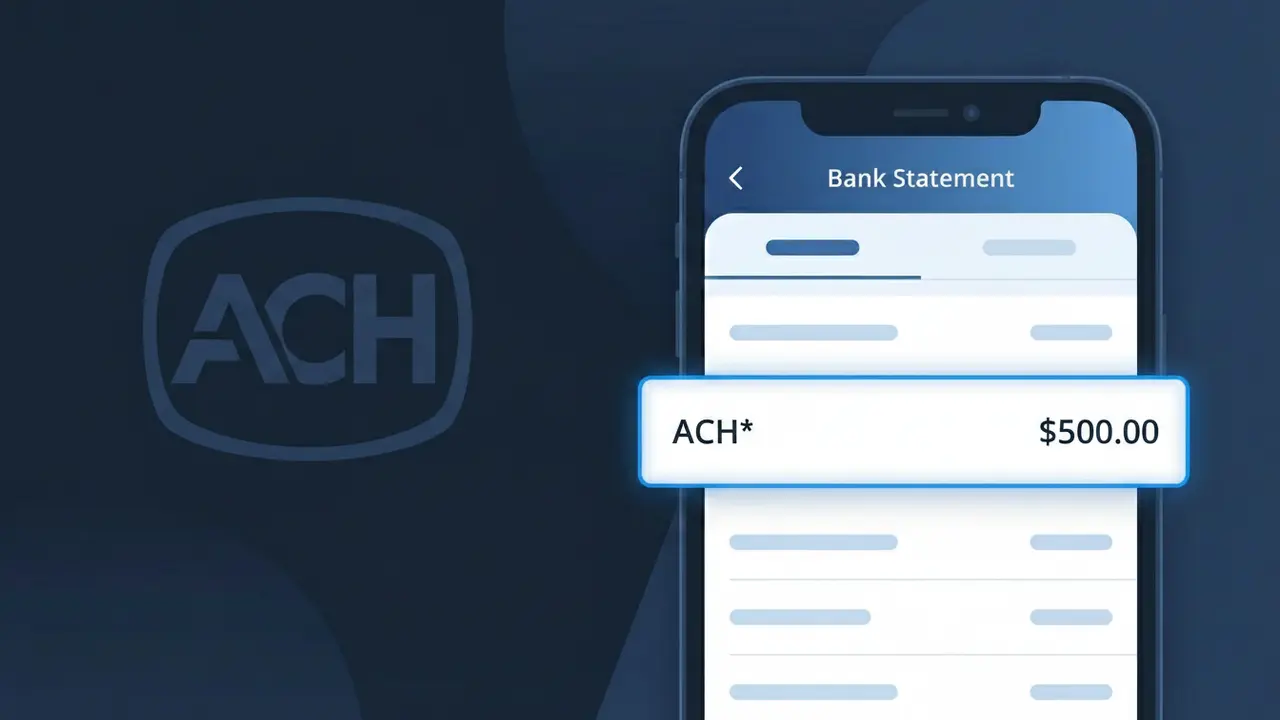
ACH* Charge (What It Is + Is It Legit?)
✓ LegitimateThe "ACH*" charge is from ACH Bank Transfer. Automated Clearing House bank transfer.
ACH Bank Transfer
Automated Clearing House bank transfer.
Category
Banking
Avg. Charge
Variable
Country
US
Billing Cycle
One-time
Cancel At
N/A
Support
See website
Why this shows on your statement
When a bank processes an Automated Clearing House transfer, the transaction is logged through the ACH network itself rather than a specific merchant system, which is why your statement shows the abbreviated descriptor "ACH*" followed by limited details instead of spelling out "ACH Bank Transfer" in full. The ACH network is a standardized federal banking infrastructure operated by Nacha, and because the descriptor is generated by the financial institution processing the transfer rather than a retail payment processor, it often gets truncated to fit within the character limits imposed by bank statement formatting systems. If you see "ACH*" on your statement, it typically means money moved electronically between bank accounts, and you can identify the specific origin by cross-referencing the transfer date and amount with any recent payments, direct deposits, or account-to-account transfers you authorized.
What should you do?
Identify the ACH* transfer source
Log into your bank account and look for any recent transactions you authorized that would trigger an ACH Bank Transfer, such as bill payments, payroll deposits, subscription services, or transfers between accounts. The ACH* label simply means the payment was processed through the Automated Clearing House network.
Match the amount to a known payment
Compare the dollar amount of the ACH Bank Transfer charge on your statement to any pending or scheduled payments you set up recently, such as utility bills, loan payments, or direct debits. Most legitimate ACH Bank Transfer entries correspond directly to a payment you authorized with a specific company or service.
Contact your bank for ACH transfer details
If you cannot immediately identify who initiated the ACH Bank Transfer, call the customer service number on the back of your bank card and ask them to provide the full originator name and company ID associated with the ACH* transaction, which can help you pinpoint exactly which business or person sent or received the funds.
Visit google.com to research the originator
If the ACH Bank Transfer still seems unfamiliar after checking with your bank, visit google.com and search for the originator name or company ID provided by your bank. This can help you confirm whether the business is legitimate and remind you of any services or agreements you may have signed up for that use ACH Bank Transfer for billing.
Should you be worried?
No, this is a legitimate charge from ACH Bank Transfer. However, if you did not authorize this charge or cancelled your subscription, you may be eligible for a refund.
ℹ️ Note
In most cases, seeing "ACH*" on your statement is completely normal. Before assuming fraud, check your recent purchases — most mystery charges have a simple explanation.
Is the ACH* Charge Legitimate or Fraud?
If you've spotted ACH* on your bank or credit card statement, it typically refers to an Automated Clearing House (ACH) transaction — a standard electronic funds transfer used by banks, businesses, and government entities across the U.S. ACH transfers are commonly used for direct deposits, bill payments, subscription services, and business-to-business payments. The presence of ACH* on your statement does not automatically indicate fraud, but it does warrant a closer look.
- The ACH* label may appear when a company processes your payment through the ACH network rather than a card network
- Legitimate ACH charges often come from utility companies, loan servicers, insurance providers, or subscription businesses
- ACH* charges can sometimes be hard to identify because the originating company name may be abbreviated or truncated
- Unauthorized ACH* charges can occur if your bank account number has been compromised or shared without your consent
How to Verify the ACH* Charge
- 1
Check the full transaction details
Log into your online banking portal and click on the ACH* charge for more details. Banks often display the originating company name, ACH trace number, or last 4 digits associated with the transfer.
- 2
Search your email for ACH-related receipts
Look through your inbox for payment confirmations, billing notices, or receipts that match the ACH* charge date and amount. Search terms like 'ACH payment' or 'bank transfer confirmation' can help.
- 3
Check with household members
Ask family members or housemates if they authorized an ACH payment linked to a shared account. Someone else may have set up an automatic ACH debit for a bill or service.
- 4
Review your active subscriptions and autopay accounts
Go through any services you've enrolled in autopay with bank account details. ACH* charges frequently appear from recurring billers like gyms, insurance companies, or loan servicers.
- 5
Contact your bank for the ACH trace number
Call your bank and request the ACH trace number associated with the ACH* charge. This number can be used to identify the exact originating company that initiated the transfer.
How to Dispute an ACH* Charge
- 1
Act quickly — within 60 days
Federal Regulation E gives consumers the right to dispute unauthorized ACH* transactions, but you must notify your bank promptly. Report the suspicious ACH charge within 60 days of your statement date to preserve your full rights.
- 2
Contact the originating ACH company first
If you can identify the company behind the ACH* charge, contact them directly to request a refund or explanation. Many billing errors can be resolved faster by reaching the originator than going through your bank.
- 3
File a dispute with your bank
If the ACH* charge is unauthorized or the company is unresponsive, formally dispute it with your bank. Submit a written statement explaining that you did not authorize the ACH debit, and your bank is required to investigate.
- 4
Request a new bank account number if needed
If the ACH* charge appears fraudulent and your account details may be compromised, ask your bank to issue a new account number. This prevents future unauthorized ACH debits from reaching your account.
Tips for Managing ACH Charges
Set up bank alerts for any ACH* debit over a threshold amount so you're notified immediately.
Keep a list of every company you've authorized to pull ACH payments from your account.
Never share your bank routing and account number unless you trust the ACH originator completely.
Review your statement monthly on the same date to catch unexpected ACH* charges early.
Use a dedicated bank account with limited funds solely for ACH autopay to reduce fraud exposure.
Use WhatIsThisCharge.net to identify related charges and find out what ACH* means on your statement.
Questions and answers
Was this page helpful?
Community Reports (0)
0 votesNo votes yet — be the first to report on this charge!
Have you seen this charge? Help others by voting:
Community Comments (0)
No comments yet. Be the first to share your experience!
Share your experience
Your email is only used to verify your comment and will never be shown publicly.
Search Another Charge
Popular Charges

Amazon Marketplace
AMZN MKTP US
Netflix
NETFLIX *SUBSCRIPTION
Netflix
NETFLIX.COM *
Apple
APPLE *SUBSCRIPTION
Apple
APPLE.COM/BILL
Related Charges
Need to dispute this charge?
Generate a professional dispute letter in seconds with our AI tool.
Open Charge AssistantCommunity Verified
Real user reports
Free to Use
Always free to check
Secure & Private
Your data is safe
Help Millions
48K+ charges identified