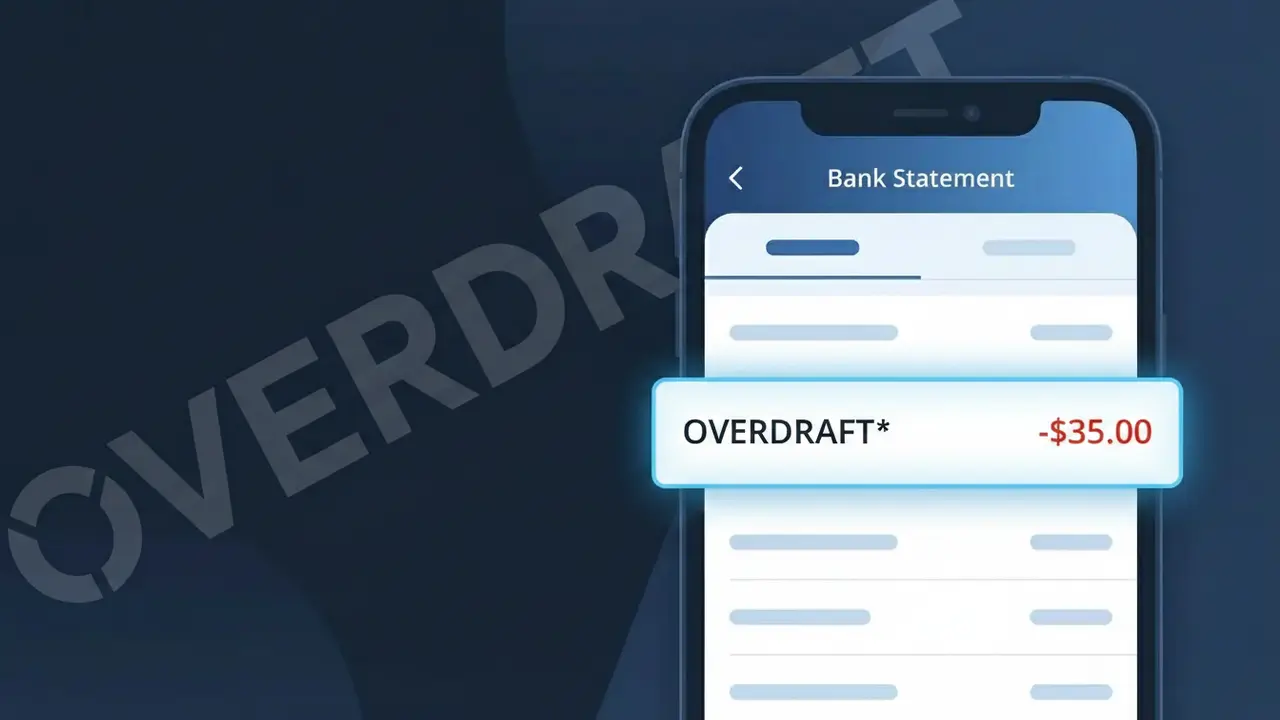
OVERDRAFT* Charge (What It Is + Is It Legit?)
⚠ SuspiciousThe "OVERDRAFT*" charge is from Overdraft Fee. Bank overdraft fee charge.
Overdraft Fee
Bank overdraft fee charge.
Category
Banking
Avg. Charge
$35.00
Country
US
Billing Cycle
One-time
Cancel At
N/A
Support
See website
Why this shows on your statement
When your bank assesses a fee for spending beyond your available balance, the charge is logged in their internal transaction system under the shorthand descriptor "OVERDRAFT*" rather than spelling out the full label "Overdraft Fee" on your statement. Banks use truncated billing descriptors like this because core banking platforms, including those built on legacy mainframe systems, have strict character limits for transaction descriptions, forcing them to abbreviate entries. The asterisk following "OVERDRAFT*" is a common placeholder used by U.S. banking systems to indicate a fee classification code or account modifier was appended in the original transaction record.
What should you do?
Review Your Transaction History
Log into your bank account and carefully review your recent transaction history to determine if the OVERDRAFT* charge from Overdraft Fee aligns with any account activity that may have triggered an overdraft. Look for transactions that exceeded your available balance around the same date the charge appeared.
Contact Your Bank Directly
Call the customer service number on the back of your bank card and ask them to explain the specific OVERDRAFT* charge in detail. Request clarification on which transaction triggered it, as overdraft fees from Overdraft Fee can sometimes be applied in error or without your knowledge of the triggering event.
Dispute the OVERDRAFT* Charge
If you do not recognize what caused the OVERDRAFT* charge or believe it was applied incorrectly, formally dispute the charge with your bank. Ask to speak with a fraud or billing specialist and request a written explanation or reversal of the Overdraft Fee charge, as banks are sometimes willing to waive first-time or questionable overdraft fees.
Protect Your Account Going Forward
After addressing the suspicious OVERDRAFT* charge, consider setting up low balance alerts, linking a backup account, or opting out of overdraft coverage through your bank so that future Overdraft Fee charges cannot be applied without your explicit consent. Visit google.com to research your bank's specific overdraft protection policies and your rights as a consumer.
Should you be worried?
This charge has been flagged as suspicious. If you did not authorize this charge, contact your bank immediately and file a dispute.
Is the OVERDRAFT* Charge Legitimate or Fraud?
The OVERDRAFT* charge appearing on your bank statement is typically a legitimate fee assessed by your bank or financial institution under the category of Overdraft Fee. This charge occurs when a transaction causes your account balance to drop below zero and your bank covers the shortfall on your behalf. However, it's worth verifying the charge since unauthorized account access or billing errors can sometimes produce unexpected fees.
- Your account balance fell below $0 and the bank paid a pending transaction anyway
- You have an overdraft protection service enabled that triggered automatically
- A scheduled or recurring payment posted when insufficient funds were available
- A hold or pending transaction reduced your available balance below the required threshold
How to Verify the OVERDRAFT* Charge
- 1
Check your account transaction history
Log into your online banking or mobile app and look for a transaction dated the same day as the OVERDRAFT* charge. The triggering transaction — such as a debit card purchase or ACH payment — should appear just before the Overdraft Fee entry.
- 2
Search your email for bank notifications
Look for automated alert emails or text messages from your bank warning that your balance was low or that an Overdraft Fee was assessed. Most banks send these notifications at the time the OVERDRAFT* charge is applied.
- 3
Check with household members
If others share your account or have a linked debit card, ask whether they made a purchase that may have exceeded the available balance, triggering the OVERDRAFT* charge without your direct knowledge.
- 4
Review any scheduled or recurring payments
Check your list of automatic bill payments, subscriptions, or loan installments. A recurring charge posting on an unexpected date is a common cause of the OVERDRAFT* Overdraft Fee appearing on your statement.
- 5
Contact your bank directly
Call the number on the back of your debit card or visit a branch and ask a representative to identify exactly which transaction triggered the OVERDRAFT* charge and confirm the Overdraft Fee amount and date.
How to Dispute an OVERDRAFT* Charge
- 1
Act within 60 days of the statement date
Federal Regulation E gives you 60 days from the statement date to formally dispute an erroneous OVERDRAFT* charge. Acting quickly improves your chances of a full refund of the Overdraft Fee.
- 2
Contact your bank's Overdraft Fee department first
Call or visit your bank and politely explain why you believe the OVERDRAFT* charge was applied in error — for example, if funds were available or a deposit was pending. Many banks will waive a first-time Overdraft Fee as a courtesy.
- 3
Submit a formal written dispute
If a phone call doesn't resolve the issue, submit a written dispute through your bank's secure message center or by certified mail. Reference the exact OVERDRAFT* charge amount, date, and the transaction you believe triggered it incorrectly.
- 4
Escalate to the CFPB if unresolved
If your bank refuses to reverse an unjustified OVERDRAFT* Overdraft Fee, file a complaint with the Consumer Financial Protection Bureau (CFPB) at consumerfinance.gov. This often prompts a faster resolution from your financial institution.
Tips for Managing Overdraft Fee Charges
Set low-balance alerts in your banking app so you're warned before an OVERDRAFT* fee is triggered.
Review your bank's Overdraft Fee schedule so you know exactly how much each OVERDRAFT* charge will cost.
Link a savings account or credit card as overdraft protection to avoid the standard Overdraft Fee entirely.
Align recurring bill payment dates with your paycheck deposit date to prevent low-balance OVERDRAFT* situations.
Opt out of debit card overdraft coverage if you prefer declined transactions over paying an Overdraft Fee.
Use WhatIsThisCharge.net to identify related charges and confirm whether an OVERDRAFT* line is from your bank.
ℹ️ Note
The OVERDRAFT* charge is most commonly a legitimate Overdraft Fee applied by your bank when a payment posted while your balance was insufficient — not fraud. In many cases, a single phone call to your bank is all it takes to understand or even reverse the charge.
Questions and answers
Was this page helpful?
Community Reports (0)
0 votesNo votes yet — be the first to report on this charge!
Have you seen this charge? Help others by voting:
Community Comments (0)
No comments yet. Be the first to share your experience!
Share your experience
Your email is only used to verify your comment and will never be shown publicly.
Search Another Charge
Popular Charges

Amazon Marketplace
AMZN MKTP US
Netflix
NETFLIX *SUBSCRIPTION
Netflix
NETFLIX.COM *
Apple
APPLE *SUBSCRIPTION
Apple
APPLE.COM/BILL
Related Charges
Need to dispute this charge?
Generate a professional dispute letter in seconds with our AI tool.
Open Charge AssistantCommunity Verified
Real user reports
Free to Use
Always free to check
Secure & Private
Your data is safe
Help Millions
48K+ charges identified