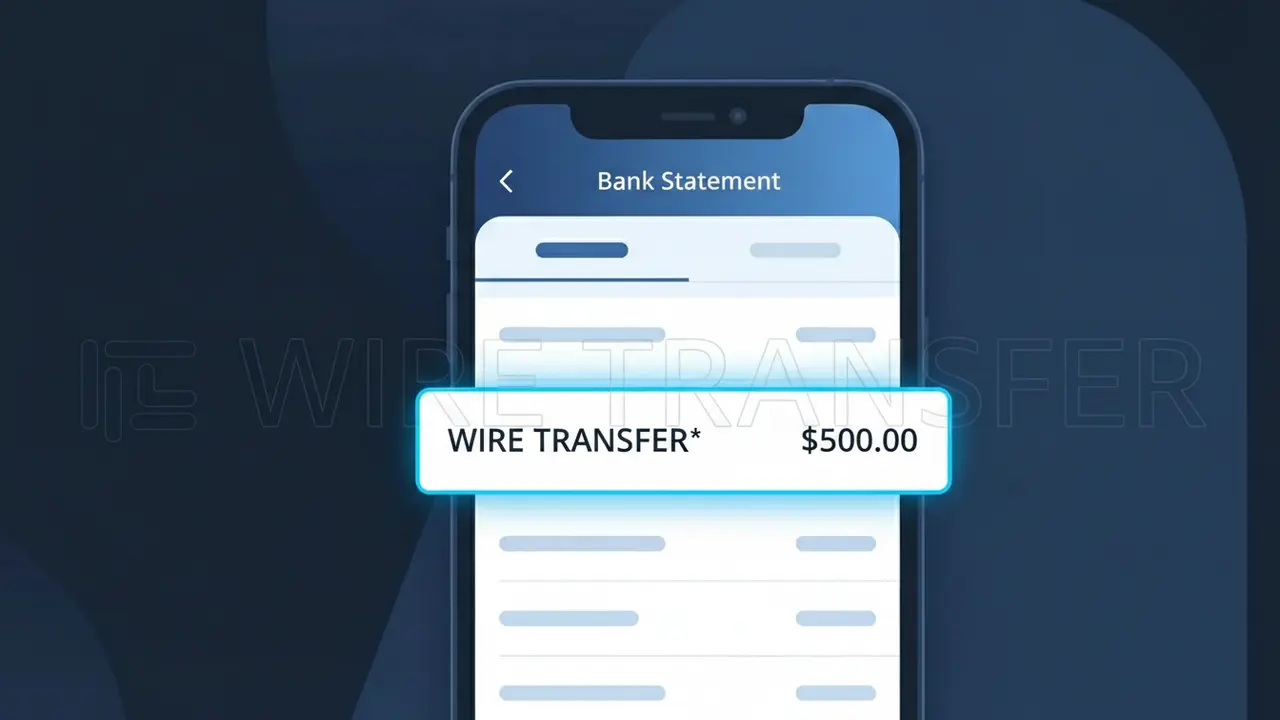
WIRE TRANSFER* Charge (What It Is + Is It Legit?)
✓ LegitimateThe "WIRE TRANSFER*" charge is from Wire Transfer. Bank wire transfer charge.
Wire Transfer
Bank wire transfer charge.
Category
Banking
Avg. Charge
Variable
Country
US
Billing Cycle
One-time
Cancel At
N/A
Support
See website
Why does this charge appear?
When your bank processes a wire transfer on your behalf, the transaction posts to your statement using the truncated descriptor "WIRE TRANSFER*" rather than a more detailed label because banking systems reserve only a limited number of characters for transaction descriptions, and wire transfers are processed through the Federal Reserve's Fedwire or SWIFT networks, which use standardized codes rather than full merchant names. The asterisk following the descriptor typically indicates that additional reference data, such as a transaction ID or routing detail, was attached to the transfer but could not be fully displayed by your bank's statement formatting system. If you see "WIRE TRANSFER*" on your statement, it is your bank's own internal fee or the transfer record itself, not a charge from an outside vendor.
Your next steps
Match the WIRE TRANSFER* amount
Check your records for any wire transfer you recently initiated or authorized. The WIRE TRANSFER* charge on your statement should correspond to a specific transaction you approved, such as sending funds to another bank account, paying a vendor, or transferring money internationally.
Contact your bank about the WIRE TRANSFER* charge
Call the customer service number on the back of your bank card and ask them to provide details about the WIRE TRANSFER* charge, including the recipient account, transfer date, and reference number. This will help you confirm whether the transaction was processed correctly and reached the intended destination.
Review Wire Transfer fees separately
Banks often charge a separate processing fee alongside the actual WIRE TRANSFER* amount. Check your statement carefully to see if both the transferred amount and a wire transfer service fee appear, as these may show as two distinct line items related to the same Wire Transfer transaction.
Visit google.com to verify Wire Transfer details
If you need additional information about your Wire Transfer or want to look up your bank's wire transfer policies, visit google.com to search for your specific bank's wire transfer documentation. Keep a record of your WIRE TRANSFER* charge details, including the date and amount, for your personal financial records.
Legitimate or scam?
No, this is a legitimate charge from Wire Transfer. However, if you did not authorize this charge or cancelled your subscription, you may be eligible for a refund.
Is the WIRE TRANSFER* Charge Legitimate or Fraud?
Seeing WIRE TRANSFER* on your bank statement typically indicates a legitimate wire transfer transaction processed through your bank or a wire transfer service. This charge reflects a fee or the transferred amount associated with sending or receiving funds electronically via Wire Transfer. However, if you don't recall initiating a wire transfer, it's important to investigate immediately, as wire fraud is a common scam.
- You or someone with account access recently sent a domestic or international wire transfer
- Your bank charged a wire transfer fee for processing an outbound or inbound transfer
- A third-party Wire Transfer service you use billed you for a completed transaction
- An unauthorized party gained access to your account and initiated a fraudulent wire transfer
How to Verify the WIRE TRANSFER* Charge
- 1
Check your bank account activity
Log into your online banking portal and look for any wire transfer requests you approved. The WIRE TRANSFER* charge should correspond to a transfer confirmation in your transaction history.
- 2
Search your email for Wire Transfer confirmations
Look for confirmation emails from your bank or Wire Transfer service provider. These emails typically include the transfer amount, recipient, and a reference number matching the WIRE TRANSFER* charge.
- 3
Check with household members or authorized users
Ask other people who have access to your bank account whether they initiated a wire transfer. A family member or joint account holder may have sent funds without notifying you.
- 4
Review recent financial activity
Check if you recently paid a contractor, sent money abroad, closed on real estate, or used a Wire Transfer service. These are common scenarios that generate a WIRE TRANSFER* charge.
- 5
Contact your bank directly
Call the number on the back of your debit or credit card and ask a representative to provide details about the WIRE TRANSFER* charge, including the recipient account and originating request.
How to Dispute a WIRE TRANSFER* Charge
- 1
Act as quickly as possible
Wire transfers are difficult to reverse once processed, so report an unauthorized WIRE TRANSFER* charge to your bank within 24–48 hours. Under federal Regulation E, you have up to 60 days for electronic fund transfer errors, but speed is critical.
- 2
Contact Wire Transfer or your bank first
Reach out directly to your bank's wire transfer department or the Wire Transfer service used. Provide the transaction date, amount, and reference number from the WIRE TRANSFER* charge and request an investigation or recall.
- 3
File a formal dispute or fraud claim
If your bank cannot resolve the issue, file a formal written dispute or fraud claim. For unauthorized WIRE TRANSFER* charges, your bank may initiate a wire recall request with the receiving institution.
- 4
Secure your account immediately
Change your online banking password and enable multi-factor authentication. If fraud is confirmed, request a new account number to prevent additional unauthorized WIRE TRANSFER* charges from occurring.
Tips for Managing Wire Transfer Charges
Enable real-time alerts for any WIRE TRANSFER* activity so you're notified the moment a transfer is initiated.
Always save your Wire Transfer confirmation numbers and receipts for easy reference if a charge is questioned.
Use strong, unique passwords for your Wire Transfer account and banking portal to prevent unauthorized access.
Review your bank statement monthly and reconcile every WIRE TRANSFER* charge against your own transfer records.
Never wire money to unknown recipients — wire fraud is irreversible. Verify recipient details before confirming any transfer.
Use WhatIsThisCharge.net to identify related charges that may appear alongside a WIRE TRANSFER* on your statement.
ℹ️ Note
In most cases, a WIRE TRANSFER* charge simply reflects a legitimate wire transfer fee or transaction you or your bank initiated — such as paying a contractor, purchasing property, or sending money internationally through Wire Transfer. If you recognize the amount and timing, there's likely nothing to worry about.
Quick answers
Was this page helpful?
Community Reports (0)
0 votesNo votes yet — be the first to report on this charge!
Have you seen this charge? Help others by voting:
Community Comments (0)
No comments yet. Be the first to share your experience!
Share your experience
Your email is only used to verify your comment and will never be shown publicly.
Search Another Charge
Popular Charges

Amazon Marketplace
AMZN MKTP US
Netflix
NETFLIX *SUBSCRIPTION
Netflix
NETFLIX.COM *
Apple
APPLE *SUBSCRIPTION
Apple
APPLE.COM/BILL
Related Charges
Need to dispute this charge?
Generate a professional dispute letter in seconds with our AI tool.
Open Charge AssistantCommunity Verified
Real user reports
Free to Use
Always free to check
Secure & Private
Your data is safe
Help Millions
48K+ charges identified