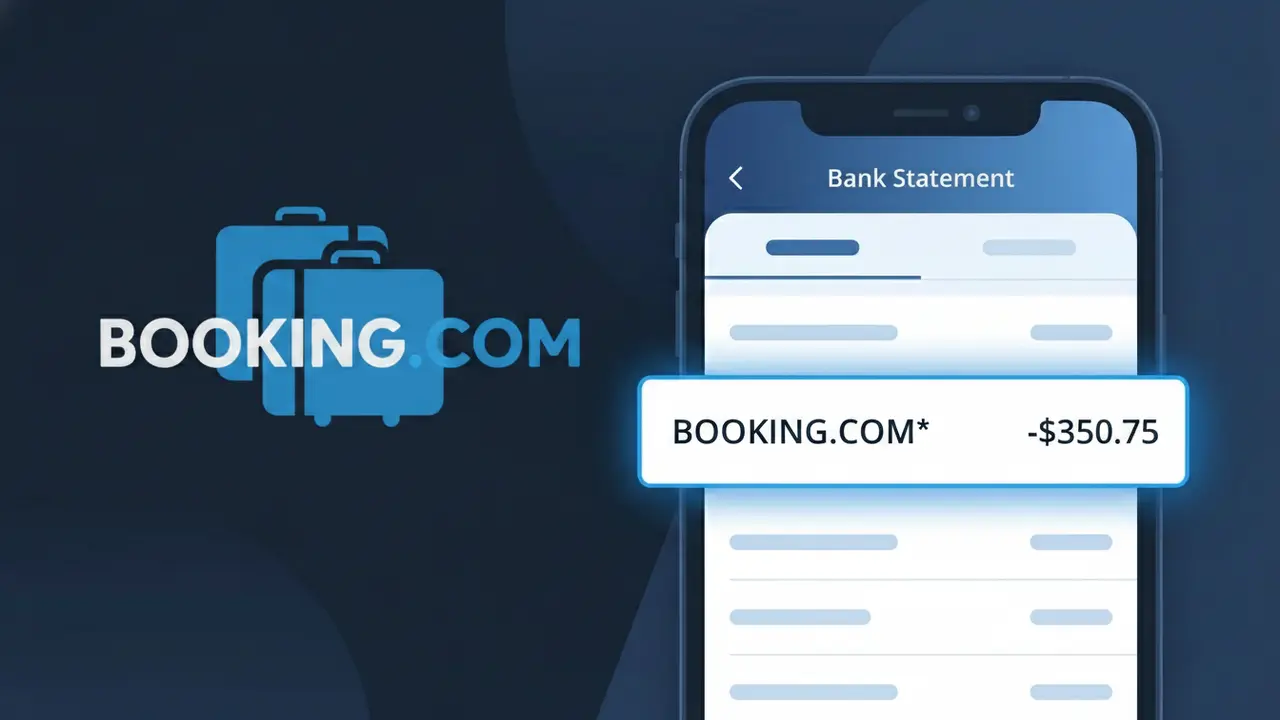
BOOKING.COM* Charge (What It Is + Is It Legit?)
✓ LegitimateThe "BOOKING.COM*" charge is from Booking.com. Booking.com hotel reservation charge.
Booking.com
Booking.com hotel reservation charge.
Category
Travel
Avg. Charge
$150.00
Country
US
Billing Cycle
One-time
Cancel At
booking.com/account
Support
See website
Understanding this descriptor
When Booking.com processes a hotel reservation payment, their billing system appends an asterisk after the company name to separate the brand identifier from any additional transaction details that may follow, such as a confirmation number or property code, resulting in the truncated "BOOKING.COM*" descriptor you see on your statement. This format is a common practice among large online travel platforms that handle millions of transactions and need a standardized way to flag charges within payment processing networks like Visa or Mastercard. If you recently booked a hotel stay and see a one-time charge of around $150.00 labeled "BOOKING.COM*" on your bank statement, it is almost certainly a legitimate charge from Booking.com for your reservation.
Recommended actions
Match the charge to a reservation
Log into your Booking.com account at booking.com and navigate to your booking history to match the BOOKING.COM* charge on your statement to a specific hotel reservation, including the dates and property name.
Review your booking details
On booking.com, open the specific reservation and confirm the charge amount matches the total shown for that stay, keeping in mind that Booking.com may charge at the time of booking or upon check-in depending on the property's payment policy.
Manage or cancel if needed
If the BOOKING.COM* charge is for a reservation you no longer need, visit booking.com/account to view your cancellation options. Be sure to check the cancellation policy for that specific booking, as some rates are non-refundable.
Contact Booking.com support if unclear
If the BOOKING.COM* charge does not match any reservation in your account history, reach out to Booking.com's customer support directly through booking.com to clarify the charge before considering a dispute with your bank.
Is this charge fraudulent?
No, this is a legitimate charge from Booking.com. However, if you did not authorize this charge or cancelled your subscription, you may be eligible for a refund.
ℹ️ Note
In most cases, seeing "BOOKING.COM*" on your statement is completely normal. Before assuming fraud, check your recent purchases — most mystery charges have a simple explanation.
Is the BOOKING.COM* Charge Legitimate or Fraud?
If you see a charge labeled BOOKING.COM* on your bank or credit card statement, it is most likely a legitimate transaction processed by BOOKING.COM, one of the world's largest online travel and accommodation booking platforms. This charge typically appears when you reserve a hotel, apartment, vacation rental, or other accommodation through the Booking.com website or mobile app.
Common legitimate reasons you may see a BOOKING.COM* charge include:
- A hotel or accommodation reservation made on Booking.com that required upfront payment
- A non-refundable booking where payment was collected at the time of reservation
- A pre-authorization hold placed by Booking.com ahead of your stay
- A Booking.com Genius loyalty program or add-on service fee
- A booking made by a family member or travel companion using your payment method
However, if you do not recall making any travel reservations recently, the BOOKING.COM* charge could indicate unauthorized use of your card. Always verify the amount and date against your travel history before concluding it is fraudulent.
How to Verify the BOOKING.COM* Charge
- 1
Log into your Booking.com account
Visit Booking.com and sign in to your account. Navigate to 'Bookings' to review your reservation history and check if any booking amount matches the BOOKING.COM* charge on your statement.
- 2
Search your email for Booking.com receipts
Search your inbox for emails from 'noreply@booking.com' or 'confirmation@booking.com'. Booking.com sends confirmation emails for every reservation, and the amount should match the BOOKING.COM* charge exactly.
- 3
Check if a household member made the booking
Ask family members or housemates whether they used your payment card to make a reservation on Booking.com. It is common for shared cards to have BOOKING.COM* charges from another user's travel plans.
- 4
Review the charge date against your travel plans
Cross-reference the date of the BOOKING.COM* charge with any upcoming or past trips. Booking.com may charge your card weeks in advance for non-refundable reservations or at check-in for pay-later bookings.
- 5
Contact Booking.com customer support
If you still cannot identify the BOOKING.COM* charge, contact Booking.com directly via their 24/7 customer service chat or by calling their support line. Provide the charge amount and date to help them locate the transaction.
How to Dispute a BOOKING.COM* Charge
- 1
Act within 60 days of the charge
Most banks require you to dispute unauthorized charges within 60 days of the statement date. Do not wait if you believe the BOOKING.COM* charge on your account is fraudulent or incorrect.
- 2
Contact Booking.com directly first
Reach out to Booking.com's customer service team before escalating to your bank. Booking.com can often resolve billing errors, duplicate charges, or cancellation refund issues faster than a formal bank dispute process.
- 3
Request a cancellation and refund if eligible
If your Booking.com reservation qualifies for free cancellation, cancel it through your account or via the confirmation email link. Refunds for eligible bookings are typically returned to your original payment method within 7–14 business days.
- 4
File a chargeback with your bank or card issuer
If Booking.com is unresponsive or refuses to resolve the issue, contact your bank and formally dispute the BOOKING.COM* charge. Provide your booking reference, email confirmation, and any correspondence with Booking.com as supporting evidence.
- 5
Request a replacement card
If the BOOKING.COM* charge is confirmed as fraudulent and you did not make any booking, ask your bank to cancel your current card and issue a new one to prevent further unauthorized charges.
Tips for Managing BOOKING.COM Charges
Set up bank alerts to get notified instantly whenever a BOOKING.COM* charge is processed on your card.
Always save your Booking.com confirmation emails so you can match them to any BOOKING.COM* statement entries.
Use a strong, unique password for your Booking.com account to prevent unauthorized bookings charged to your card.
Note your booking's payment schedule — Booking.com may charge you at reservation, at check-in, or on a specific date.
Use a virtual card number for Booking.com reservations to limit exposure if your payment details are ever compromised.
Use WhatIsThisCharge.net to identify related charges that may appear alongside BOOKING.COM* on your statement.
Common questions
Was this page helpful?
Community Reports (0)
0 votesNo votes yet — be the first to report on this charge!
Have you seen this charge? Help others by voting:
Community Comments (0)
No comments yet. Be the first to share your experience!
Share your experience
Your email is only used to verify your comment and will never be shown publicly.
Search Another Charge
Popular Charges

Amazon Marketplace
AMZN MKTP US
Netflix
NETFLIX *SUBSCRIPTION
Netflix
NETFLIX.COM *
Apple
APPLE *SUBSCRIPTION
Apple
APPLE.COM/BILL
Need to dispute this charge?
Generate a professional dispute letter in seconds with our AI tool.
Open Charge AssistantCommunity Verified
Real user reports
Free to Use
Always free to check
Secure & Private
Your data is safe
Help Millions
48K+ charges identified